
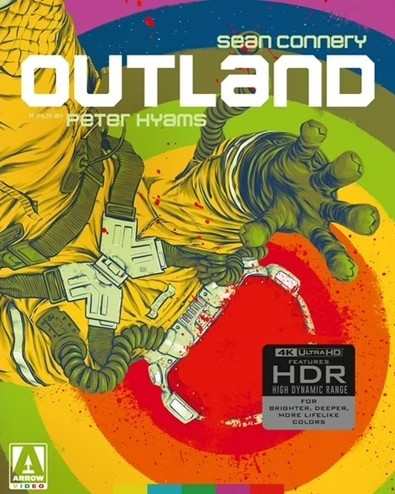
This “Limited Edition” 4K Ultra HD release from Arrow Video is currently available.
Back in the late 1970s and early 1980s, space films were the rage. Obviously, this was due to the massive success of Star Wars and its sequels. But cinemagoers also got to enjoy the classic Alien, and, well, plenty of other science-fiction efforts of varying quality. This included Star Trek: The Motion Picture, Battlestar Galactica, Battle Beyond the Stars, Starcrash, The Black Hole, Saturn 3, Flash Gordon and so many others that it’s impossible to list them all here.
One movie that arrived in 1981 was Outland, a unique science-fiction title starring Sean Connery. Audiences at the time might have been a little confused by the picture, as it featured no elaborate spaceship battles or showdowns involving laser guns. Instead, it harkened back to westerns of old, borrowing liberally from the classic High Noon.
The movie may not have been a box office smash during its initial release, but it was well-regarded by critics and made a lasting impression on those who did manage to see it. It’s an excellent picture that holds up extremely well. In fact, I’d argue that it ranks among the best science-fiction features of the era.
Now Arrow Video is delivering a stunning new “Limited Edition” 4K Ultra HD version that any sci-fi fan should pick up. The disc is yet another winner with vastly improved picture quality (compared to the Blu-ray) and it contains a wealth of extras.
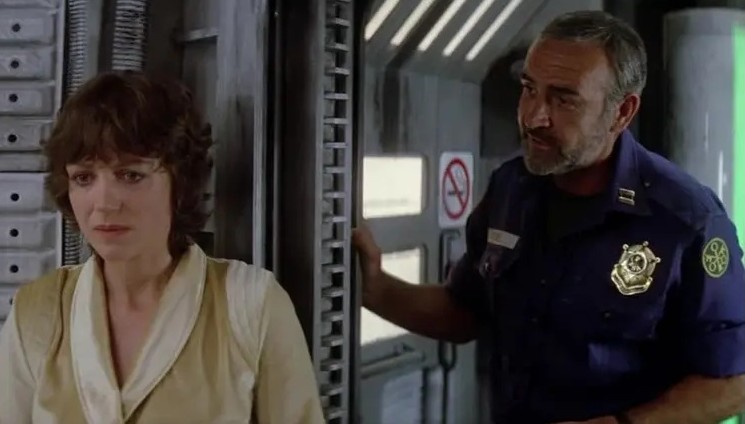
This story is set at a titanium mining outpost on one of Jupiter’s moons. Marshal William T. O’Niel (Sean Connery) is a new arrival on the remote and grim site. This is much to the chagrin of his wife Carol (Kika Markham), who is sick of moving from one dank and depressing facility to the next. She soon announces that she’s taking their son Paul (Nicholas Barnes) back to Earth, and that O’Niel should join them. But dispirited as he is, the grouchy protagonist wants to see out one part of his recently appointed job. It involves an illicit, dangerous drug that is affecting the workers and causing incredibly disturbing deaths.
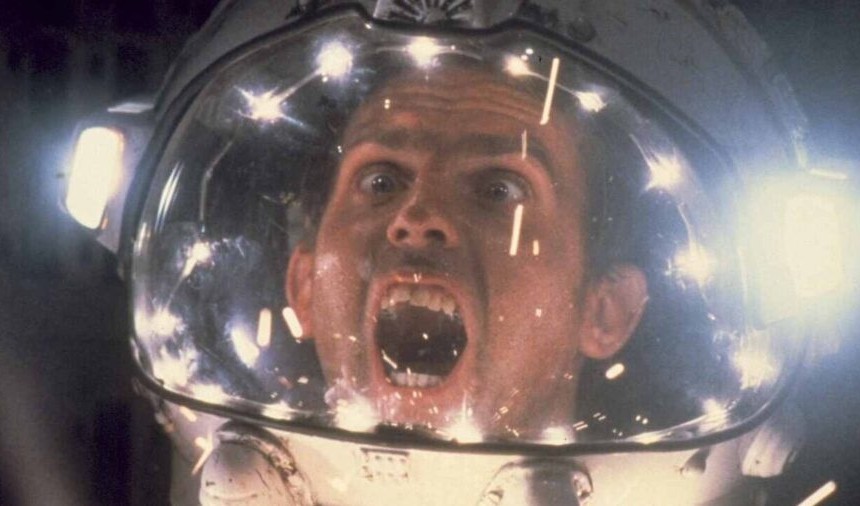
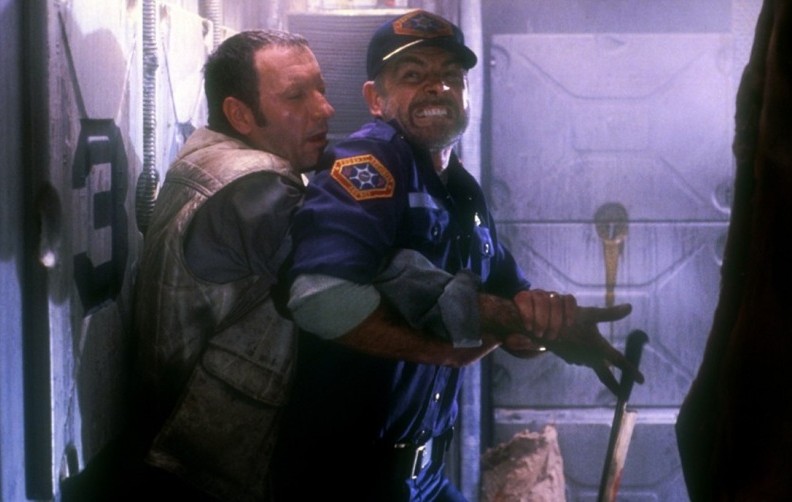
Head manager Mark Sheppard (Peter Boyle) immediately tells O’Niel to sit quietly, avoid arrests and keep out of the affairs of the workers, because the site is seen as highly profitable for its owners. O’Niel talks to Sergeant Montone (James B. Sikking) about cracking down on the drug problem, but gets no support. The only individual willing to lend some assistance is a sharp-witted MD, Dr. Marian Lazarus (Frances Sternhagen). After O’Niel starts to hunt down dealers and foils a big delivery, warnings turn to threats. It climaxes with Sheppard requesting killers to come and eliminate the sheriff. Almost the entire base stands aside while O’Niel fights for survival.
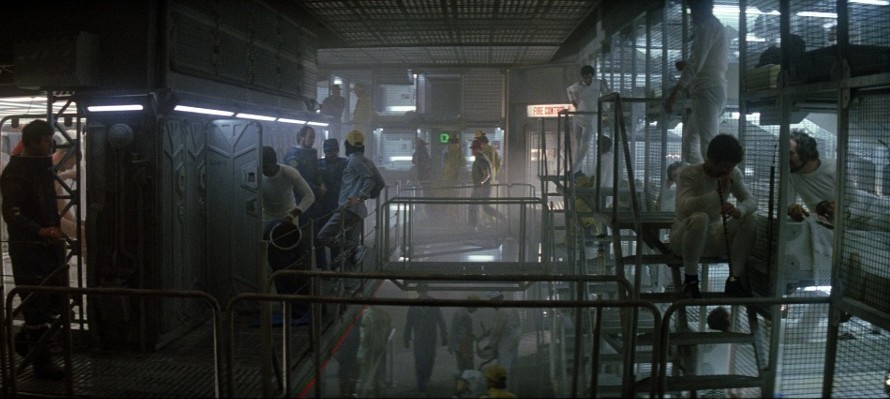
So, yes, the film was intended as a futuristic take on High Noon, but it works remarkably well. The production value is extremely high with impressively grand, yet still claustrophobic sets. They’re packed with workers, which makes the quarters all the tighter as the lead attempts to chase down suspects. It has an appropriately grimier tone than many movies of its day. This picture is also ahead of its time in terms of subtext, with a massive corporation controlling the lives of poor employees and working them until they’re literally dead.
There’s a lot going on in the story, and the performances are exceptional. Connery is fantastic as O’Niel. He’s a bit irritable, but in an entertaining way. There’s a great introduction after he arrives on the base and talks to a group of various managers who sit silently. I’m paraphrasing, but, “Wow, I really impressed them,” is how he sums the response as he sits back down. His bickering with Lazarus is a lot of fun to watch as well. It’s tense at first, until the two eventually become friends. The confrontations with Sheppard are also enjoyable. Again, there is another fantastic moment in which the sheriff tells the deeply irritated villain running the facility that he found his latest shipment and flushed it down the toilet. “Proud of me?” he prods with something of a sly grin. And the serious drama works, with O’Niel eventually opening up to Lazarus and admitting that everyone around him thinks he’s a lousy sheriff, so he just wants to do his job and find out if they’re right. It’s a revealing moment.
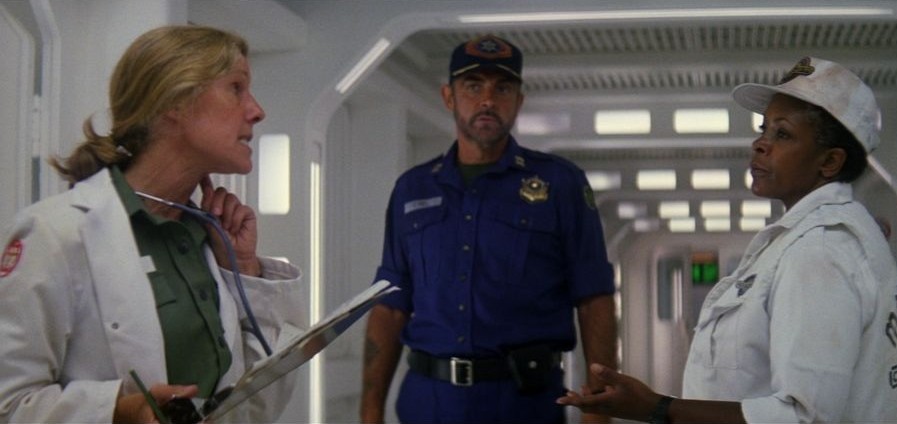
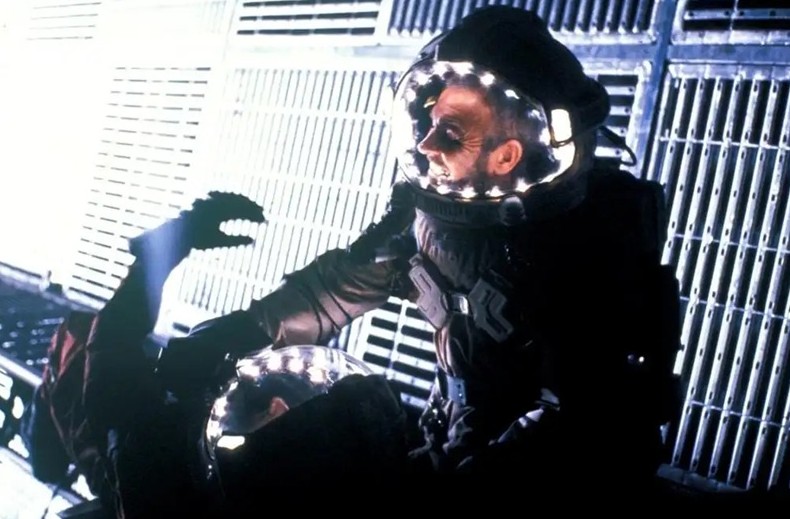
The action is tense and exciting as well, captured with striking photography and special effects that consistently impress. In all, Outland is an above-average sci-fi picture that, after many decades, still remains a personal favorite.
I own the Blu-ray and this 4K Ultra HD release is significantly better than the previous version. It delivers a much cleaner, brighter picture with bolder colors that looks dynamic throughout. The 35mm original negative was scanned in 4K and restored for this release and it is presented in Dolby Vision. This is as good as the film has ever looked.
Chris Alexander provides a new film historian commentary. The track is largely improvised and conversational, but still informative and enjoyable. It’s clear the movie made an impression on him as a younger man too and so it is fun to hear his comments on the picture.
Still, the essential commentary is actually the archival one with writer/director Peter Hyams (who also helmed Capricorn One, The Star Chamber, 2010: The Year We Make Contact, Running Scared, Timecop, Sudden Death, The Relic, and many others). He’s a great speaker who goes into everything involved in the creation of this picture. There is a new interview with the director that repeats some of this information, but he essentially thanks George Lucas and Ridley Scott for indirectly helping the movie get made. He admits wanted to shoot a western, and no executive would finance it. One night, he came to the conclusion that all he really needed to do was change the setting. Hyams also talks about working with Connery and what a pro he was, easily communicating his character’s thoughts with a simple expression or look.
As mentioned, there is also a recent interview with Hyams, who goes over most of his career. He talks about his family history. This includes his stepfather, a conductor and opera translator who was blacklisted during the McCarthy witch hunts. The horrific treatment by the extremist movement on his stepdad, a sweet man who was of no threat to America or anyone within it, made a deep and lasting impression on him (it may be why High Noon was a major inspiration to him). Hyams talks about his time working for news outlets, eventually moving into film and becoming his own cinematographer. And the filmmaker shares tales about the good and bad experiences he went through with his early projects, as well as his storytelling philosophy and how he set up shots in the movie.
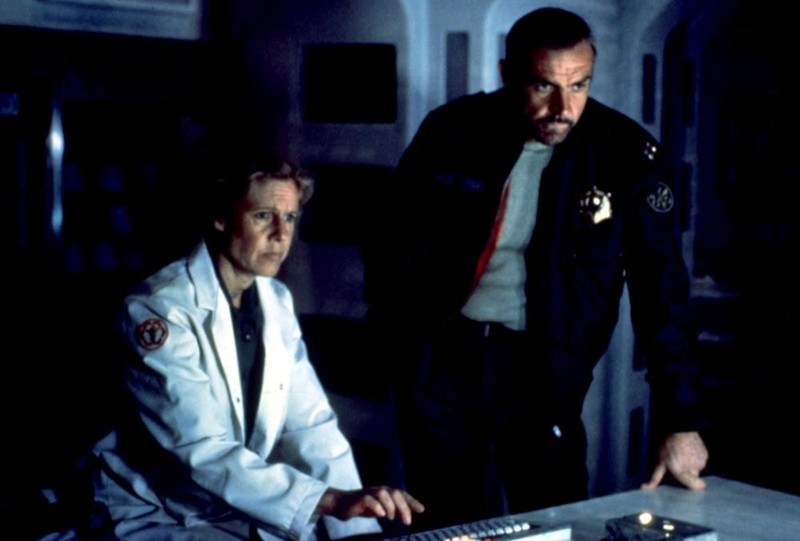
Hyams did find Outland to be one of the best experiences of his career. Apparently, the Ladd Company were incredibly supportive during the shoot in England, and their president even suggested that Hyams shoot add more graphic and jarring elements to a death scene early in the film to hook viewers into the story. The filmmaker is very proud of the movie and is specifically pleased with the friendship between O’Niel and Lazarus. The two are played by a man and woman, but there is no romantic connection between them, which is still rarely done in a studio narrative.
There is also a great discussion with cinematographer Stephen Goldblatt. Apparently, Goldblatt was in his 20s and had just come off his first independent feature. He doesn’t go into specifics, but says he was aware at the time that there were issues with a cinematographer and director being the same person, and thus knew that he had been hired by executives on the production to be let go shortly after production began. This film involved extensive visual effects through a new system called Introvision, so Goldblatt took a crash course in the process and made himself indispensable. He notes that Hyams filmed most of the conversations between actors and that he shot all of the footage involving effects (which is a considerable amount). And despite the odd circumstances behind-the-scenes, Goldblatt states that he and Hyams got on well. The interviewee says it was an incredible learning experience and paved the way for his work as cinematographer on The Hunger, Young Sherlock Holmes, Lethal Weapon, Lethal Weapon 2, The Prince of Tides, Batman Forever, and many others).
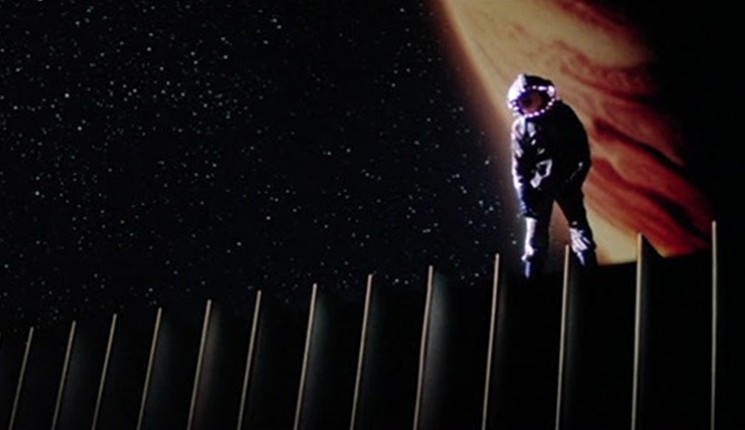
William Mason, who worked at Introvision, is another excellent interview piece. He talks about the Introvision process, which involved shooting miniatures and using front projection and mirrors to incorporate different layers and elements together within a live shot involving actors. Moviemakers would see the finished article as they filmed and avoid all costly post-production effects. It really was an impressive technique which was being used for the first time in Outland. Mason explains how the striking effects shots were accomplished. Introvision was memorably used in other titles and we see examples, including the boulder scene in Raiders of the Lost Ark, and the train sequences in Stand by Me and The Fugitive. The speaker also laments what happened to Introvision, and goes into interesting detail about it.
If that wasn’t enough, there is a visual essay on the career of Hyams and a video essay on Outland. The career of the director is fascinating and offers a look at many of the pictures in his career and similar elements within the projects. At the very least viewers will have a list of other titles to seek out. The video essay is interesting and engaging as well, although like many others of its kind, this reviewer doesn’t necessarily agree with a few of the ideas being argued. Publicity materials like a trailer and image gallery are also included. There’s a booklet with essays on the feature. And the package contains a double-sided fold out poster with new and original art for the movie.
Outland is a great science-fiction feature that stands above many others of its ilk. That’s because, in addition to its excellent cinematography, production design and visual effects, it also takes great care with its characters and themes. The western allusions add depths and a relatable element to the story. Arrow Video’s 4K presentation is also top-notch, making this effort easy to recommend to anyone looking for an all-around great piece of entertainment. Pick it up if you can!
