
This “Limited Edition” Blu-ray box set from Radiance Films will be available for purchase on November 18th.
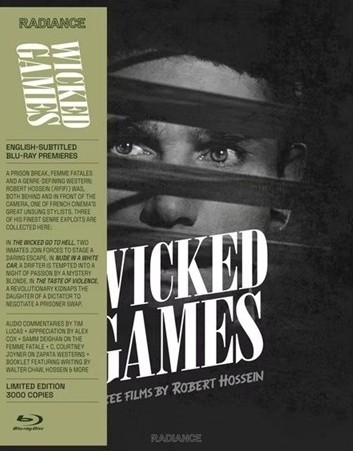
The importance of the French crime picture Rififi can’t be overstated. The success of the film, critically and commercially, resulted in huge careers for many of the cast and crew members. One of the actors who made a memorable impression was Robert Hossein. As an actor, he became a box office draw and soon began directing features in the 1950s. While several of his titles were popular with audiences, they weren’t as well regarded by the press in his homeland. In fact, by the 1960s, important cinema-related publications like Cahiers du Cinema, whose attention was focused on the French New Wave, was largely dismissive of Hossein’s work.
While his pictures could be melodramatic and pulpy, they aren’t your typical studio fare and are wonderful in their own right. Radiance Films have decided to present a trio of his works that have been largely unseen by audiences in North America. It’s called Wicked Games: Three Films by Robert Hossein. Gaumont has presented the distributor with 2K restorations of all the films and they look beautiful. The set also contains enlightening extras that go over the films and their importance in French cinema history. Anyone who enjoys international cinema should pick up this impressive collection.
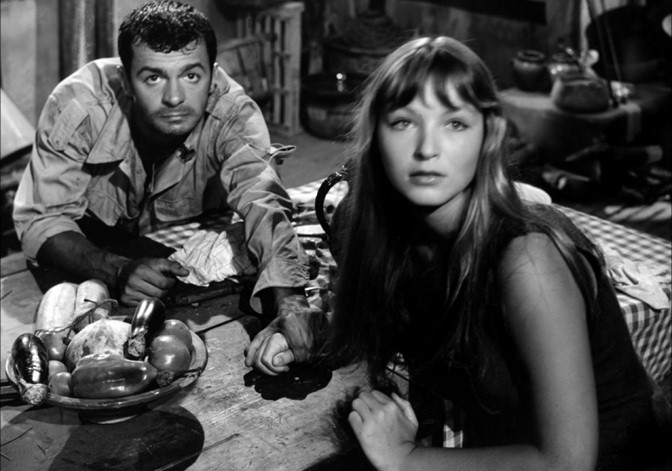
The first movie contained is Hossein’s directorial debut, The Wicked Go to Hell (1955), and it’s something of a French film-noir. The story begins as a prison drama, following the exploits of Pierre (Henri Vidal) and Rudel (Serge Reggiani), two convicts who find themselves locked in a cell together. When another important prison inmate, Fred (Hossein himself), finds that someone ratted on him, the entire population guesses it was either Pierre or Rudel. The two men realize they have to escape and agree to work together to free themselves. After managing a jailbreak, their vehicle breaks down. They end up at an isolated beach house, taking an artist (Jacques Duby) hostage along with his stunning girlfriend Eva (Marina Vlady). It isn’t long before they kill the man and find themselves clamoring for the attention of the charming woman. In fact, they are so enamored, they fail to realize that she may want revenge for her beau’s death.
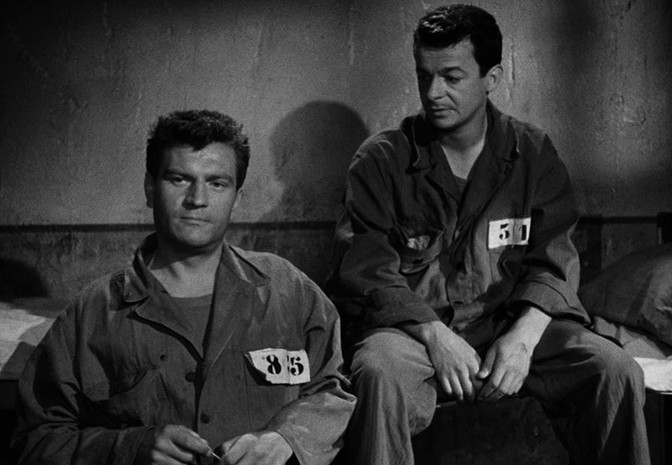
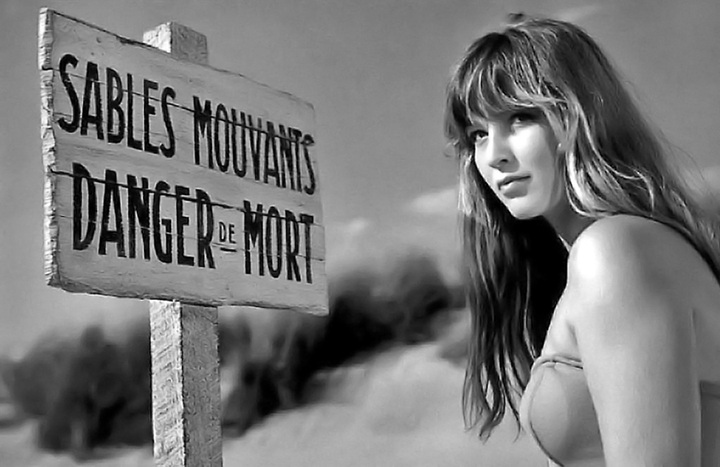
The feature marks an impressive debut for Hossein. This is a character-based story and the film does an excellent job of developing various persons at the jail. So much so that it’s almost sad to see some disappear as the story moves outside the locale. At least the tension between Pierre and Rudel is maximized, as both accuse each other of being the snitch (the movie never really lets on exactly which of them is). Vlady makes a stunning impression as the young woman (she is almost reminiscent of Ursula Andress’ intro in Dr. No, which came a few years later) who hides her true intent while around her swooning captors. The finale ends on a familiar but effective note as the story is wrapped up.
The photography is also remarkable. There are some wonderful overhead angles of prisoners marching and a dirty, oppressive look to the jail. The lovely sea locale is beautiful, but it ends up being just as dangerous, making for a nice contrast. While the plot structure is odd and the movie is relatively simple, there are enough unique elements to keep one engaged and following the story.
The bonuses on the disc include a commentary by film historian Tim Lucas (he actually delivers a track on all three pictures). There is a newly created making-of featurette with another movie expert that also contains interviews with Hossein and filmmaker Jean Rollin. It seems Rollin knew the director and worked with him on a few projects. Both of these features go over some of the interesting oddities about the director/co-star and production. Hossein’s past is largely unknown and there is little in the way of a biography on him, so his life prior to his movie career is speculative. For this project, established figure Yves Allégret (The Proud and the Beautiful) was supervising Hossein’s direction. This credit has led to questions about who did what on the feature. Apparently, this process was not unusual at the time in France and Hossein does suggest that the filmmaker helped shoot a few bits. You’ll also find out that Hossein’s father scored the picture under a pseudonym and that Vlady was 18-years-old and had married Hossein before the shoot. The two would work together on another picture in this set.
Additionally, you’ll get a retrospective piece on the career of Hossein that goes over all of his pictures, and attempts to assess why critics initially were against his work. Some didn’t think there were any notable messages in these efforts and they were just commercial pictures, but it doesn’t seem that way when revisiting them. You’ll see clips from some noteworthy titles, like The Vampire of Dusseldorf aka The Secret Killer, which is the true story of a notorious German serial killer.
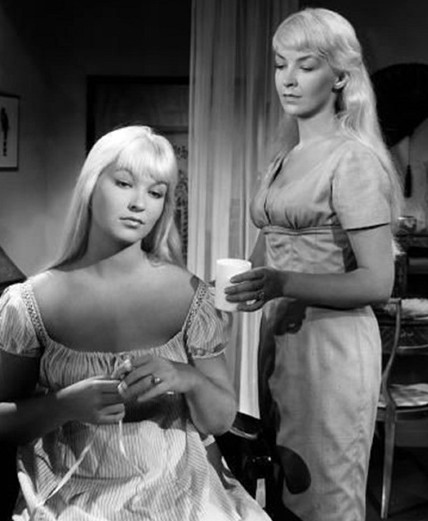
The second film in the set is Nude in a White Car (1958) aka Blonde in a White Car. It stars Hossein as Victor Menda, a downcast, out-of-work radio show host taking a late-night walk in Nice near a beach. He’s picked up by a blonde woman in a car. She is beautiful, but he can’t make out her face clearly. The two park and make love before she spurns him. In fact, the mystery lady shoves Victor out of the car and then attempts to run him down.
Shocked, the lead gets her license and ends up at a beautiful coastal villa. He intends to confront the woman, but is confused when two blonde sisters appear. One is a sweet, wheelchair-bound Polio survivor Eva (Marina Vlady), while the other is her sibling, Helene (Odile Versois), who works tirelessly as Eva’s caregiver. Victor can’t quite figure out what is going on, as both are friendly and offer him the position of manager at their soon-to-open record shop. He’s obviously curious about whom he spent that first passionate night with, but the longer he is there and sees tension in their relationship, the more confusing it all becomes.
If you can get over the fact that Victor wouldn’t be able to make out his lover’s face during their romantic escapade (this bit is more brightly lit than it should be, so much so that you wonder if Victor should see an optometrist), this is a pulpy but extremely enjoyable effort. It’s not set in a lot of locations, but it is beautifully shot with stunning lighting. There are some angles of the villa with the camera shooting up to the second-floor hallway. The dark shadows on the walls from the decorative railings are striking.
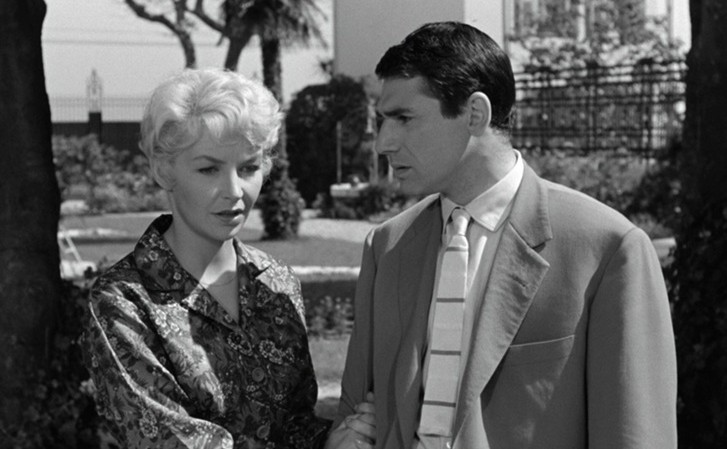
Again, this is a psychological thriller and its emphasis on character and the performances make it intriguing throughout. There’s great chemistry between the entire cast, which is to be expected given that the star/director was married to one of the actresses playing the sister.
Like Victor, viewers will frequently be wondering who knows what, as well as whether Eva is faking her condition, or Helene is simply desperate to get away and act out on her impulses. Personally, I wouldn’t exactly describe the siblings as typical Hollywood ‘Femme Fatale’ scenario, but this alteration actually makes the story more interesting and unsettling. This effort is a great surprise and the psychological drama makes it a strong entry in the set. And, on a personal level, I couldn’t help but also be fascinated by some of the backdrops, including the look of the era’s record shops.
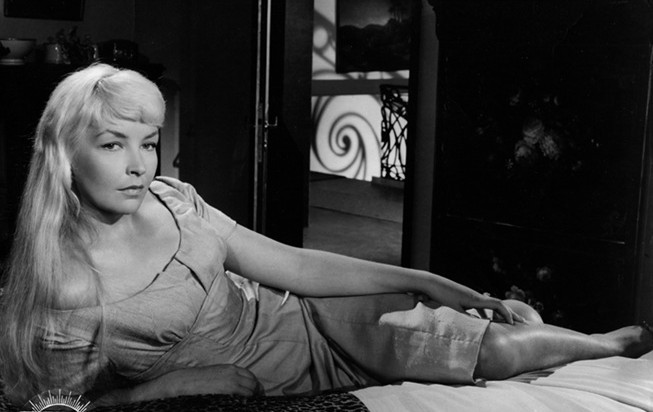
Again, the picture looks stunning here. It’s a very clean and crisp image with a lot of detail. It’s hard to imagine the movie looking any better.
The commentary track with Tim Lucas is also entertaining, as he analyses the psychological states of the characters at various points in the story, as well as giving detailed information about the production. It’s a fun track. You’ll also receive a visual essay on ‘Femme Fatales’ in classic French cinema which points out some of the interesting and different versions of the staple that have been depicted onscreen over the years.
And there is a recent interview with Marina Vlady, who discusses her work and relationship with Hossein. She believes that the busy pair had a wild and jam-packed relationship, living full lifetimes in only a handful of years. This involved making movies, traveling and having kids. The pair divorced after a few years, but it was amicable and they remain friendly.
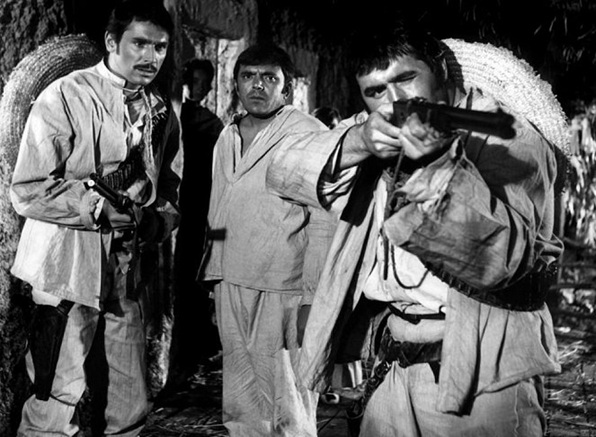
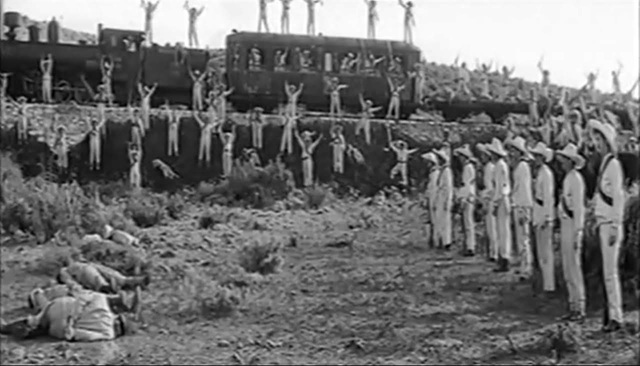
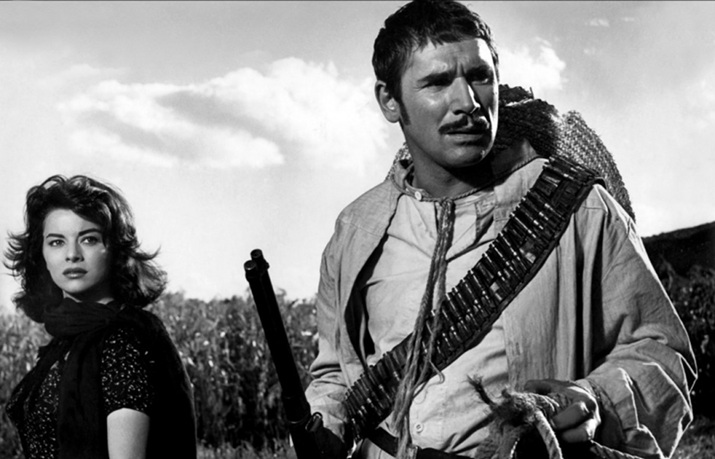
The last movie in the set is the western, The Taste of Violence (1961), which film historian Tim Lucas believes is Hossein’s masterpiece. This tale is set in “Central America” although it clearly is inspired by the Mexican Revolution. Revolutionaries made up or ordinary citizens are fighting their oppressive, dictatorial government. We focus on one faction and its lieutenant, Perez (Hossein). After defeating a train containing an army, they take the president’s daughter Maria (Giovanna Ralli) hostage. The group soon find themselves under attack, with Perez and underlings Chamaco (Mario Adorf) and Chico (Hans H. Neubert) escaping and discussing what to do with Maria. One wants to sell her back for money, another man falls for her, and even Perez feels himself growing close to the woman. It leads to conflicts within the trio. And after some time, Maria’s attitudes towards the men change as she sees the hardships they and their families have endured.
While one might initially wonder if a French western shot in Montenegro and Croatia could convincingly present a western setting, it’s so beautifully captured and framed that any of the natural oddities on display aren’t a distraction. You’ll be treated to phenomenal imagery throughout the picture, in all sorts of outside locations. A city street scene late in the film, when the surviving characters return to see their hanged compatriots lined up and down the street, is stunning.
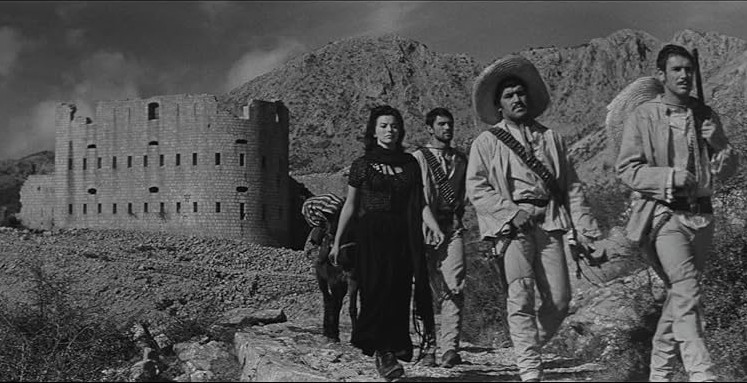
Again, there is plenty of solid character work here, with the three revolutionaries at odds and even plotting against each other, leading to a consistently tense story. At the time, it was relatively rare to see a movie focus on downtrodden citizens fighting for a better life and the screenplay interestingly displays their different motivations and attitudes. While subdued by genre standards, the finale is very impressive and doesn’t give way to an upbeat wrap-up. It’s an excellent picture.
This title has a discussion with filmmaker and western authority Alex Cox (Sid and Nancy) talking about the movie and its importance. He goes into its tendency to avoid showing long and elaborate battle scenes, instead focusing on the aftermath. Cox notes that while some have critiqued the picture for this and called it a budgetary issue, the number of extras, horses and more on display suggest he could have shown it all if he wanted to, but chose not to glorify the violence. It’s another informative extra.
There is a commentary from Lucas that goes into technical detail about the production, the cast and more. This is his favorite effort from Hossein and his enthusiasm for the picture ends up being infectious. And there is a wonderful 27-minute featurette on the Zapata Western (which features stories detailing the Mexican revolution) and the many pictures included in this subgenre, like A Fistful of Dynamite. Viewers will also learn Hossein’s film inspired Sergio Leone (the Dollars trilogy, Once Upon a Time in the West) and that the filmmakers were good friends. So much so that Leone gave Hossein a cameo in Once Upon a Time in the West, and Hossein had Leone direct the dinner scene in his own western, Cemetery Without Crosses.
Wicked Games: Three Films by Robert Hossein “Limited Edition” Blu-ray set is a winner. All of the movies are very good (with two being exceptional), the picture quality is wonderful, and the extras will give one a greater appreciation and understanding of the movies and their place in French cinema. It’s fantastic that Rififi afforded Hossein the opportunity to not only appear in more films, but make them himself. If you can, be sure to pick this set up.
