
This “Limited Edition” 4K Ultra HD release from Arrow Films is currently available. A “Limited Edition” Blu-ray is available separately.
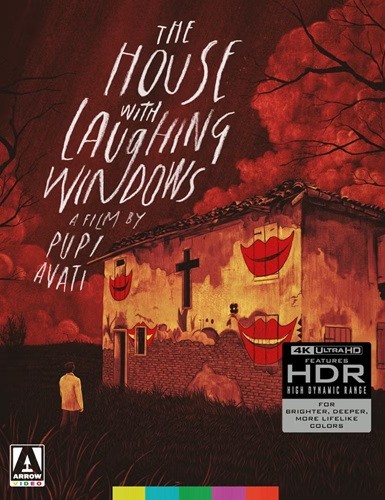
If you live in North America and watch a lot of Italian horror films, then you’ll be most familiar with filmmaker Pupi Avati for his 1983 zombie picture, Zeder aka Revenge of the Dead. It’s a slow-moving but eerie and atmospheric effort that made an impression on many genre enthusiasts. However, in his homeland, the writer/director is best known for The House with Laughing Windows, a chilling picture with giallo elements that hasn’t really ever been properly released in North America.
Well, it’s being given a proper release now. Arrow Video is delivering the feature as a “Limited Edition” 4K Ultra HD. It’s a marvelous way to debut the movie in this part of the world, with a stunningly sharp image that presents the film in all its deranged glory. The set also includes a ton of fantastic extras, including a feature-length documentary on the production, that make this title a must-own for any enthusiast of horror films from this part of the world.
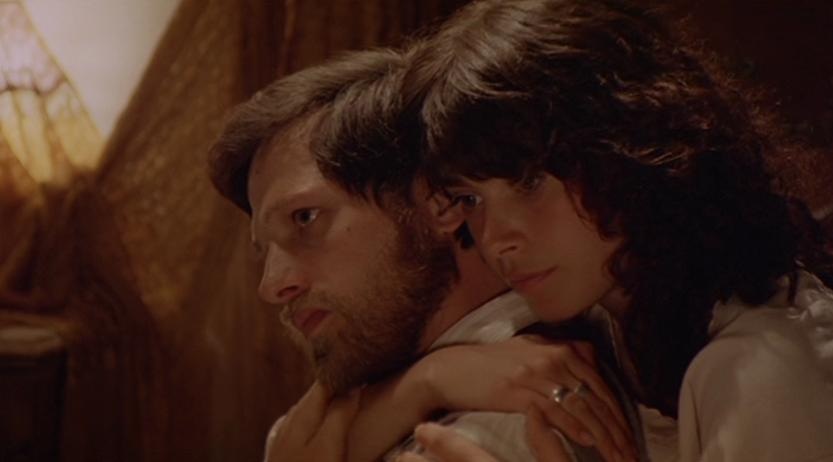
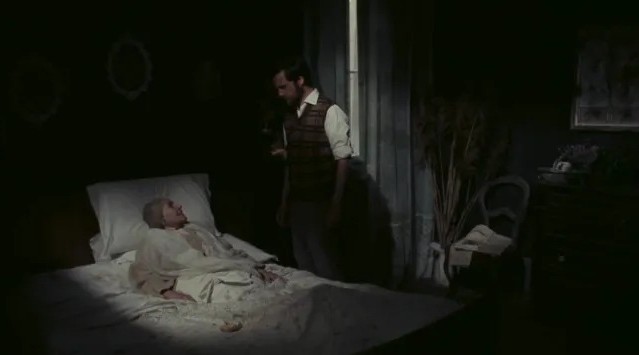
The movie jolts viewers with a truly disturbing opening sequence (which is intentionally grainy) featuring a man being tortured and stabbed to death. Many years later, we are introduced to Stefano (Lino Capolicchio), an art restorer arriving in the small, rundown village Vali di Comacchio. The protagonist has been hired to do restoration work on a damaged fresco from a nearby church that was painted by Buono Legnani, who died many decades earlier. After being welcomed by a priest (Eugene Walter), Stefano immediately begins work. It isn’t before a palpable sense of dread begins to take hold of the lead. The villagers behave bizarrely, and the only friendly faces are sweet young schoolteacher Francesca (Francesca Marciano) and an elderly bedridden woman (Pina Borione) staying in a room one floor above him.
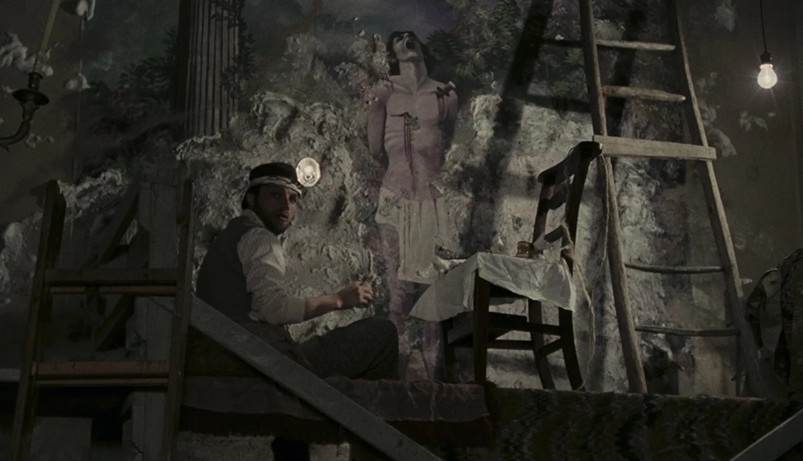
Stefano’s unease grows even more rapidly when he learns that the late painter was obsessed with capturing not only death in his works, but also agony and torture. It seems that the painter very quickly moved from painting individuals on their deathbeds to enlisting his two sisters to help him kidnap and murder subjects, all for his art. Very soon, those around the main character begin to meet strange ends and Stefano feels that his own life is in grave danger.
Much like Zeder, this movie is a slow burn. Yes, the opening scene is quite disturbing, but much of the film relies on atmosphere over shocks. And it’s largely effective, as the bleak surroundings and strange behavior of those around Stefano do indeed create a tense atmosphere. Horror fans might be initially disappointed that the murders, unlike most giallo pictures, avoid presenting slayings in graphic ways. But, if you can hang in there through a lot of weirdness and appreciate the eerie mood, you will get some memorable nastiness and shocks during the final act. And while the first major story twist that occurs is predictable, the second one that follows is a startling surprise. That finale even manages to outdo the already distressing opening.
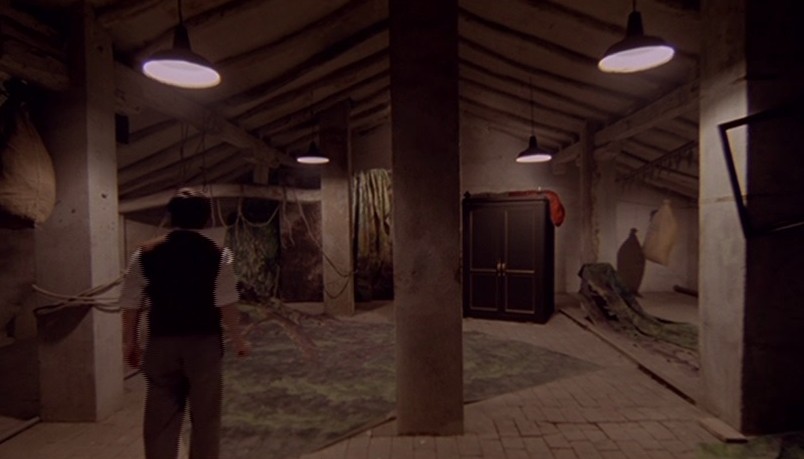
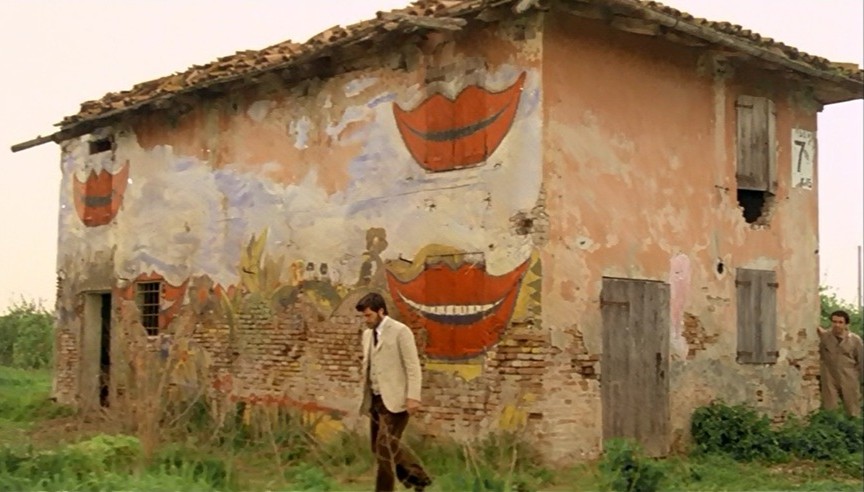
The film has good performances and clearly there’s a lot of subtext and comments involving life in post-war Italy. Some dark remnants of the past are still present in the backcountry, and the production takes advantage of numerous decaying buildings. Combined with equally disturbed characters, the end result leaves the viewer uncomfortable and on edge. This is a very good effort and while it may be leisurely paced, the final 20 minutes are hard to forget.
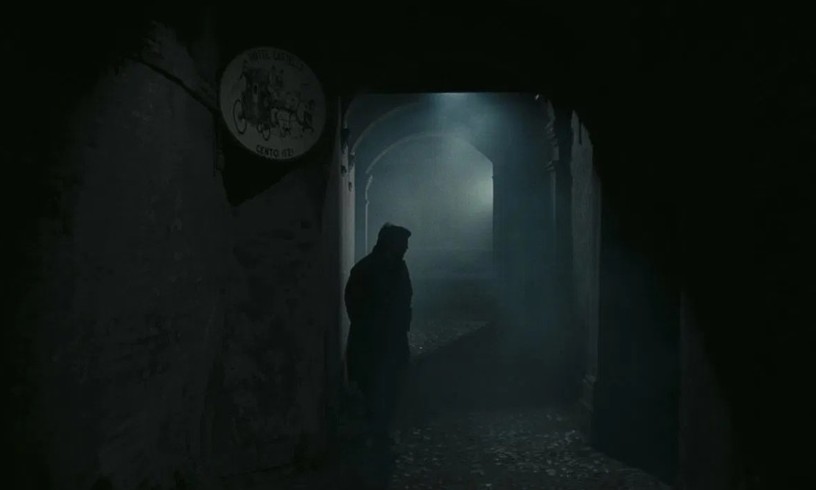
The image quality on this transfer is unexpectedly stunning. The original 35mm camera negative was restored and scanned for this release, and I was stunned at how good the movie looks. Everything, from the beat-up, desolate exteriors, to the dark and shadowy interior sets, look amazing. And when the gruesomeness occurs, it is shocking. You’ll see a corpse that has been maintained in formaldehyde, as well as a graphic slaying, all presented with crystal clarity.
As mentioned, there are a great many excellent bonuses as well. The biggest one is a feature-length documentary on the film. It features interviews with director/co-screenwriter Pupi Avati, his brother and producer/co-screenwriter Antonio Avati, as well as star Luno Capolicchio and other crew members. They tell the remarkable story of how this movie was made. Pupi and Antonio had been making a name for themselves in the Italian film industry, which all came to a halt when they completed a film called Bordella. The movie was a satire and involved a brothel for women clients paying for sex from male prostitutes. After its opening weekend, the picture was seized by the conservative government and the pair were put on trial for obscenity. They were convicted and it took a few years for them to recover from the ordeal.
Over this time, they started plotting a comeback, trying to write a script that could be shot for as little money as possible in order to get themselves back in the filmmaking scene. Greatly inspired by the works of Roman Polanski, the pair discuss how they came up with the concept, as well as the unique title and themes of the story. There were false starts with financing, before raising funds that, based on the info they share, translates to the low five-figures in US dollars. Indeed, the movie was shot with a crew of about 12 people, who served double and triple duty taking on various positions as needed. Lead actor Lino Capolicchio had just become a big star in Italian cinema and was intrigued by the script, ultimately deciding to help the filmmakers out and starring in the picture. Many crew members discuss doing various duties, as well as shooting in dilapidated buildings that were just as creepy in real life as they are in the film.
Actress Francesca Marciano also talks about her role in the film. She was only 18-years-old at the time and recalls memories of star Capolicchio and director Avati being very sweet and apologetic about some of the unusual things that she had to endure for the role. It seems that everyone was very committed to their roles on set, for the most part good natured, working together to make the best film they could. Many involved note the remarkable success of the picture and consider it one of the best in their respective careers. The documentary is a fascinating and informative one that is well worth checking out.
There are some entertaining visual essays on the movie as well. The first features Christopher Alexander, who goes into the unsettling mood the film establishes and the effect it had on him when he first saw it. The delivery is a bit over-the-top at times, but it’s all in good fun and there is some excellent analysis. A second essay from Kat Ellinger goes into the themes and some of the filmmakers’ potential cinematic inspirations. It is amusing to hear critics express their thoughts and ideas about a movie, which aren’t always exactly in line with the filmmakers themselves, who explicitly state their specific intentions and references, but it is interesting and enjoyable to get their perspectives.
You’ll get even more genre critic analysis in two film historian tracks that accompany the movie. The first is from Australian critics Alexandra Heller-Nicholas and Josh Nelson who discuss how they discovered the film at a festival screening and their thoughts on the picture and its importance in the giallo genre. The second track, from Eugenio Ercolani and Troy Howarth, provides plenty of background details and facts about the Avanti brothers, including the occasional friction and infighting between them, as well as the wide variety of genres they took on during their careers. Perhaps this is why their genre work feels atypical compared to other pictures of the era.
The release also contains a theatrical trailer.
When I was a younger man, I watched as many giallo and Italian horror flicks as I could get my hands out, but like many, I still missed out on several important ones. The House with Laughing Windows was one of those films, and it’s wonderful to finally see it in this part of the world in all of its disturbing grandeur. This is a horror film that makes a lasting impact on the viewer. Arrow Video has provided a brilliant transfer along with great bonuses that make this title a must buy for any fan of this genre.
