
This “Limited Edition” Blu-ray is now available from Radiance Films.
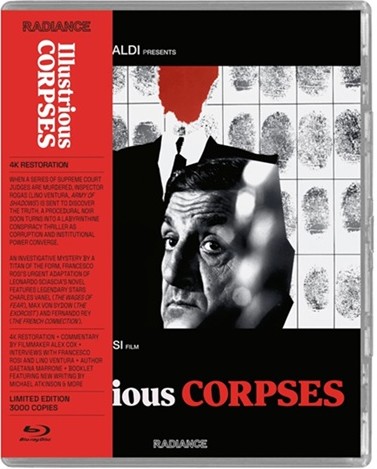
When you look back at cinema history, you often see features with elements that still feel modern. In Italy during the late 1960s through the 1970s, there was unrest in the streets and in government. Known as the “Years of Lead”, extremist political factions and supporters resulted in acts of violence and suppression. This period also inspired films that dealt with these struggles, presenting the horrors average citizens and low-level civil servants faced due to corruption of those in power.
One of the notable Italian pictures that dealt with these themes was Illustrious Corpses aka Cadaveri Eccellenti, a hit that didn’t specifically attack political parties (the film is set in a nameless European country, but it’s hard to imagine the tale being set anywhere else), but certainly made its feelings known on prevalent issues of the day. It’s a dark and impressive picture that, more than three decades after its release, was awarded the honor of being one of 100 films to be saved from the Italian Ministry of Culture. It is now arriving as a “Limited Edition” Blu-ray from Radiance Films.
The plot involves a series of murders involving prominent judges. Inspector Amerigo Rogas (Lino Ventura) is assigned the case. Things get complicated when other judges meet untimely ends and the officer is bluntly ordered by the far right-wing government Security Minister (Fernando Ray) and his underlings to find the “madman” responsible (or at least an appropriate suspect) in order to alleviate public fears.
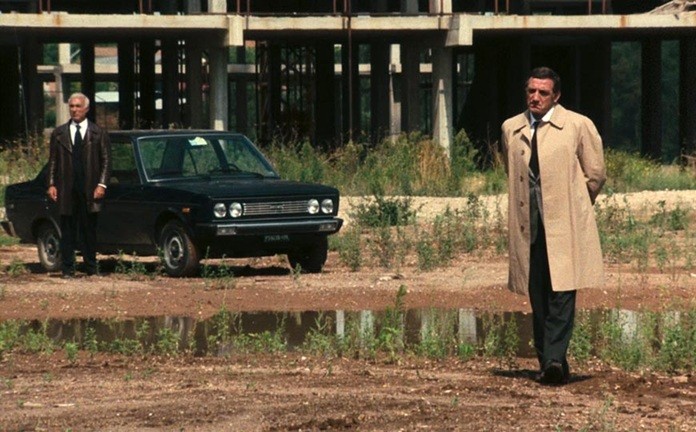
Rogas sees the first murder as a revenge killing by a pharmacist who was unjustly imprisoned by the judges. The inspector sets out to find the downtrodden figure, but as the number of victims increase, tying all the slayings to one figure becomes impossible. The protagonist also reconnects with a school chum and leftist journalist Cusan (Luigi Pistilli), who listens to Rogas’ growing concerns about who might be responsible. The lead’s life is put at risk when evidence suggests a conspiracy involving the country’s leaders. Paranoid, he fears that he is being followed, becomes unable to trust anyone at work, and doesn’t know how to move forward with the case.
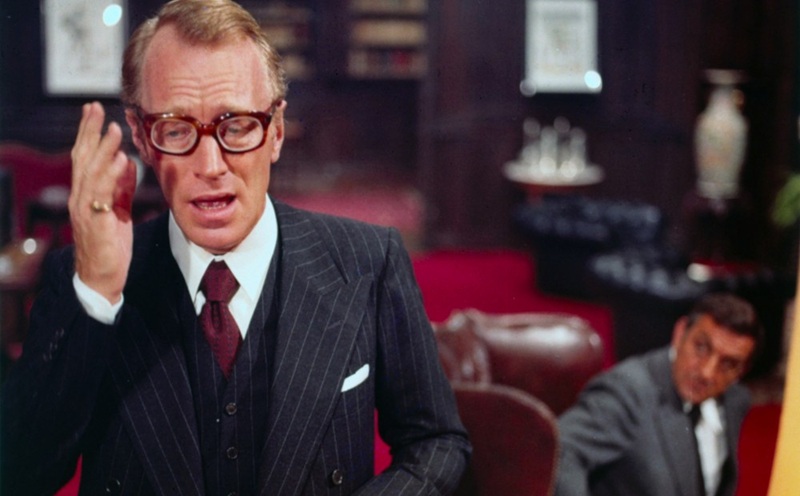
This is a political thriller and not a genre film, so the many murders are seen after the fact. Despite this, there is a sense of tension throughout as Rogas learns more about ways in which events are being manipulated and controlled. The views of superiors are increasingly distressing, including those of the Supreme Court’s president (Max Von Sydow), who considers himself all-powerful and incapable of error in any ruling he brandishes. A few unexpected connections are also drawn between various politicians as Rogas attends a party late in the picture. And, while the various officials aren’t overly explicit in their threats, they do manage to intimidate the protagonist and, by extension, viewers.
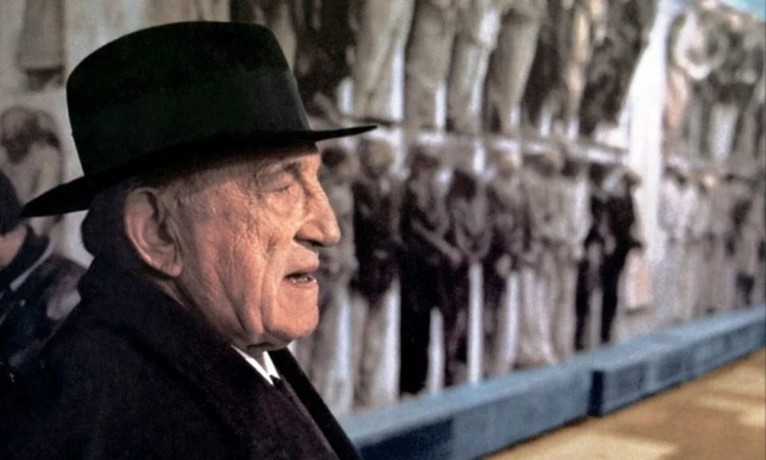
The movie is impressively shot too, opening with a character wandering through a crypt lined with actual ancient corpses displayed all around. As mentioned, there were many real-life protests during this period, and a few normally picturesque sites are littered with grime and dirt, adding a sense of unease. The architecture of many buildings is impressive to behold, though the interiors become increasingly darker, narrower and more claustrophobic. The film generates atmosphere in abundance and maintains the feeling as pieces of the truth are slowly revealed. When Rogas starts believing himself to be a hunted man, he moves through darkened night environments and is interrupted by flashes of light and sound. These well-captured moments generate a palpable threat.
Not to give away too many spoilers (skip this paragraph if you don’t want to know more), but this is not a happy story, and so the filmmakers deliver an appropriately grim and unsettling finale. Justice is not delivered and villainous, extremist forces running the country are left to continue influencing and controlling the government and county without reprisal. That may turn some off, but it feels appropriate given the tone of the picture and helps deliver the message with assurance.
Overall, this is an excellent picture. While its story is exaggerated, it manages to paint a believable picture of important figures involved in corrupt activities and feels relatable, not only during the era it was produced, but in the modern day as well. One can see why Italians admire the film so much, as well as its commentary on politics of the era.
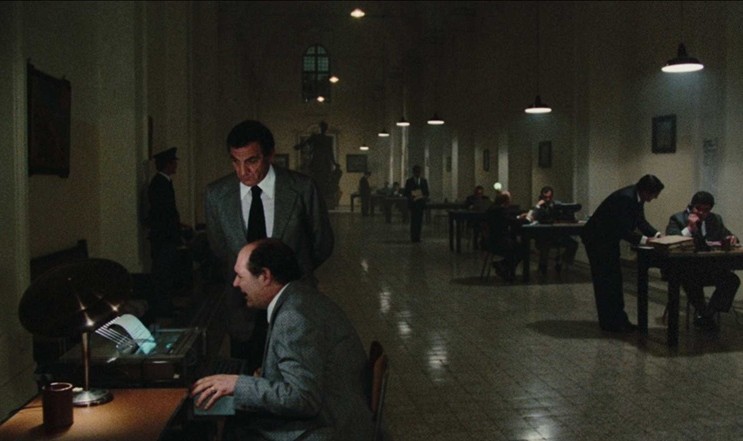
The Blu-ray disc itself is equally impressive. While the original negative of the movie appears to be lost, multiple elements (including two first generation reversal film elements) were located and restored in Italy to create a new 4K scan. The picture on display looks very good. There is only a tiny amount of natural grain in only a handful of scenes that is barely noticeable. Otherwise, the movie looks remarkably clean and clear. Many of the interiors, including the crypt, look excellent. This is a very strong transfer that will leave any fan pleased.
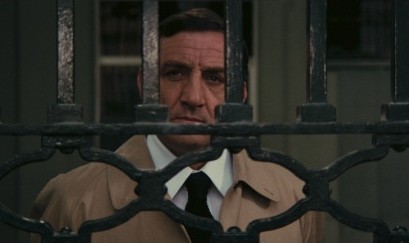
The disc contains a film historian commentary from Alex Cox (director of Repo Man, Sid & Nancy, Walker and many other titles). As with other movies he has presented, there is a great deal of informative discussion about the film, its history and the clever ways in which director Francesco Rosi frames the action. He notes early on how Rogas is often seen out in the open early, before the world around him begins to close in. Cox also notes that this is one of the few films in which a detective takes public transit. It hadn’t occurred to me, and was fun to see this as a technique that potentially helped to make the protagonist even more relatable to viewers. The speaker also notes the director’s interesting philosophy about using characters to engage audiences in his stories on an intellectual level. Cox makes many astute observations that I found enlightening, making for another engaging commentary.
There are also two archival interviews with director Francesco Rosi from a 1976 television interview. He expresses his political views and what he was trying to accomplish with the movie. Rosi is a compelling speaker, although his insistence that the story isn’t specific about Italy seems a bit of a stretch. While these kinds of events could and have since taken place in various countries under various regimes, it seems obvious he was specifically referencing issues in his homeland. Star Lino Ventura also takes part in one of the discussions, noting how he was cast and his working relationship with the filmmaker.
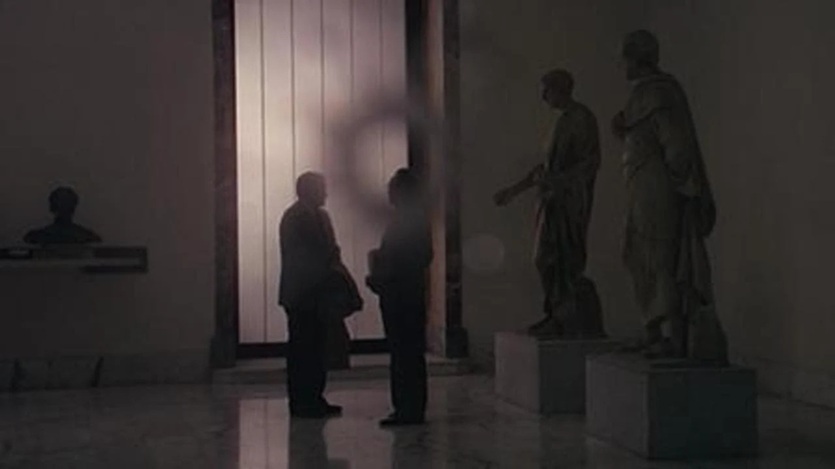
Professor Gaetana Marrone appears in a recently recorded segment, discussing the source material, how it changed under Rosi’s hands, and the sociopolitical context for the movie. Again, it’s a very informative piece and helps bring a lot more understanding about the background of the film and political strife in Italy.
The disc also contains a trailer and an image gallery. Finally, a booklet is included containing writing on the movie, as well as a newly translated interview on the movie with Rosi.
This is another great Blu-ray title from Radiance Films. Illustrious Corpses is another impressive title that still holds up nearly 50 years after its release. The picture quality is excellent and the extras add plenty of background information that help audiences unfamiliar with Italian history understand the movie even better. Any film fan who appreciates international cinema is well-advised to check it out.
