

Running Time: 129 minutes
This feature film from Vertical (previously known as Vertical Entertainment) opens exclusively at theaters in Albuquerque and other markets in New Mexico.
According to online sources, the classic Bram Stoker horror novel Dracula has received more than two hundred film adaptations, averaging out to more than one treatment per year. The latest production is from French director Luc Besson, known for his visually arresting titles La Femme Nikita, Leon: The Professional, The Fifth Element, Valerian and the City of a Thousand Planets. So, does this version have enough bite to make an impression?
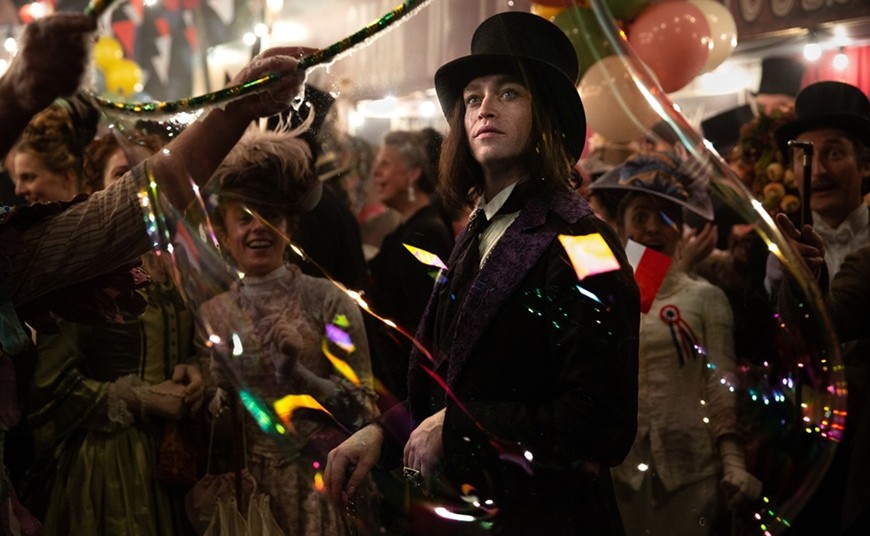
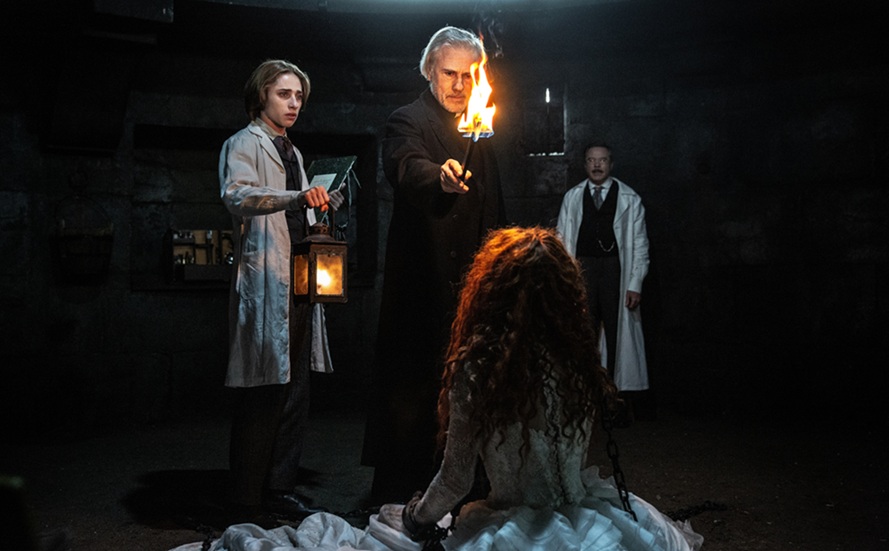
The film begins with Romanian prince Vlad Dracula (Caleb Landry Jones) leading his army against the Ottoman empire This is between visits to his adoring wife Elisabeta (Zoë Bleu). Tragedy strikes when Elisabeta is killed, with a furious Dracula renouncing God and becoming a vampire. Over the centuries, he seeks out the reincarnation of his partner, creating several female bloodsuckers around Europe to help him locate her. One day, he is visited at his castle by solicitor Jonathan Harker (Ewens Abib), who is handling one of the count’s properties in Paris. Dracula unexpectedly sees a picture of Harker’s fiancé Mina (Bleu again). Knowing the woman is his lost love, he locks Harker up and sets out to claim her. Back in Paris, Mina is concerned about her institutionalized best friend Maria (Matilda De Angelis) who is actually one of Dracula’s team. Maria escapes and tries to bring Mina and Dracula together, while visiting priest/vampire slayer (Christoph Waltz) attempts to prevent the reunion.
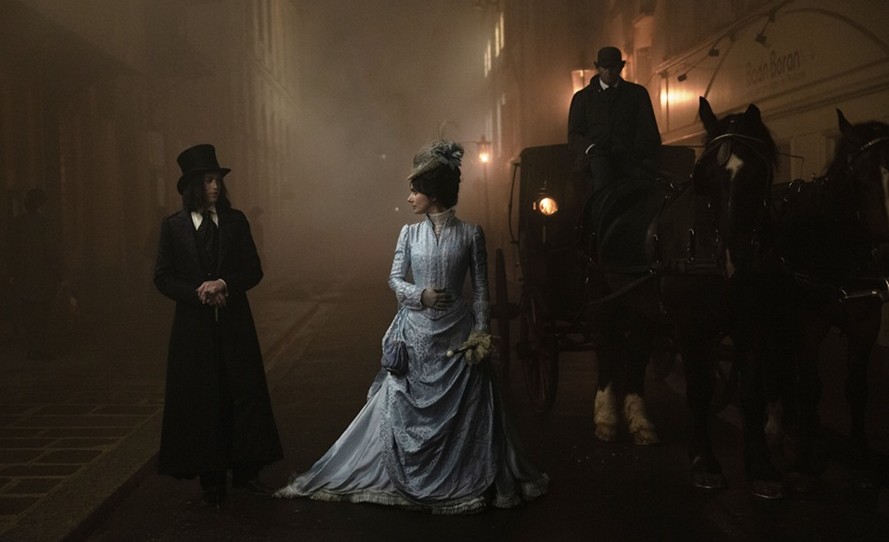
There have been a few tweaks to the original story, including a notable change in setting. This adds some beautiful French locations to the story. Dracula’s castle is impressive too, literally built into the base of a mountain in the Carpathians. Both provide some visual panache. Landry fares reasonably well as Dracula, particularly in scenes using old-age makeup (although the character closely resembles Gary Oldman’s take on the role in the 1992 film Bram Stoker’s Dracula during these scenes). Matilda De Angelis is fun to watch as a troublesome and at times unhinged minion of the title vampire. And Waltz is entertaining as the Van Helsing character, studying the bloodsuckers and their physiology. He also makes a valid criticism of Dracula’s motives in the hopes of convincing the villain to change his ways.
The picture has been sold as a more romantic take on the legend, emphasizing the count’s agony and obsession over losing the love of his life, and his efforts to search for her reincarnated soul over several centuries. Truthfully, this aspect of the story was handled more succinctly and effectively in the noted 1992 version. This feature opens with heated intimacy between Dracula and Elisabeta, but otherwise there isn’t any more depth or information about their eternal connection. This concept has always been a tricky one to pull off, and the fact that the characters are rarely onscreen together until the final third doesn’t help build chemistry between the leads or sell the everlasting romance.
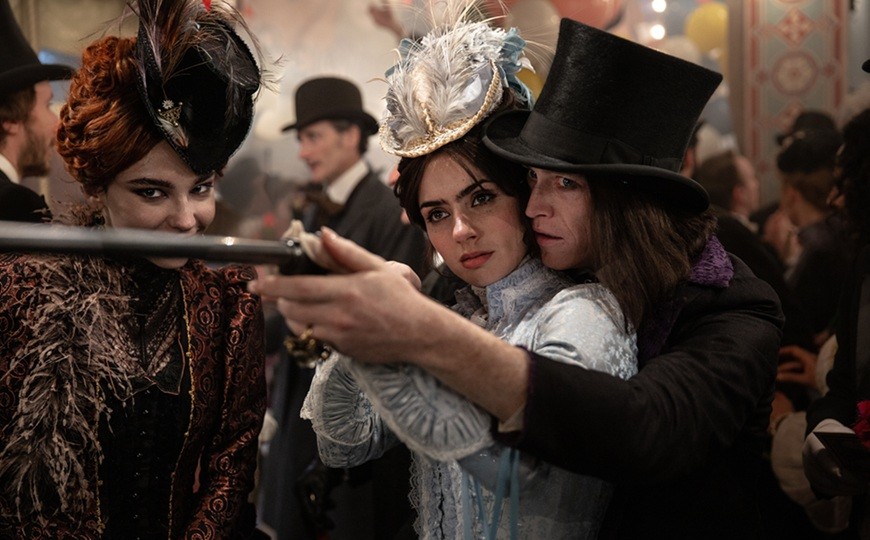
Additionally, the movie frequently switches tones between melodrama and exaggerated humor. For instance, there is a sequence involving Dracula attempting suicide repeatedly after the death of Elisabeta and failing. It’s played in far too light a manner given the severity of the situation, but it is amusing. One battle scene involving a vampire earns a big laugh when a flying, decapitated head bounces off of a shocked onlooker. The odd gag raises a smile, but the majority do not land. There is a section set at a grand ballroom that almost turns into a musical number and feels jarring. Dracula also has a set of castle gargoyles who serve as clumsy servants. These CGI-characters are intended to generate laughs, but are simply grating.
In the end, the love story is essential to this particular telling of the story, and it’s difficult to connect with the lovelorn characters. That added silliness results in a bizarre tone that never congeals. Having said that, bits and pieces work, resulting in a curious but inconsistent work. Overall, this edition of Dracula isn’t likely to leave a significant mark on viewers.
