

Running Time: 105 minutes
This feature film from A24 opens exclusively in theaters on February 20th.
In this day and age of constant reboots and remakes, it can be difficult to review a movie in which the original leaves a strong impression. This is particularly true when certain changes to the story are altered or updated. The new dark comedy/thriller How to Make a Killing is one of those examples. It’s a remake of the 1949 British classic Kind Hearts and Coronets. This picture revises the tale and puts it in a modern-day American setting. It’s a solid enough effort and one can’t blame the moviemakers for revising a 75-years-old film, especially when the has a line or two that would not be appropriate today (though it does display the main character’s true nastiness). But still, if you appreciate the original, you still may end up having a few issues with this update.

The story begins with Becket Redfellow (Glen Powell) sitting on death row and explaining how he ended up there. Becket states that his mother was from an incredibly wealthy family, but was expunged after falling in love with a man below her social station and getting pregnant. The lead grows up living a comparatively ordinary life, slightly envious of extended family members. As an adult, he is visited by childhood sweetheart and unhappily married aristocrat Julia Steinway (Margaret Qualley), who jokingly comments that he should attain his rightful fortune by wiping his relatives out. Indeed, Becket begins plotting the murders of seven family members in order to become the sole heir and gain billions in the process. His plans get complicated when police take notice of the strange deaths and he falls for Ruth (Jessica Henwick), the girlfriend of one of his targets.
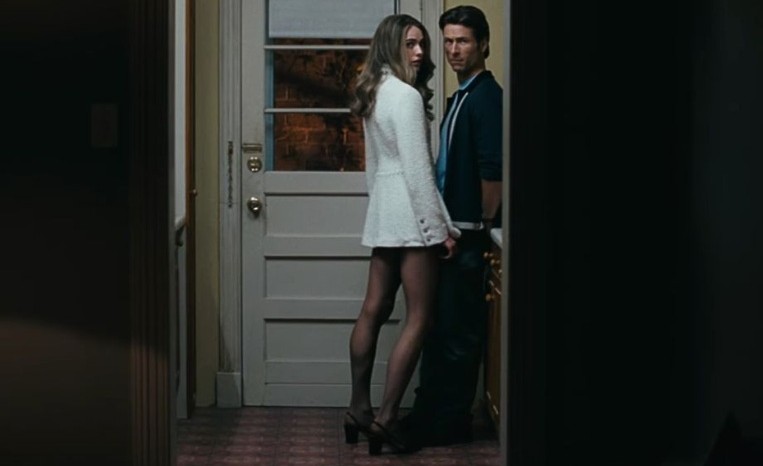
The movie casts a number of actors as various Redfellow family members, including Bill Camp, Zach Woods, Topher Grace, Raff Law, Sean Cameron Mitchell and Ed Harris. With the exception of Camp, most of the characters are only in a scene or two, acting horribly before Becket attempts to eliminate them. This broadness is fine in a comedy and a few of these bits are funny, yet many of the characters still don’t end up lingering for long in the memory (the previous version had a very humorous way of getting around this potential problem).
At least a couple of the murders are amusing to witness, with one involving an anchor and another in which the character awkwardly tries utilizing a bow and arrow. Some offhanded comments from the lead and investigators are amusing as the bodies pile up, and the cutaway to the family mausoleum and yet another funeral is hilarious as well (even if this gag is borrowed from the original film).
Powell is capable in his role, although this reviewer couldn’t help but note that the film softens his edges and, despite many of his actions, present him as more of a character to root for. Becket is even threatened by family members at a couple of points. It’s a shift from the original film’s lead, an individual who becomes just as cold, pompous and even more cutthroat than those he desires to kill. In general, this reinterpretation doesn’t emphasize the satirical story elements enough or work as effectively. It feels especially strange when the tone shifts more towards drama, presenting Becket as deeply dismayed about the possibility of losing Ruth.

I’m attempting to remain impartial, but the original film did make a significant impact on me. There is a reason it’s a classic among many film historians. Admittedly, I do believe that those witnessing this tale for the first time won’t have the same kind of problems as I did. For me, while this update is reasonably engaging, but also makes a few missteps in updating the story that prevent it from achieving the same kind of success. How to Make a Killing doesn’t slay so much as leave one feeling a sense of apathy about the entire exercise.
