
This “Limited Edition” Blu-ray set from Radiance Films is currently available for purchase.
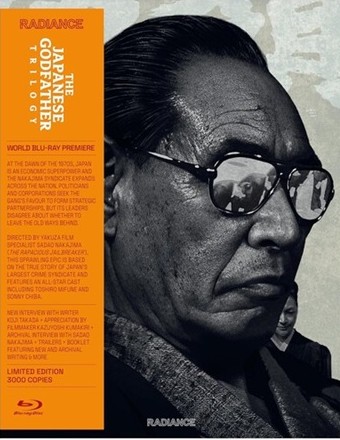
The 1970s were something of a heyday for movies about the criminal underworld. There were literally hundreds arriving from all over the world. You had multiple titles from Italy like Borsalino (1970), The Valachi Papers (1972), as well as the American Oscar-winners The Godfather (1972) and The Godfather Part II (1974). Even Martin Scorsese was beginning to dabble in the genre with Mean Streets (1973). Japan certainly was making its fair share of pictures dealing with the yakuza, with one of the standouts being the Battles Without Honor and Humanity series, four films that were produced between 1973 and 1979.
Another major highlight is the Japanese Godfather Trilogy, which comprises three all-star yakuza pictures that were produced in quick succession (although not back-to-back as one might expect) and released between 1978 and 1979. Radiance Films is putting out a “Limited Edition” box set of the series with a few notable extras that will give some additional background information to help new viewers understand the movies even more than before.
The first picture in the set is Japanese Godfather (1977) aka Yakuza Senso: Nihon no Don and it does rank among the country’s best movies of this era about the criminal underworld. Admittedly, there are a couple of moments that may have been inspired by other genre titles, but the story offers unique and interesting details into this organization and how it works.
This opening movie involves a great many characters and moves like a bullet. Japanese audiences at the time would have been familiar with all the famous actors and their past roles (which would help them immediately have a sense of what type of individual each person was). Coming in fresh, you’ll need to give yourself ten or fifteen minutes to get a handle on all of them, but once you do, the story is compelling.
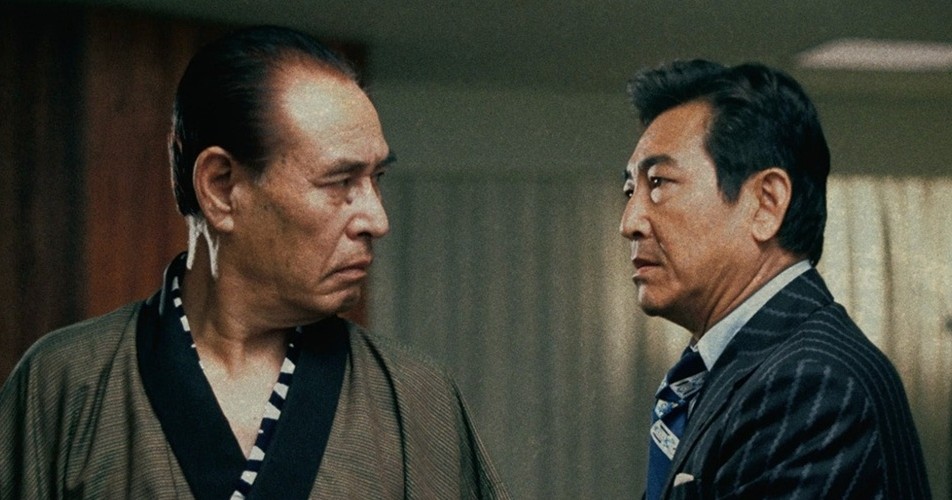
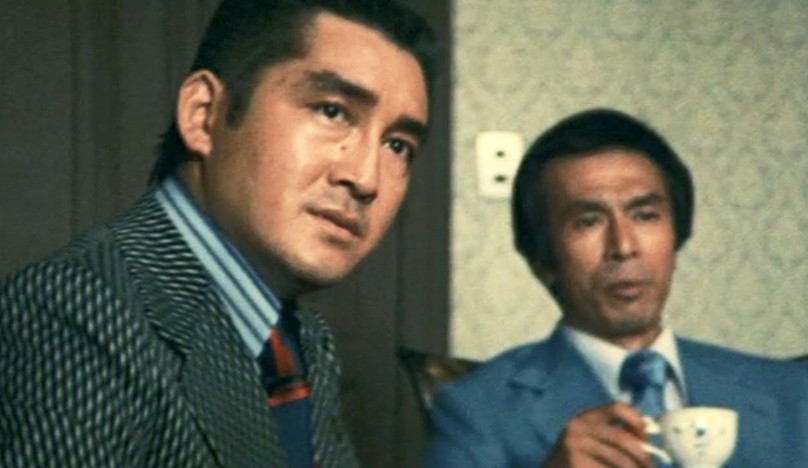
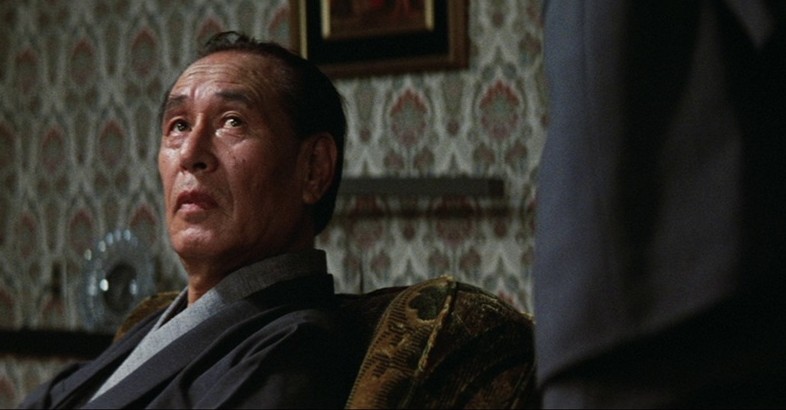
The makers claim that it is all based on a true story. It is set in post-war Japan of the late 1950s and 1960s. Kazumasa Sakura (Shin Saburi) is the head of the Nakajima Group, a yakuza gang attempting to make major inroads into business and politics and become the biggest gang in Japan. But, he’s also an old man and is suffering from health issues (including high blood pressure) and suffering over the impulsiveness of a rebellious daughter. His Chief and next-in-line is Shuhei Tatsumi (Koji Tsuruta), a strong, old-fashioned enforcer who treats his peers respectfully (at least, as much as these kinds of characters can), who is now also struggling with a weak heart. On hand to help is Shiro Matsugae (Hiroki Matsukata) and a team of other members, some of whom are more used to doling out violence than subtle manipulation.
Over the course of the story, there is conflict between the Nakajima Group and other criminal units within the yakuza, who resent their attempts to gain more power and influence. Naturally, some of the businesses who make deals with the leads are asked to change allegiances, leading to more conflict. And there is a subtle sense of competition within the group itself, with many beneath the primary members wanting to rise in the ranks and take more important roles.
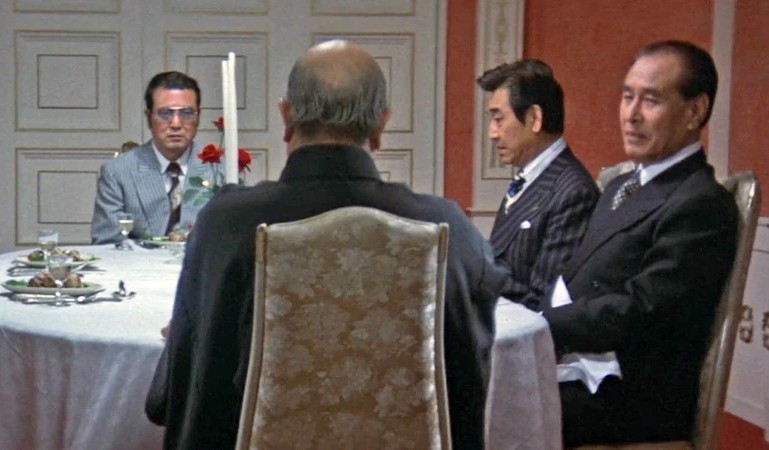
The movie is primarily focused on dealmaking, with the Nakajima members attempting to find their way into legitimate businesses and exert some control over them. They are understandably looked upon with derision and initially note difficulties making inroads in various areas. Of course, you also see the police and media get involved, as certain individuals have secrets that they’d rather keep hidden from the press. As expected, the film is also interested in backstabbing and how all the characters attempt to maneuver and adapt to the changing nature of their business. It also spends some time with a few lower-ranking gang members and their subplots doesn’t amount to a whole lot, but it is fascinating to see everyone try to survive in a brutal and unforgiving environment. Tatsumi serves as the most relatable, compelling and somewhat tragic character, who understands the threat and danger and, knowing that his time may be limited. He avoids posturing like others in his group and seems more introspective.
Another interesting character not mentioned previously is the son-in-law of Sakura, Yasuo Ichinomiya (Etsushi Takahashi). He is a doctor who finds himself ousted from the medical community because of who his fiancée is. His journey goes in a fascinating direction, as he finds himself becoming more embedded within the gang by association, eventually being given money to open his own hospital (which ends up treating many gang members). Ichinomiya ends up in the middle of a difficult decision about the fate of one of the characters during the climax and has an interesting arc from a well-meaning MD to a person serving the criminal interests of his wife’s family.
The action is nasty and bloody, with a couple of disturbingly memorable moments as well. This is a very strong gangster picture that really grows on the viewer as it progresses and makes a lasting impression.
The picture quality on this release is very good. This is the first time it has ever appeared on Blu-ray, and the high-definition digital transfer, while not spectacular, is solid. Viewers won’t have any issue with the way the movie looks. The extras include a 2020 archival interview with the late director Sadao Nakajima, who focused on his relationship with Koji Tsuruta, which had its share of ups and downs over the years. He talks about how they parted ways, but were forced to overcome their differences and work together for this picture. The director seemed pleased that, despite their earlier problems, Tsuruta would stand up for him when anyone would question his decisions. You’ll also get trailers for the pictures.
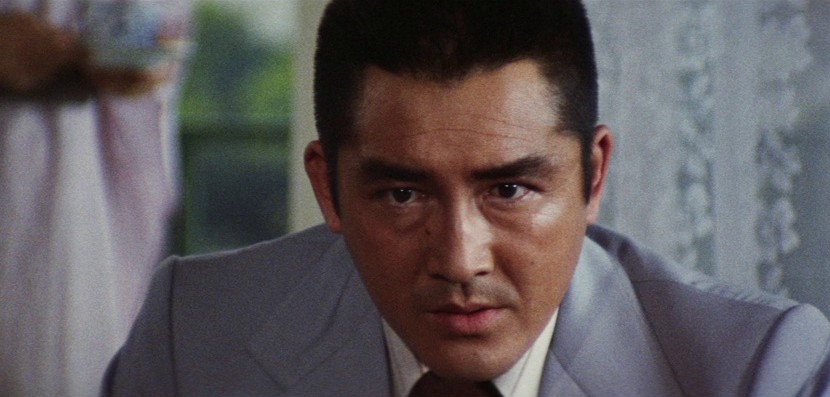
Since the first title was a hit, the sequel, Japanese Godfather: Ambition (1977) followed later in the year. It isn’t quite as dynamic as the original, but it is an excellent sequel that keeps the story moving and shows what happened after the events of the first picture.
After a health scare, Kazumasa Sakura (Shin Saburi) still leads his yakuza outfit, the Nakajima Group, and continues his attempts to earn more power and influence. Without a second in command, a couple of characters are subtly vying for the position, including Shiro Matsugae (Hiroki Matsukata). This time out, the gang set their sights on various construction businesses, as well as opening a club with lovely, high-class ladies not only to make money, but to lure important clients with the hopes of making deals and even getting them involved with some of the employees (and using it to their advantage). This leads to another major subplot involving the president of a foreign country. The gang wants this dictator and country to exclusively deal with them and end up trying to lure him with a potential wife.
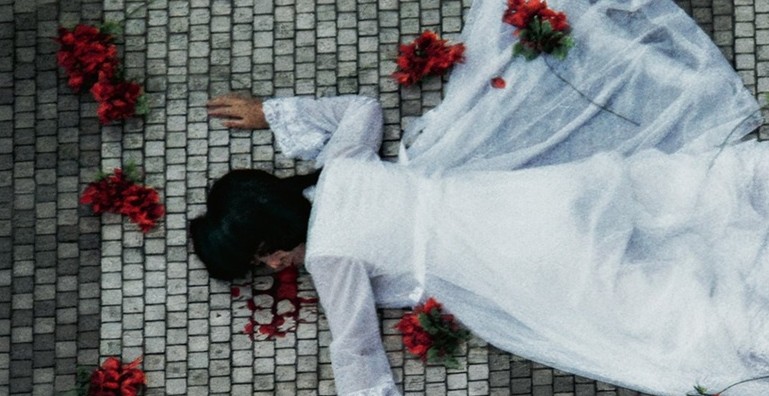
Of course, there are also conflicts with competing gangs and the police, resulting in plenty of action and shootouts. There is a particularly thrilling chase involving Sakura’s rebellious daughter, who continues to cause problems wherever she goes. Matsugae ends up heavily involved in the club, developing a close relationship with the wealthy heiress (and friend of Sakura’s doctor, Ichinomiya) who helps set up the operation. But after a while, even Matsugae becomes depressed by the stress and toll the job has, especially its effect on others, in particular the young woman chosen to be the visiting president’s bride.
While again, yakuza leader Shkura is the throughline for all the pictures, this sequel ends up being Matsugae’s story, with the character going through a similar sort of existential crisis as his predecessor. It all leads to a disturbing climax that results in some of the leads meeting an unfortunate, but perhaps expectedly brutal end. It may not be quite as fresh and powerful as the original and its slightly longer and flabbier than its predecessor, but it’s still an excellent picture that is much better than most gangster epics.
Again, the picture quality is strong and on a par with the previous release. Extras on this disc include an interview with filmmaker Kazuyoshi Kumakiri (Hole in the Sky, Sketches of Kaitan City). During his film studies program, his professor was Japanese Godfather series director Sadao Nakajima. He shares stories about his interactions with the director. Amusingly, he recalls that Nakajima would walk around in sunglasses and be accompanied by an entourage (not unlike some of the gangster characters in his films). It did take some time for Nakajima to warm up to him, but the young man states that he learned a lot from him and appreciated all of his comments and advice. Trailers are also included.
The final Blu-ray in the set contains Japanese Godfather III: Conclusion (1978). As the title suggests, it’s the last movie in the series. It follows the yakuza as they develop presences in territories like Guam and Saipan, which could lead to casinos, prostitution and drug trade empires. Kazumasa Sakura (Shin Saburi) and his Nakajima Group are making inroads, but find themselves being pitted against another by a major figure leading an association of all Yakuza groups. Run by Kosuki Oishi (Toshiro Mifune, who was featured in subplots of earlier films), the two are told to try to make peace as they expand their businesses. They ultimately agree to run the major gambling house together, but of course both are simply waiting for war to ultimately break out.
When Oishi’s daughter Ikuko (Yukari Yamamoto) falls for the son of a notable figure with past ties to the Nakajima Group (in previous films), the romance complicates matters. A hidden note involving a large sum of money also becomes a major plot point. Sakura’s son-in-law, the doctor Yasuo Ichinomiya (Etsushi Takahashi), who desperately wants funding to further advance his cancer research, is given a task to complete that results in his disillusionment with the entire yakuza. It all ends in tragedy for all but one of the characters.
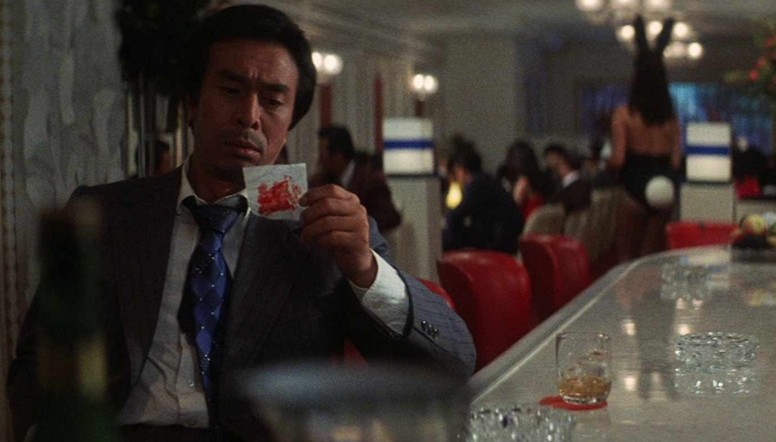
This is the weakest effort of the bunch. It’s a bit slower moving than the two previous installments. And because of the deadly nature of these stories, there are fewer surviving characters from the previous installments to follow. Viewers will also have to get over seeing Ichinomiya shocked by the devious acts and techniques used by yakuza (particularly after he helped them eliminate a character two films ago).
But at least the tropical locations are nice to look at, there is some good action, and the final act is generally engrossing. This is a decent movie, it’s just that the previous chapters were so strong it can’t quite live up to them. But it does provide proper closure to the series, which those watching will appreciate.
The Blu-ray picture on display here may be the best of the three, just because the island locations are naturally beautiful. As for the main bonus on this disc, it’s an interview with one of the co-screenwriters of the series. He explains how the movies were made. And yes, it turns out that the producer of the movie called him up after seeing The Godfather and asked him to create a Japanese equivalent of that movie. He goes over adapting the family theme behind the gangs for Japanese audiences, as well as his experiences interviewing actual yakuza and incorporating a few real stories into the picture.
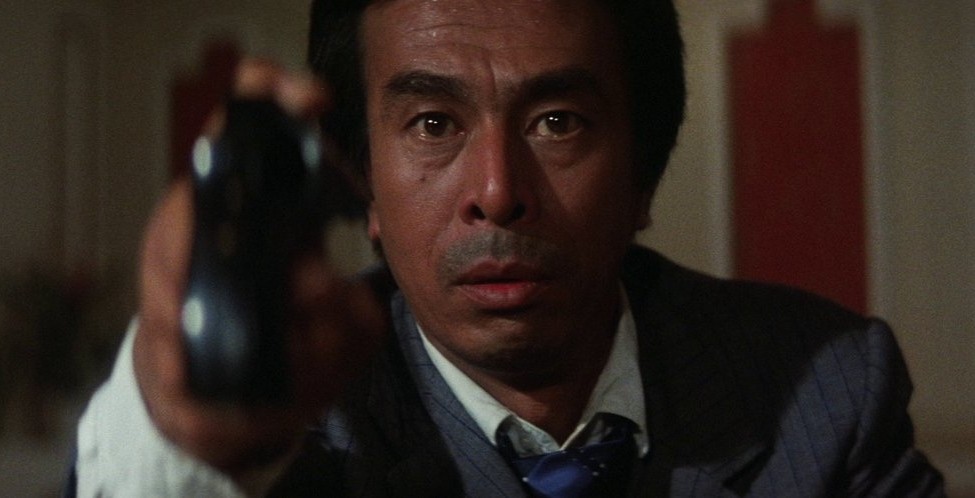
If you appreciate mobster movies, then the previously hard-to-find Japanese Godfather Trilogy is well worth checking out. The first picture is phenomenal, the second very good, and the third passable (and at least presenting a finale to the story. Radiance Films has done another fine job in presenting a fascinating international production to North American viewers.
