
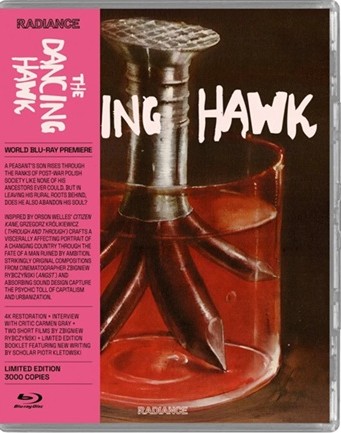
This “Limited Edition” Blu-ray from Radiance Films is currently available from most retailers.
Over the past couple of decades, I’ve been viewing more and more Polish cinema. If you’re relatively new to movies from this part of the world, you should be warned. While there are a few entertaining comedies, the cinema of this nation isn’t primarily known for bringing smiles on the faces of viewers. Instead, their films delve into incredibly grim subject matter. This is completely understandable, as the nation has been through a number of awful events like Nazi occupation, followed by a period under the control of Russia.
Still, if you go in knowing that you may be seeing something grim and, to Western eyes, more experimental than a Hollywood narrative, you may find yourself being wowed by what you see. A filmmaker from Poland who is only recently getting his due is Grzegorz Krolikiewicz. Radiance Films recently released an impressive “Limited Edition” Blu-ray of Through and Through (1973). It was a dark drama based on a true story that showcased the trials of living under oppression and how it turned one couple into killers.
Now, Radiance Films is putting out a “Limited Edition” Blu-ray of another title from the moviemaker. The Dancing Hawk aka Tanczacy Jastrzab is another unrelentingly bleak tale about the struggles of an individual trying to make a better life for himself and improve his social standing and class, only to fail miserably. And I was even more impressed by this picture than the previous Krolikiewicz one, largely for its fascinating and original storytelling techniques that include staggeringly gorgeous photography. Any aspiring cinematographer should pick up this Blu-ray immediately, as the imagery on display will make a permanent impression.
The film itself isn’t a straightforward narrative. But for those looking for a general synopsis, the plot details the life of Michał Toporny (Franciszek Trzeciak), a peasant boy who grows up in squalor on a farm. Viewers see the difficulty of life through World War II and then under the Russian Stalinist government. Determined to improve his standing in the world, he leaves for the big city and educates himself under the political system, plotting to improve his life socially and economically. His growing obsession with wealth and power lands him a job building and running a factory, while following orders from the government.
Alas, in order to succeed at his job, he ignores the well-being of villagers and commits other harsh acts, including leaving important family figures from his hometown behind, and later ignoring his wife Wieslawa (Beata Tyszkiewicz) for the sake of his work. Toporny also pays little attention to his son, later worrying that the youngster’s protests of the government will put his position in jeopardy..
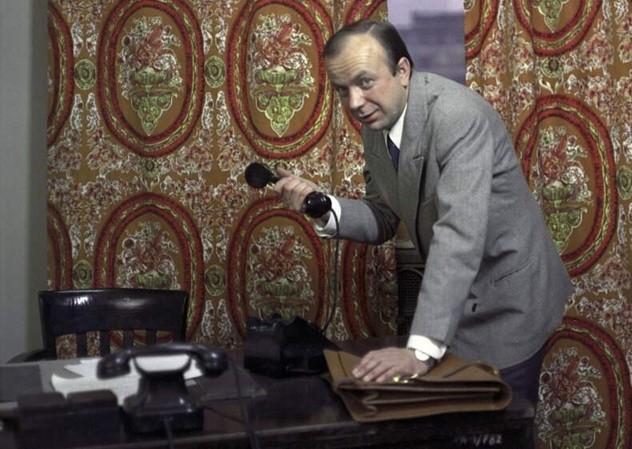
All of the lead’s efforts don’t result in happiness, as Toporny’s wife ultimately cheats on him with his coworker Zatorski (Jerzy Zelnik), he fails to get promoted to a high position, and never truly escapes his class position or archives success in the manner he dreams of. As the film comes to a close, he tries to return to his old home and reconnect with his past, only to see it torn apart and destroyed. His life comes to a close with no sense of identity and little to show for all his attempts at work to make a name for himself.
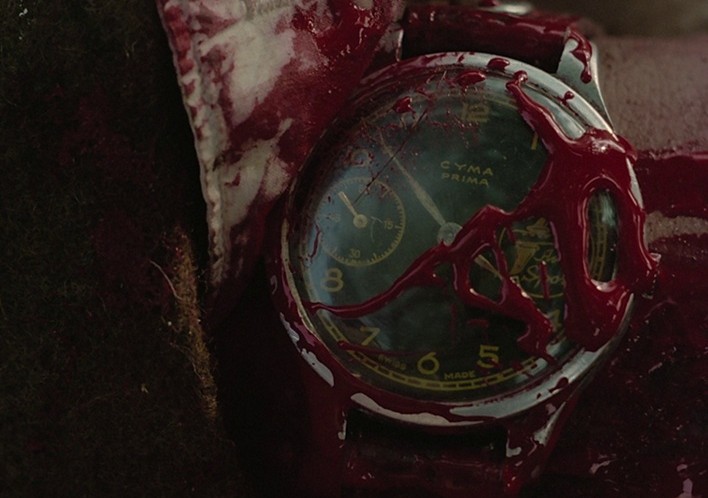
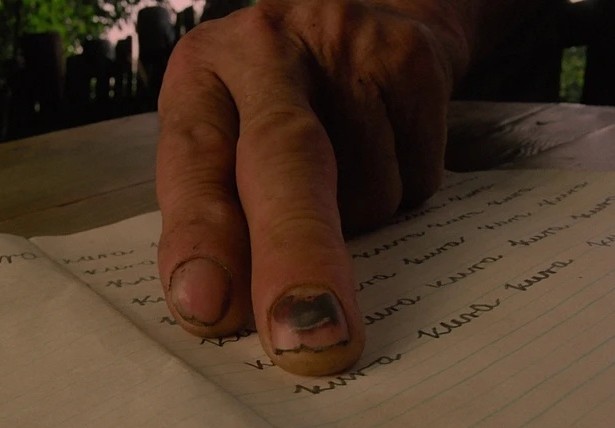
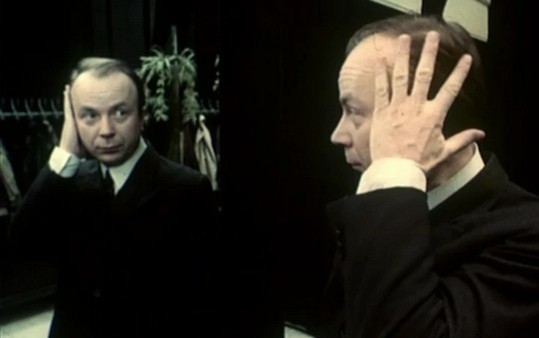
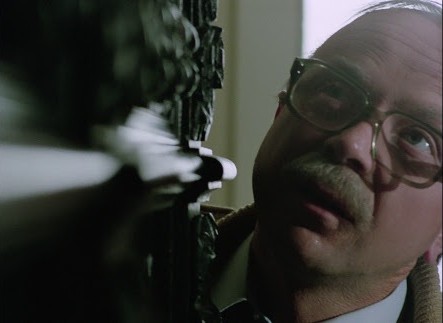
As mentioned, it’s hardly fun stuff. However, it is presented brilliantly here. The 1.37:1 box-like aspect ratio really helps one feel a sense of claustrophobia and the walls constantly closing in on the character. And the unique camerawork and lighting can be described as simply incredible. The director of photography uses wide angles as well as macro lenses to present extreme close-ups. There are haunting images of a bar of soap (a character frantically states that the soap is made from human fat) burning melting on a stove, and a creative use of a mirror, as Toporny begins to lose his soul and finds his own reflection not matching his own movements.
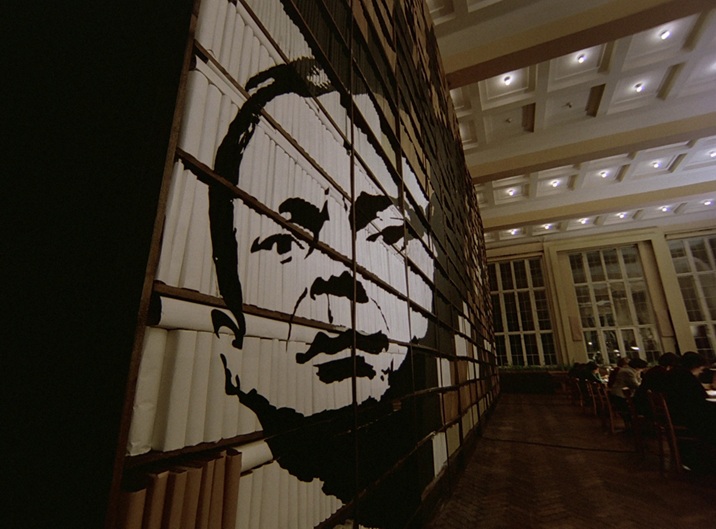
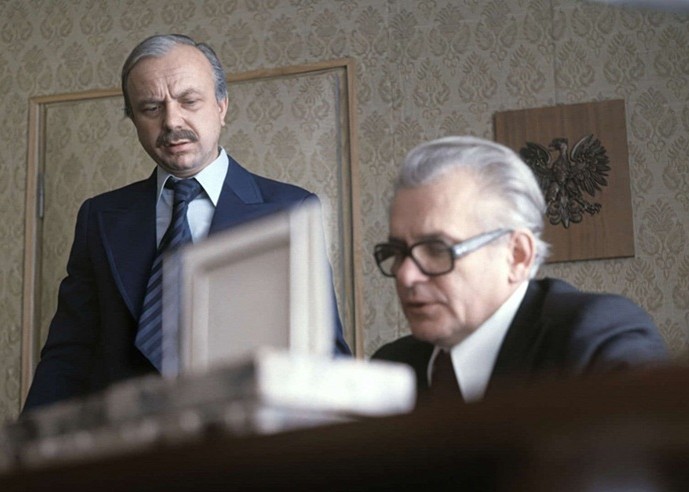
Additionally, when attending school viewers see Toporny in a room filled with books up to the ceiling, which tower over him. It’s an amazing image. Additionally, after he secures a job in the factory office we see the mundanity of his life at work. The film uses long shots that feature the character repeating the same actions, statements and fears over and over again. It’s an unusual but incredibly effective way to display the endless drudgery and frustration he feels on the job, with all of his efforts going in circles and not resulting in any progress.
The imagery on display is not only impressive, but this Blu-ray also presents it all beautifully thanks to a stellar National Film Archive of Poland 4K image restoration. It is jaw-dropping, with a crystal clean image that really helps the photography pop even more. I was incredibly taken by the visuals throughout and can’t imagine the movie looking any better than it does here.
And as noted, there is a loose story but the movie isn’t concerned with a conventional narrative, often jumping around in time. Instead, it appears to be really most concerned with creating a foreboding and depressing atmosphere of a life wasted trying to achieve greatness under an oppressive system. Overall, the movie succeeds effortlessly in its goals, and those willing to go on a dark and depressing journey will be as impressed with the title as I was.
As for extras on the disc, there is an engaging video essay by a film critic who goes over the career of director Grzegorz Krolikiewicz and provides a detailed analysis of this movie. While consistently well-reviewed, this expert notes that the more experimental storytelling, lack of direct explanations for the events being depicted and less-than-appealing/marginalized lead takes some getting used to. She notes that movie enthusiasts have had a hard time finding his titles for years, and that even in his homeland he didn’t initially get as much attention as filmmakers like Andrzej Wajda, Pawel Pawlikowski and Agnieszska Holland. However, that is now changing as more are discovering his works. She also notes many of the themes of the filmmaker and the ways in which this title also explores them.
The film’s cinematography by Zbigniew Rybczynski is remarkable, and the disc also includes two short films made by Rybczynski (who later became a director himself). The first is Soup (1975) aka Zupa, a darkly humorous work that combines bright primary colors with animated photographic images to present a man living a mundane and repetitive existence (he eats a lot of soup, day after day). The second, Oh! I Can’t Stop! (1976) aka Oj! Nie Moge sie Zatrzymac! features a camera hurtling through various environments, homes and buildings in a town using one continuous shot. It’s a lot of fun and I greatly admired this effort. Rybczynski would go on to direct many music videos, including notable ones for Simple Minds, Pet Shop Boys, The Art of Noise and Rush. Even those familiar with Polish cinema may not have had the opportunity to see The Dancing Hawk, a striking effort that does leave an impression on the viewer. Thankfully, Radiance Films is now making the memorably effort available to everyone with a wonderful new Blu-ray release that includes a shockingly crisp appearance and impressive bonuses. Fans of international cinema should definitely pick it up.
