
This “Limited Edition” Blu-ray from Radiance Films is currently available at most retailers.
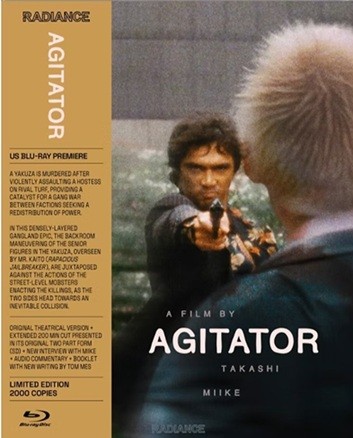
If you’re familiar with Japanese cinema, then you’ll no doubt be aware of filmmaker Takashi Miike. For years, he’s been pushing boundaries in a wide variety of genres. He is perhaps most famous for horror pictures like Audition, but has also made samurai pictures like the brilliant 13 Assassins, science fiction titles like Terra Formars, as well as plenty of mobster movies. In fact, there likely isn’t a genre he hasn’t dabbled in at one time or another.
Miike is also very prolific. If he manages to keep up his pace, by the time he retires he will have easily made 75 pictures, and might even approach 100. Some of his titles are lavishly produced, others are shot very quickly on-the-cheap.
Agitator is a Yakuza movie that has made a lasting impression on many movie fans. It’s a Yakuza feature that was a quick, shot-on-video, direct-to-disc effort. In fact, the title was initially released in its homeland as two separate movies that totals 3 hours and 20 minutes (it does include a brief recap at the beginning of the second feature). When it was picked up for distribution internationally, the filmmaker created a 2 ½ hour version. Over the years, some have claimed that the two-part version is the director’s cut, but in reality, this is not the case. Miike was left alone and put together two different editions, both of which in his eyes are official.
Radiance Films is now releasing a “Limited Edition” Blu-ray of the title, presenting for the first time both cuts of the movie so that fans can compare and ultimately pick their own favorite. It should be noted that, as this project was made guerrilla style and shot on video, it isn’t the prettiest looking effort in the director’s catalog. But this is the best possible edition of the movie. It contains both versions of the title, as well as an informative film historian commentary, as well as an interview with Miike and a trailer. I’ll be honest and admit I prefer the director’s more polished productions, but there is plenty to appreciate here and those who admire his work should immediately pick this disc up.
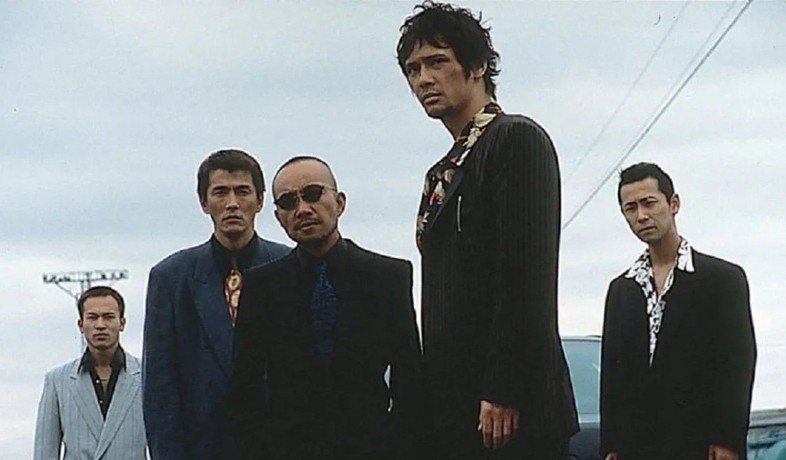
Kunihiko Kenzaki (Masaya Kato) is a member of a criminal outfit going through a major conflict among Yakuza groups. A major player in the overall organization, Mr. Kaito (Hiroki Matsukata) wants to take down and absorb smaller Yakuza gangs and build a massive empire. Two of those forces are bitter enemies, and it’s also noted that Kaito and others often make deals with smaller Yakuza units to do their dirty work for them, creating a rather messy and complicated underworld. Kunihiko is a hired gun and serves his group loyally, but begins to suspect strange goings on behind-the-scenes after being sent out on a hit.
Sure enough, there are all kinds of double-crosses going on within the Yakuza and, as the story progresses, he and his team eventually find themselves being absorbed into the larger organization. The figure struggles with serving other masters. He also finds a lover who presumably wants him to break free of gang life and start anew. However, it becomes clear that Kunihiko is far more likely to honor his brothers in arms than walk away from the Yakuza.
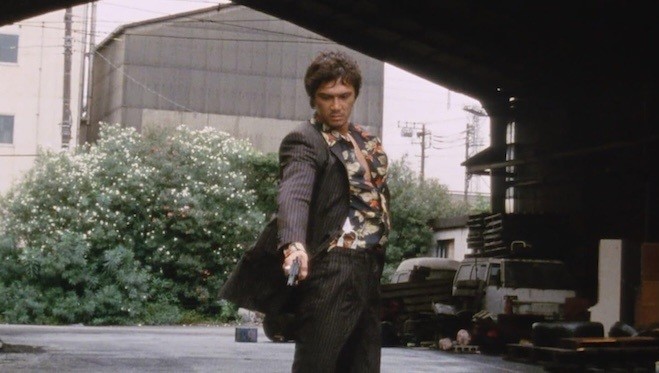
It’s a tragic tale of sorts and one that appears to want to present the Yakuza in a more accurate light. This is a Miike movie, so viewers will see some atrocious acts and nasty behavior from all (although Kunihiko is at least a figure who keeps his promises). Nothing about being a gang member is presented as fun and it all seems a path to certain doom, even for those who rise within the organization. Star Kato is charismatic, and it’s also impressive to see a notable actor like Matsukata appearing in a shot-on-video, direct-to-disc effort.
I will admit that, for me, there is a lot of exposition and set-up early on, with so much plotting and planning that it really takes a significant amount of time to find its footage.
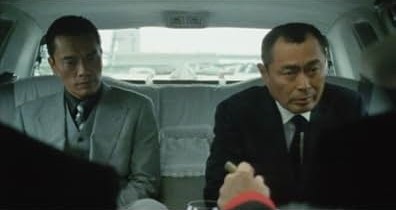
But the final hour, in which the lead and his gang are forced to deal with potentially being taken over by a rival organization, is fascinating to watch. We see one or two agree to swap sides to survive, but find them being treated as dishonorable by their new employers and struggling with guilt over their actions. This type of drama is unique, tense, and engaging to watch, but it takes a bit too long to get there. And while there are interesting shots and set-ups and the video image presents some urgency to the proceedings, the lack of clarity is noticeable and occasionally distracting. But that’s the way the film was intentionally made and some viewers will appreciate this approach. Even for me, the power of the final hour makes up for a slow opening.
The international cut was blown up to 35mm for its theatrical release, while the 2-part movie very clearly shows its video origins. The extra footage consists of some extended scenes and new ones again involving various Yakuza plots, as well as a lengthy scene where the central gang visits a bordello. Viewers see how differently each treats the women that they are with. Honestly, I preferred the international cut, which dispenses with the extra exposition and focuses on the takeover action and brief romance plot.
This disc’s extras are very good. Japanese cinema expert Tom Mes is very well-informed and does an excellent job of detailing how this Yakuza picture was a bit more dangerous than other genre pictures of its era. He’s a big fan of the movie and makes some convincing arguments along the way (although I still have a few issues with the title). The information relayed is very helpful in understanding the background behind the briefly popular direct-to-video market and why filmmakers and sometimes actors found these productions appealing. Essentially, it allowed Miike the freedom to do whatever he wanted with little interference. Additionally, a few stars, who might have been tired of playing the same type of character in the same type of movie, could stretch with Miike and do something a bit wilder.
Mes also laments the loss of the video store for streaming. While I certainly agree to a large extent, one thing that has improved today is access. Back in the day, your only options were VHS tapes at a handful of video stores which consisted of the owner’s choice of stock (or you could buy fuzzy bootlegs of international and hard-to-find pictures once a year if there was a convention somewhere near you). Today, there are still many hard-to-find titles and, yes, it can be an overwhelming process to come across and discover something new. But, while things aren’t perfect, you at least have a better chance of tracking down something specific with a multitude or physical media choices and streaming outlets. Anyway, the commentary is very strong and I learned a lot about this movie from listening to it.

There is also a great, recent interview with Takashi Miike, who talks about working on this movie. He notes the freedom he had shooting guerilla style and trying to make the film almost feel like a documentary. He notes simply running to locations with a tiny crew and shooting without permission, which he states was dangerous but invigorating. The filmmaker notes that he couldn’t do this today and seems amused that he got away with so much on this production, including a scene with a character in a real traffic intersection, spinning his wheels and veering off.
A trailer is also included on the disc. A booklet with more writing on the movie and reversible packaging is included with this release.In spite of a few issues, Agitator is an interesting and unique Yakuza picture that builds momentum as it progresses and features a strong climax. Radiance Films has done another excellent job with this title. The source material is lower-resolution video than what is prevalent today, so this isn’t a reference disc, but it is as good as the film can possibly look. The fact that both versions are present is also impressive. Miike enthusiasts, and those looking for a different kind of Yakuza picture, should check it out.
