
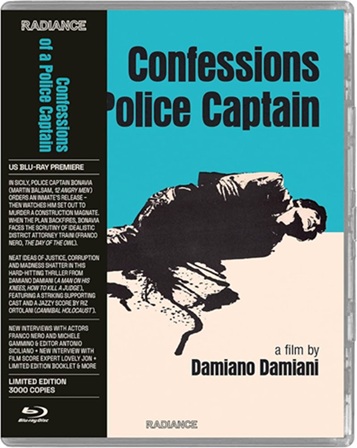
This “Limited Edition” Blu-ray from Radiance Films is now available for purchase.
While I like to think that I have seen a great many pictures from around the world, I must officially thank Radiance Films for introducing me to a great many new ones… some of which I had never even heard about. Over the past few years, the distributor has been digging deep into the career of Italian filmmaker Damiano Damiani, bringing attention to titles like The Day of the Owl, The Case is Closed: Forget It, How to Kill a Judge, Goodbye & Amen, and A Man on His Knees to name but a few. Typically, these pictures were highly critical of extremist governments and their practices, exposing corruption among high-ranking officials and sometimes shocking audiences while doing so.
Recently, I was lucky enough to reconnect with an old friend from Italy, who actually brought up Damini in passing during a conversation. The director’s work is extremely well-respected across the ocean and has only risen in esteem over the years. But were it not for all of these releases, I wouldn’t have had much to say to my pal about the writer/director. Thankfully, I could actually talk about some of Damiani’s titles with him and not completely embarrass myself. So, once again, thank you Radiance Films.
This week, the distributor is presenting Confessions of a Police Captain, which was made during a particularly prolific period for the moviemaker. It’s another exceptional title that was a huge hit during its original release and is now rightly considered a classic in its homeland.
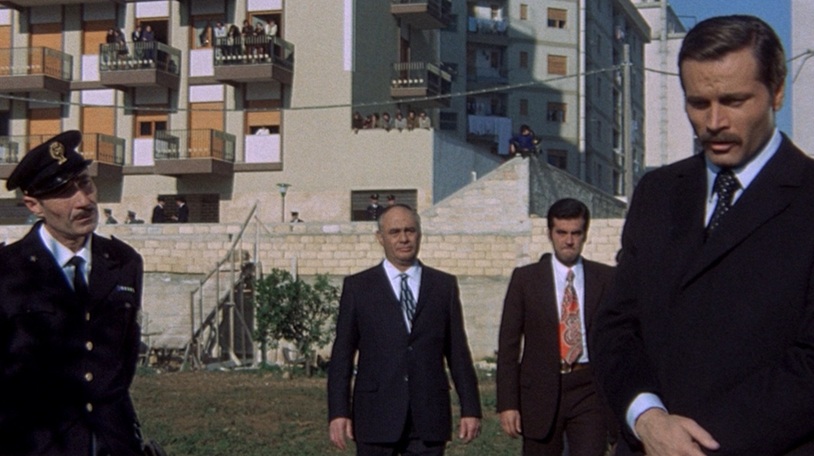
The story is set in Palermo, Sicily, and introduces straight-laced and idealistic state prosecutor, Deputy D.A. Traini (Franco Nero). The Attorney-General of Italy assigns him to investigate a recent crime that actually appears tied to a significant figure in the police force. It is revealed that Captain Bonavia (Martin Balsam), who has a grudge against local land developer/mobster/union buster Ferdinando Dubrosio (Luciano Caternacci) may have had an institutionalized man released from custody. This crazed figure, Michele Li Puma (Adolfo Lastretti), whose sister Serena (Marilu Tolo) once dated Dubrosio, sought revenge on the mobster for a past wrong, attempting to kill him. But the assassination attempt fails, with someone having tipped Dubrosio off about the attack.
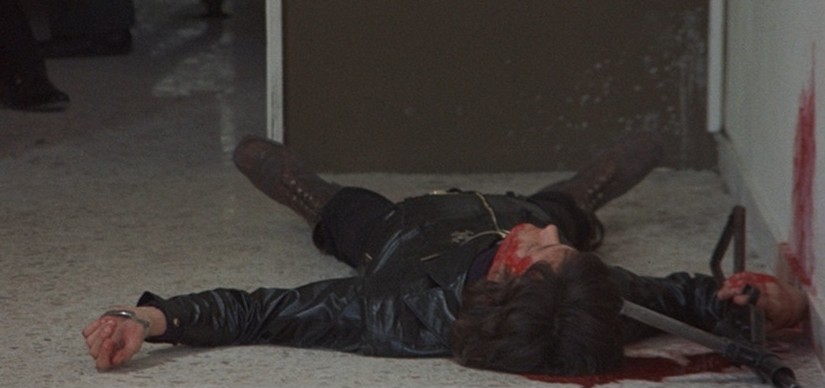
Traini is forced to figure out the details of exactly what happened and becomes determined to prosecute Captain Bonavia for the crime. He also searches for Selena, who knows intimate details about Dubrosio’s criminal activities. While Bonavia tries to cover his own tracks, Dubrosio sends goons out to find witnesses to his past crimes and stop those who get too close to learning about his brutal activities. Even Traini, who only seeks proper justice, finds his ideals being tested when he experiences subtle bribes that appear to be made in order to keep him passive in his investigation. The movie climaxes with a major reveal about whom the snitch revealing information to Dubrosio really was, which essentially ends any kind of high-mindedness the lead previously held about his work and those around him.
There is a lot going on in the story and it’s all impressively delivered, as viewers see layers of corruption unveiled that rise higher than initially anticipated. The movie also features incredible performances from its cast, who are all at odds with each other and in constant conflict. Damiani’s characters always seem a little more authentic and naturalistic than other pictures from this era (he frequently used regular people with the right look to play supporting characters in his films like cops or thugs), and that is the case again here.
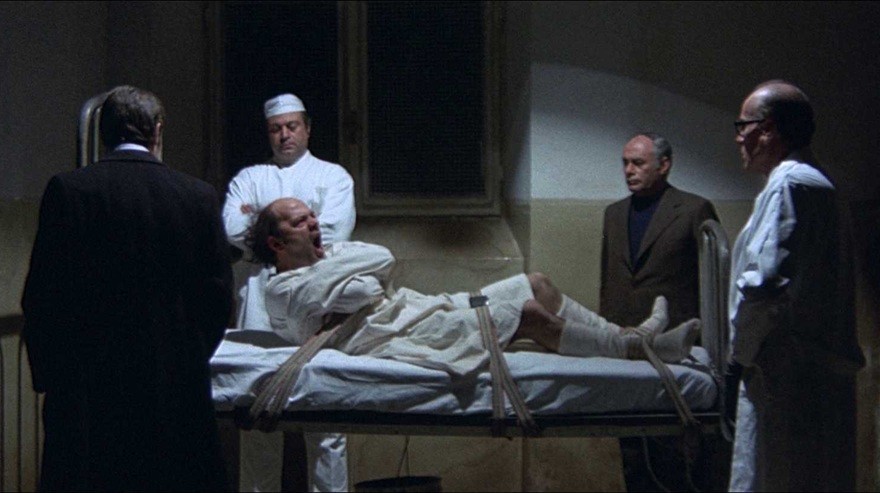
There are also a couple of shocking moments, including the slaying of a very young witness, that linger in the memory. And for the first time viewer, it’s honestly difficult to predict exactly how things will pan out. The photography is great and the finale is impressively bleak, making a lasting impression on the viewer.
For those who appreciate crime movies that delve into deeper societal issues within a country and its government, this is a wonderful film. It delivers all you would hope to see in a crime picture, along with an added layer of disillusionment and critique of those in power. The film really makes an impression, particularly in today’s day and age.
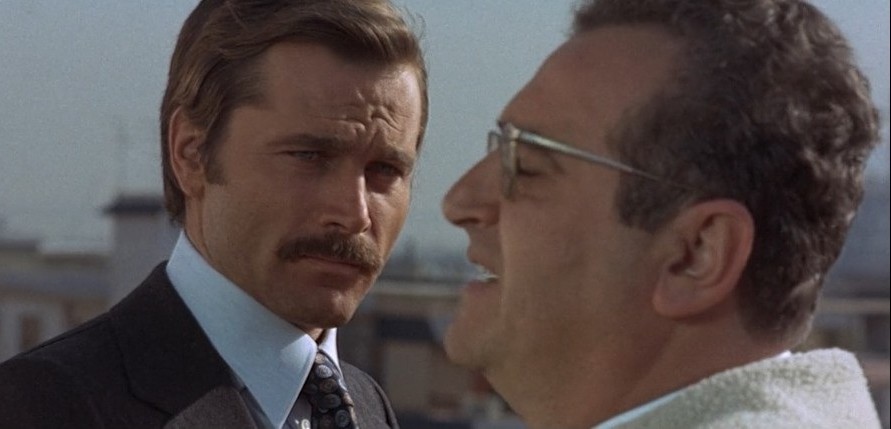
The picture on this Blu-ray is excellent. A 2K restoration was delivered to Radiance Films, and while the disc may not contain the crispest image ever committed to Blu-ray, the title looks better than ever. It is a very clean and clear picture with a few specs here and there, but no significant flaws and a minimum amount of natural grain. The exteriors of Palermo and the more remote areas in Sicily look quite impressive.
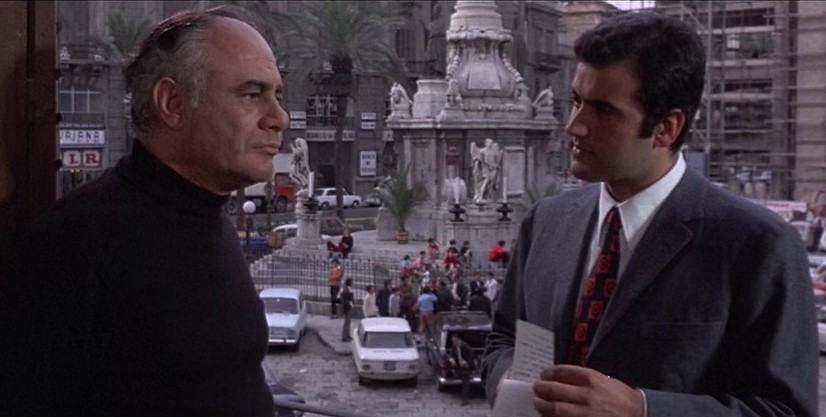
As far as extras go, there is plenty of excellent material. The first bonus is a lengthy interview with star Franco Nero, who discusses his working relationship with Damiani and their three collaborations. He was cast early on, and notes several big-name actors who were considered to play Captain Bonavia. One was Anthony Quinn, whom Damiani didn’t think properly understood the role. Then came Ben Gazzara, who loved the script, but at the end of the day left as well. Martin Balsam eventually stepped in and took the part, continuing to appear in a number of Italian pictures afterward. Nero notes that Balsam was a wonderful collaborator and that his exceptional performance inspired him to try and match the actor’s intensity. In the process, Nero delivers one of his most memorable roles. Overall, the speaker tells great stories about his experiences and is wonderful to listen to.
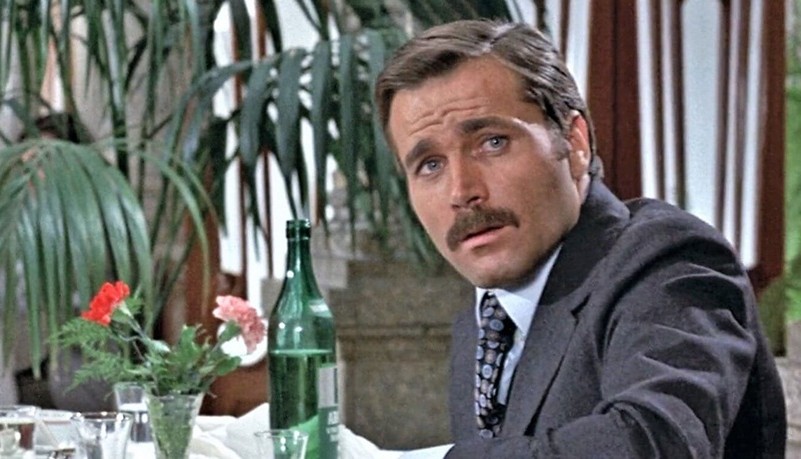
Actually, it seems that everyone on-set thought both Balsam and Nero were incredibly kind and generous performers. Co-star Michele Gammino discusses his work on the film and how he ended up getting involved with Damiani. Originally a voice-over actor, he had done dubbing work for Damiani on previous pictures. The director took a liking to Gammino, stating that he was going to cast the voice-actor in his next project. The performer was shocked when the filmmaker not only kept his word, but continued casting him in supporting roles on future projects.
The film’s editor, Antonio Siciliano, also discusses his working relationship with Damiani. He talks about finding a specific rhythm for the editing based on the performances and line delivery of actors in each scene. Since he was editing in Rome and the film was being shot in Sicily, he would get daily cassette tapes from Damimi with instructions on which takes the director liked best. The editor was amused that in a couple of instances his director would simply complain on the tape about troubles he was experiencing during the shoot. Siciliano also goes into the ending of the picture, noting that he decided to edit it a few different ways, suggesting a particular finale for the film that Damiani liked and ultimately okayed.
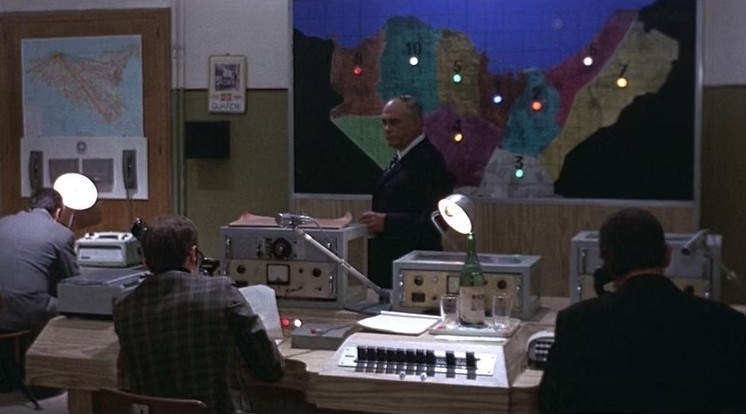
There is also a lengthy appreciation of the film’s composer Riz Ortolani (Don’t Torture a Duckling, House on the Edge of the Park, Zeder). The music expert goes over Ortolani’s career and the common elements in his scores.
Additionally, there is a gallery of stills, posters and other promo material for the title. A booklet is also included, with detailed essays on the picture and its importance and relevance today.
Confessions of a Police Captain is a remarkable film. In fact, it’s so strong that, over 55 years later, it’s a surprise that no one in North America ever considered remaking it. But that’s likely a good thing, as it’s hard to imagine a revised version being as powerful as the original.
Anyone who appreciates Italian cinema should certainly pick it up. And who knows? Should you ever run into a movie enthusiast from this part of the world, you may even find yourself talking about it. Take it from me, it’s best to get a drop on as many Damiani titles as you can so you know what to say! In the end, this is a very important film in the country’s catalog and Radiance Films has done another excellent job with this “Limited Edition” Blu-ray.
