
This “Limited Edition” 4-disc Blu-ray box set from Eureka Entertainment is currently available for purchase.
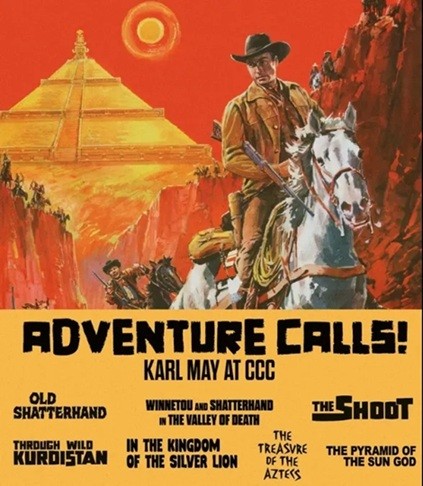
If you’ve been living in the English-speaking western world, then the name Karl May may not ring a bell. While I read my fair share of westerns growing up, I’d certainly never heard of the figure. But as it turns out this author, whose work was released primarily in the late 1800s, is iconic in his native Germany and many parts of Europe, selling over 200 million copies to readers across the globe. Curiously, English-translations of his works have only been made available in the last 30 years, but his impact is huge. May’s works influenced and inspired many since their publication (in mostly positive ways, although with one horrific exception). Long after his passing, the figure also played a part in reinvigorating the popularity of westerns in the 1960s.
The “Limited Edition” Blu-ray set Adventure Calls! Kasl May at CCC consists of seven movies produced by CCC Film that are based on either the author’s works, or his characters. These German-European co-productions were lavishly produced, massive successes in their homeland as in other nations across the pond. In fact, the first film was among the biggest German productions ever, and one that was, and remains, one of the country’s most popular titles. The story of May and how these features were produced is fascinating and set not only includes 4K restorations of all the titles taken from the original camera negatives, but informative extras that will wow newcomers.
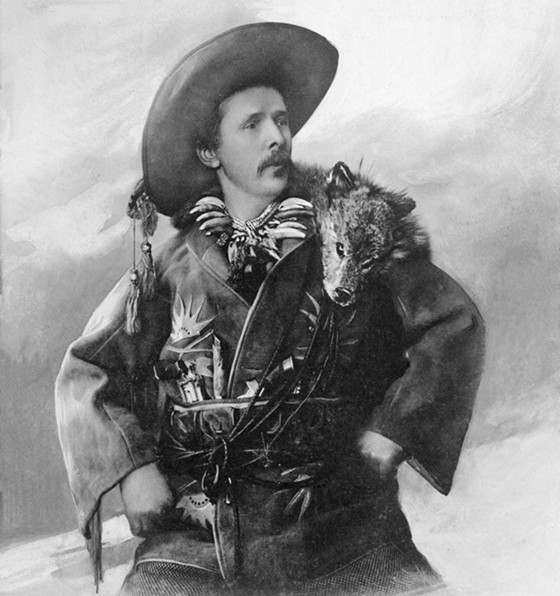
It’s hard to detail these pictures without going into background information about May, so I’ll present details from a couple of bonus features on the disc. May was an adventure writer who specialized in westerns. The author was a shameless self-promoter, even back 150 years ago, claiming to have based his tales on real experiences he had exploring the old west and other foreign lands. As it turns out, he was completely lying about his past. May was a con man who had spent much of his 20s in prison for theft and fraud. He had spent a great deal of his sentence in a prison library, and after reading and developing writing skills, began to create compelling fictional tales and fashion a new image of himself. His works met with immediate success, and it seems that most children in this part of the world grew up reading his works. This was all well and good, but one disturbing aspect was that Adolf Hitler was one of those kids, even insisting that his armies read his novels and took inspiration from them.
As you might expect, his work fell out of favor for that reason. But a decade or more after the end of World War II, a renewed interest in the author began to rise. Children started reading his works again, and adults who had grown up with the writer were already familiar with the material. So, West German studio Rialto teamed with Constantin Films and Yugoslavian outfit Jadran Studios to produce an adaptation of Treasure of Silver Lake, starring Lex Barker as the heroic German Charlie “Old Shatterhand” and Pierre Brice as Winnetou, his Native American/Apache friend. The film was a huge success and inspired sequels for the studios.
Curiously enough, German production house CCC Films wanted to get in on the action. Alas, they didn’t own the rights to the Shatterhand and Winnetou novels. However, the characters were in the public domain, so producer Artur Brauner decided to use them in original western stories, and also buy rights to other books that hadn’t been acquired by Rialto. CCC Films began their own series of movies, even hiring the same actors from the Rialto projects in the same roles. This included Lex Barker, perhaps most famous at the time for having portrayed Tarzan in various US productions.
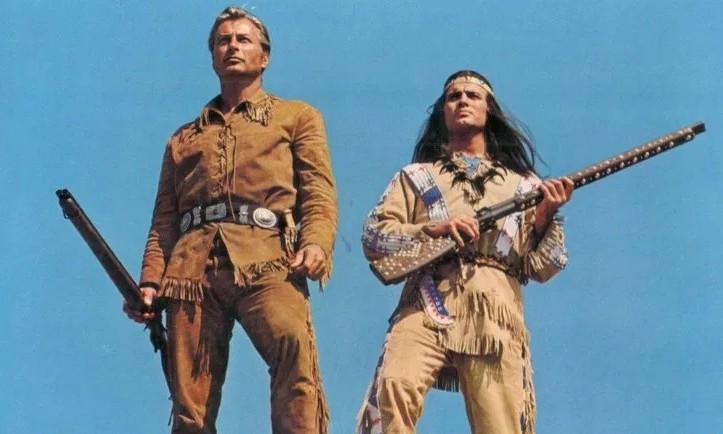
The first film on the set is Old Shatterhand (1964), a French-Italian-Yugoslavian production that was shot in 70mm. The plot is fairly simple and straightforward. Ranchers and Apache are nearing an all-out conflict after many members of both groups are murdered. German ‘Old Shatterhand’ (Lex Barker) and his Apache compatriot Winnetou (Pierre Brice) quickly realize that bandits following the orders of sinister US general (Guy Madison) are responsible. The villains are attempting to start a brutal conflict and personally profit from it.
There is almost no background information on the title character, you’re simply supposed to be familiar with the figure. But, ‘Old Shatterhand’ is called that because he generally doesn’t murder his foes, instead shooting them in the hand to disarm them. Despite all the action and danger around him, the lead comes across as amusingly invincible and doesn’t appear to ever sweat. Winnetou is equally honorable and poised, avoiding killing whenever possible and rarely getting ruffled by all the commotion. The two also talk about the importance of maintaining peace and beauty in the land. While this is a western of its era and certain elements don’t play as well today as they once did, the message and attitudes are more altruistic than most pictures of their era. And when the major villains do meet their ends, their end is often accidentally self-inflicted.
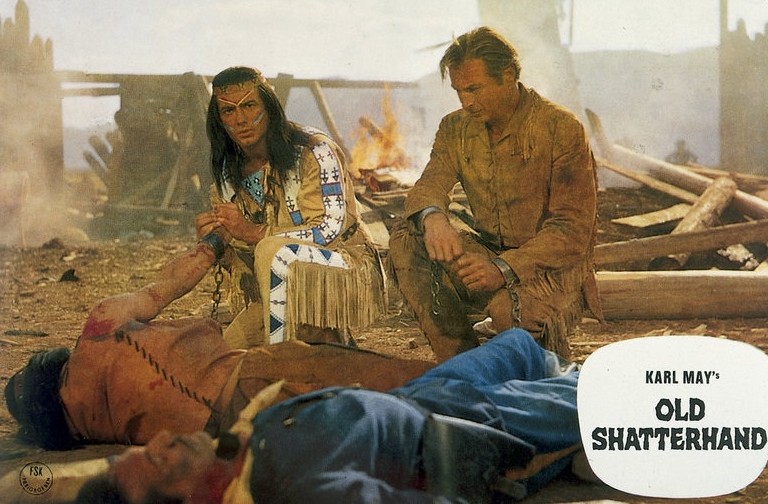
The scope of the film is really impressive and the movie contains wonderfully lavish settings and production design seeking to emulate the look and feel of American westerns. This film was largely shot in former Yugoslavia (now Croatia and Serbia) and the country’s mountains, valleys (and a waterfall) on display are unique and awe-inspiring. When the action comes, including a major battle between the Apache and US cavalry at a giant fort, the spectacle does match any American western. While the characters on display can come across as a bit corny, this is a very entertaining fun western, and one that possesses a slightly different and far more sympathetic take on Native Americans.
Naturally, the picture looks wonderful (it was, after all, shot with 70mm) and consistently impresses with its epic landscapes and big action towards the close. It features both the German audio and an English dub. The film was dubbed in all languages in post-production and made with an international cast for mass export with both tracks in mind, so both languages look equally solid. Another plus is a lengthy 30-minute introduction to the movie with cinema expert Sir Christopher Frayling, who gives a lot of interesting background information. He notes that while the characters in the story were progressive for their day, Hitler might have seen the unstoppable ‘Old Shatterhand’ as something of an ideal physical model to aspire to, hence his attraction to the character.
There is also an informative commentary track by film historian David Kalat who also goes into May, the popularity of these stories, the many troubled attempts, including the hiring and firing of several writers, to get a proper screenplay for the film right up to the start of the shoot. You’ll also learn how everyone was cast, shooting in Yugoslavia, and more. He also notes how these pictures and their success influences co-financiers from Italy, who would note the series success and try their hand at westerns soon after with Sergio Leone.
An archival documentary that covers this title and the following feature includes discussions with the producers and some of the cast members on the picture. There are some wild stories included in this feature.
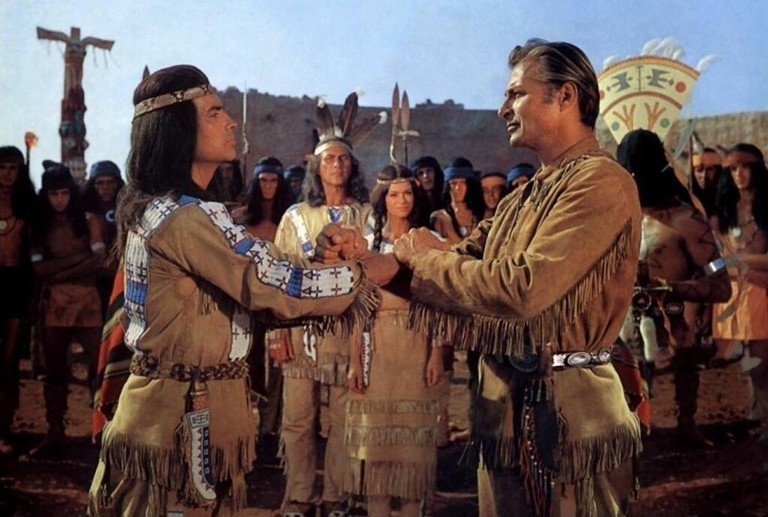
Near the end of the CCC Films spell making westerns, they brought the favorite characters back for a big finale with Winnetou and Shatterhand in the Valley of Death (1968) aka The Valley of Death. The two stars return in this tale about an army gold shipment that mysteriously vanishes. The valuable loot is well hidden, leaving all sorts of bandits, a Sioux chief, as well as other villains all trying to find it. Mabel Kingsley (Karin Dor), daughter of the army man wrongly accused of taking it, asks ‘Old Shatterhand’ (Lex Barker) and Winnetou (Pierre Brice) to help her locate the gold and prove her dad’s innocence.
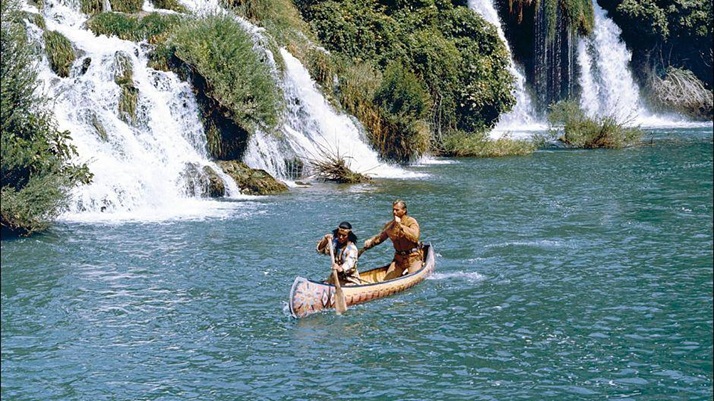
They may not have had quite as large a budget for this effort, but it is fast-paced and features nothing but action for 90 minutes as all but the heroes succumb to greed and try to murder their way to riches. The heroes fend off attackers, most of whom end up killing each other as they desperately hunt for gold. Overall, this is a fun picture that features many of the same plusses (fantastic Yugoslavia locales, as well as some footage taken in the US at the Grand Canyon, every second of which appears to have been is used), impressive action and offers a nice send-off for the characters. As before, the image quality is very nice and clear. As with every title, there is a shorter, but no-less informative intro from Sir Christopher Frayling.
One of the following discs contains a movie actually based on a proper May novel. It stands with the previous two pictures as the best of the set. The Shoot (1964) aka The Yellow One is an adventure tale set in the Balkans (actually not too far from the former Yugoslavia where the movie was shot). The area was controlled by the Ottoman Empire and the story involves another of May’s iconic heroes (at least, in Europe), German adventurer Kara Ben Nemsi (also played by Lex Barker). He arrives, meets up with Arabian pal Hadschi Halef Omar (Ralf Volter) and learns of a deadly figure known as ‘The Shoot’ who is terrorizing the area with bandits, kidnapping, raiding and murdering locals. Nemsi and his friend decide to identify ‘The Shoot’ and help the locals fight back against the Ottomans. During their travels they keep meeting with carpet dealer Nirwan (Rik Battaglia) who ends up being the deadly killer (guess the carpet industry simply wasn’t lucrative enough).
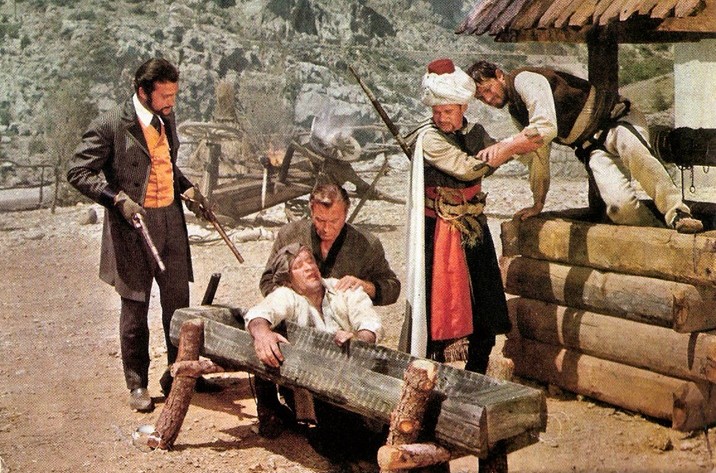
Shockingly, noted director Robert Siodmak (The Killers, The Spiral Staircase and several famous film noir titles) was lured from Hollywood back to Europe to make this picture, and it certainly shows here. You’ll have to forgive the less-than-ideal portrayal of Omar and some silly jokes, but there is plenty of impressive photography. Additionally, when the action starts, you’ll see some truly dazzling moments: bandits raiding with fire, a dangerous-looking scene with horses on a rickety suspension bridge, chase with the hero hanging off of a horse-drawn carriage, and more. And the film also shows an interesting, softer side to the hero than you might see in an American production. When his trusty horse sacrifices itself to save the protagonist, the character openly grieves over the loss of his animal partner/friend.
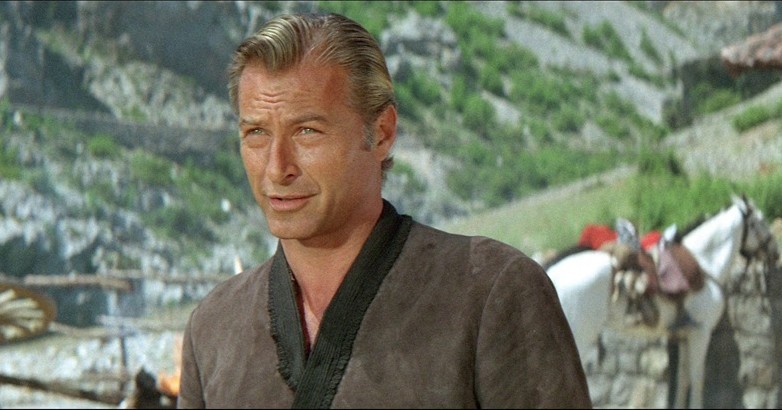
It’s certainly dated in regards to some character depictions, but is an impressive watch and is well-made.
This film was also a big hit, and a sequel called Through Wild Kurdistan (1965) is also included on the disc. The follow-up wasn’t directed by Siodmak and isn’t as elaborate or impressive, but does provide some entertaining thrills, while also further developing the lead character and the supporting cast members from the previous instalment.
This time out, Kara Ben Nemsi (Lex Barker) is traveling through Turkey with Hadschi Halef Omar (Ralf Voter), where he befriends a sheik, as well as a lovely local Tschita (Marie Versini). Ottoman forces again pose a threat to citizens, with the corrupt governor Machredsch of Mosul (Djordje Nenadovic) posing life-threatening problems for the leads. There are some impressive battles between the two, with the finale climaxing as the hero and villain face off on the edge of large cliff.
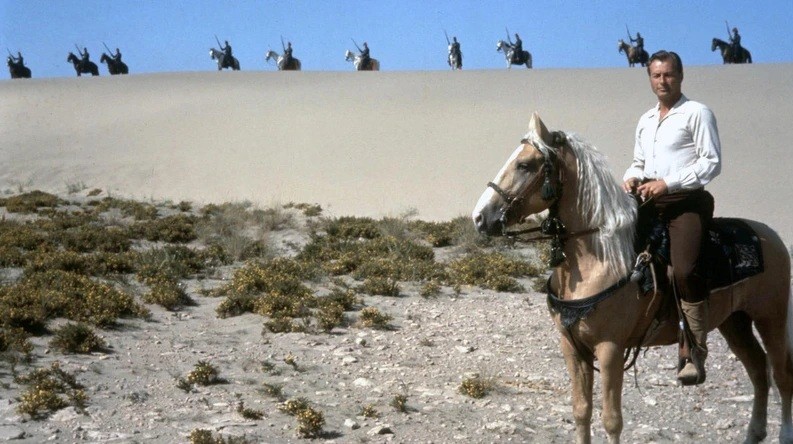
This effort features Spain subbing for Turkey, but the desert-locales still look reasonably convincing and there is enough going on to make it an entertaining follow-up. The picture is a little dirtier than some of the previous features, but looks perfectly fine with a light amount of natural grain here and there.
Additionally, the disc contains Sir Christopher Frayling introductions, a making and history of the Kara Ben Nemsi series of titles, and archival newsreel footage of German awards being bestowed on the production of The Shoot and promo materials.
The next disc contains one title, a rather unexpected and, well, perhaps unnecessary follow-up to this title called In the Kingdom of the Silver Lion (1965) aka Kingdom of the Silver Lion. It might have been shot immediately after the previous chapter, and some of the extras suggest that the cast may not have realized they were in two pictures (they believed this was part of the first film).
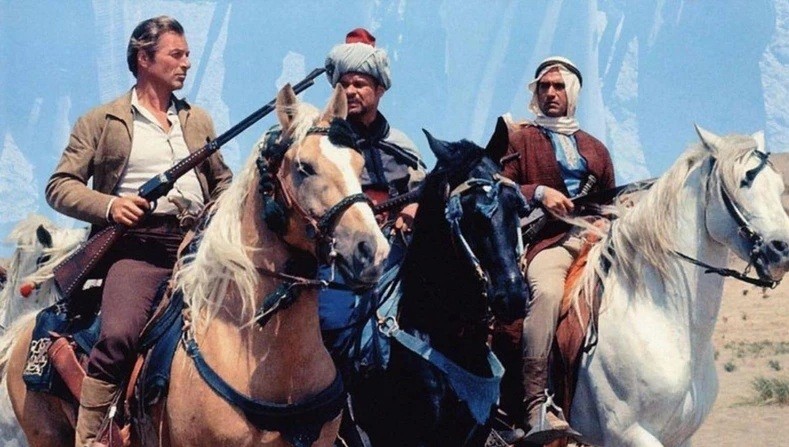
After taking a huge plunge off of a cliff, viewers learn that Machredsch of Mosul (Djordje Nenadovic) actually survived his fall. Wounded, he escapes, recovers and plots revenge against Kara Ben Nemsi (Lex Barker), Hadschi Halef Omar (Ralf Voter) and Tschita (Marie Versini).
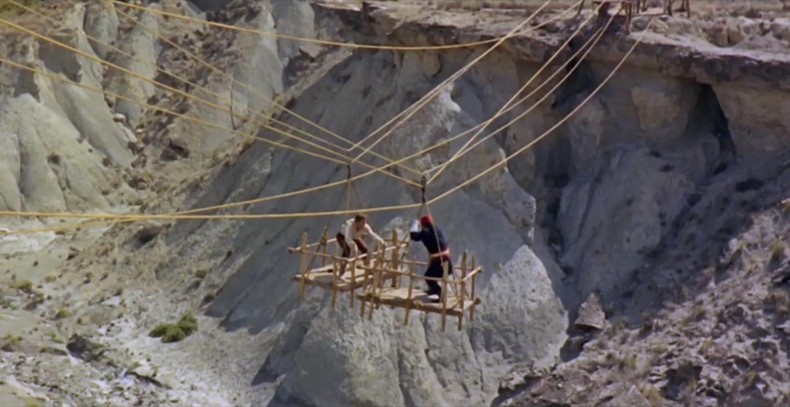
The film repeats many beats of the previous instalment and is a weaker effort, but does include an impressive finale in which Nemsi and the antagonist battle over a salt canyon. The extras on this disc include a featurette on the restoration work done on all the titles, as well as a featurette on the career of Robert Siodmak. As expected, it does deal with his return to Germany after spending two decades in Hollywood, chronicling his successes back in Europe, as well as a couple of his lesser titles. And, as previously noted, Sir Christopher Frayling provides introductions to both titles.
Speaking of lesser efforts, the final disc contains two more May adaptations directed by Siodmak. The Treasure of the Aztecs (1965) aka Treasure of the Aztecs, which follows the adventures of German Dr. Karl Sternau (Lex Barker). Due to a previous association with the Bismarck family, the physician has become pals with President Abraham Lincoln (Jeff Corey), who asks him to stop by for a chat. When Lincoln learns that Sternau is on his way to Mexico, he asks him to deliver a letter to Benito Juarez (Fausto Tozzi) showing his support for the Mexican nationalist effort (the citizens are fighting off French and Austrian occupation). Lincoln doesn’t want to offend the French and only send an inspirational message south.
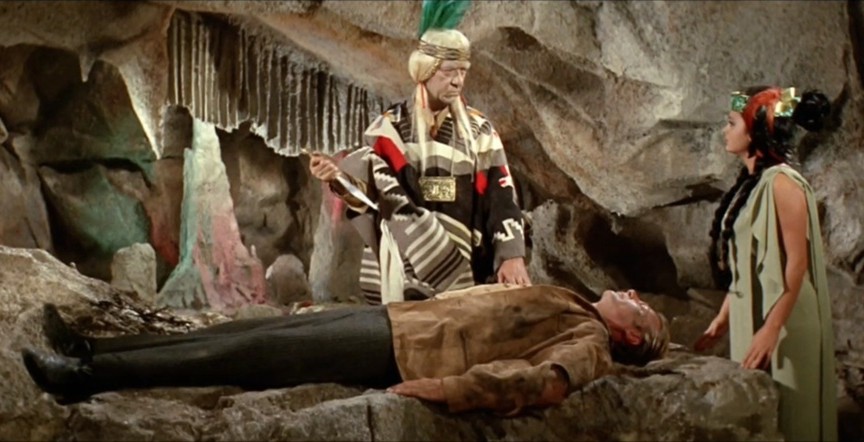
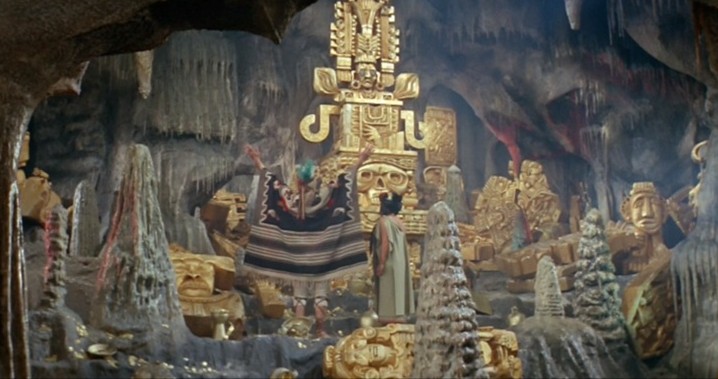
The hero agrees, but because of his heroic nature, ultimately gets involved in the fight. Along the way, it is revealed that the villainous Captain Lazoro Verdoja (Rik Battaglia) and members of his group are obsessed with finding a lost Aztec tomb filled with gold. A fetching descendent knows the location and so, in addition to trying to help the Mexican cause, Sternau also tries to save her as well as help her protect the treasure.
This German-Yugoslavia-Spain production is a bit odd in that it’s actually only half of an intended epic. The film was cut in half, with the second part, The Pyramid of the Sun God (1965) finishing up the story. Ultimately, the choice to release both pictures as two separate movies wasn’t a great one. The first title features a great deal of characters. It’s 90 minutes of set-up with little along the way to excite. There are definitely pacing issues in the first film and it really only perks up during its final act when the hidden Aztec gold temple is finally revealed. It’s a great set with impressive production design.
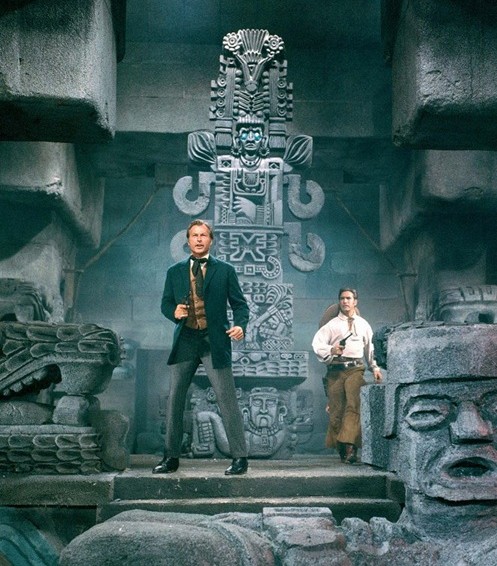
After a nearly 10-minute recap at the beginning of The Pyramid of the Sun God, the story eventually kicks into gear with characters getting in conflict, as well as being lost in the tomb. Naturally, the greedy ones pay the ultimate price for trying to steal an Aztec treasure, with an eruption occurring and one of the primary baddies falling into lava. At least the second chapter features some silly fun and is an amusing ride. Admittedly, these two pictures clearly aren’t among Siodmak’s best works, and sit well below The Shoot in terms of quality.
Sir Christopher Frayling again gives introductions to the titles. The first movie contains a commentary from film historian David Kalat. He repeats a lot of history about May from the previous track, but there are some interesting comments along the way. While the producer considered shooting in Mexico, the distance was too far from production headquarters in Germany and so Spain substitutes for the country (some exteriors were also shot in former Yugoslavia. All and all, it’s another track with plenty of good trivia. Additionally, there is a lengthy talk with an expert on all things Karl May, who notes the many changes between the films and the original text.
The package also contains a 60-page book with essays on author Karl May, and the films, as well as a profile on Lex Barker.
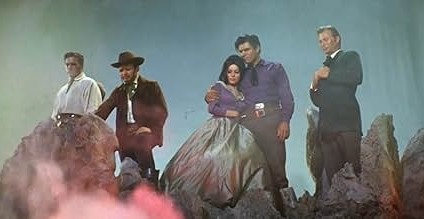
I’ll admit to having known very little about these Karl May adaptations, but they are incredibly important films in the western genre that may have, in part, inspired the Spaghetti Western trend that followed shortly thereafter. A few of the titles are really good as well. As always, picture quality is generally excellent… and certainly better than any previous release, if there actually were any on DVD (which I doubt). The extras are notable as well, as they give a lot of important history about the writer, his films, and their influence on the genre. For western enthusiasts, Adventure Calls! Karl May at CCC is a Blu-ray set worth your while.
