
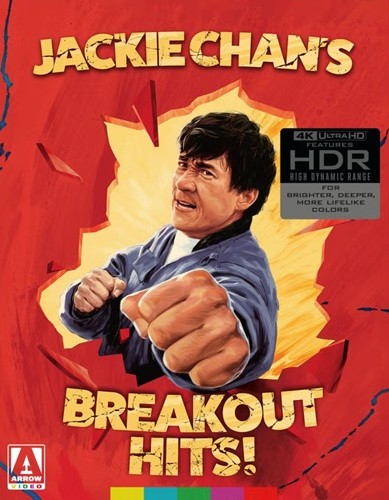
This Limited Edition 4K Ultra HD box set from Arrow Video will be available to purchase on June 30th.
Legendary action hero Jackie Chan has had a long and successful career spanning more than fifty years on the big screen (and over sixty if you include his film work as a child). The one market that the performer did struggle to break into was the US. While he was already a household name abroad by the late 1970s, it took much longer for North American audiences to respond to his unique brand of martial arts and action films. He did star in the US production Battle Creek Brawl (1980), which flopped. After making memorable cameo appearances in the all-star comedies The Cannonball Run (1981) and Cannonball Run 2 (1984), he tried again with The Protector (1985), which was both a bad experience for the actor and yet another box office disappointment.
Chan returned to making films in Hong Kong, moving away from period martial arts pictures to progressively bigger titles featuring action, adventure and comedy (like the Police Story, Project A and Armour of God series). These were massive successes in China and nearby territories, and while that could easily have been more than enough for most actors, Chan not only regrouped fantastically in his homeland, but a decade later, finally broke into the US market.
Arrow Video is putting out an incredible 4K Ultra HD set of Jackie Chan movies that finally began drawing the performer a lot of attention in this part of the world. Jackie Chan’s Breakout Hits! contains Drunken Master II (1994) aka The Legend of the Drunken Master, Rumble in the Bronx (1995), Thunderbolt (1995), Police Story 4: First Strike (1996) aka First Strike, Mr. Nice Guy (1997) and Who Am I? (1998). Many of these pictures played on the big screen in North America and raised Chan’s profile, before he starred in the hit Hollywood action/comedies Rush Hour (1998) and Shanghai Noon (2000).
For this release, Arrow is delivering incredible 4K restorations of the Hong Kong cuts and international versions from the original camera negatives (for some of the extended cuts, they have inserted the best available materials – it all looks consistent and viewers generally won’t notice the occasional, brief change in source material). They are all presented in Dolby Vision with exceptional picture quality, along with wonderful extras to give perspective on where they fit into the performer’s career. If you’re a fan of action cinema, I can’t recommend this set highly enough.
So, let’s go disc by disc through the contents.
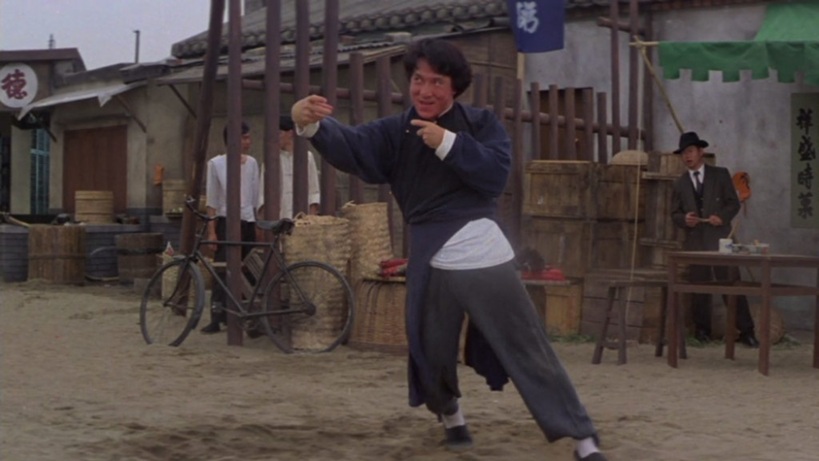
The first 4K Ultra HD title is Drunken Master II (1994) aka The Legend of the Drunken Master (in North America) presented in the Hong Kong cut, international edition, and US version. Truth be told, most of us in this part of the world didn’t end up seeing this feature until after the next title in the set, but it was produced first and released in its homeland earlier. The film is a sequel to the 1978 Hong Kong hit Drunken Master, featuring the actor’s take on legendary folk hero Wong Fei Hung.
The plot features various criminals, a sinister British government official all of whom target the martial arts establishment of Wong Fei Hung’s father. This is because of a valuable Chinese seal that ends up in their possession. As tensions rise, the mischievous protagonist eventually uses a barred “drunken style” fighting technique” to protect those around him.
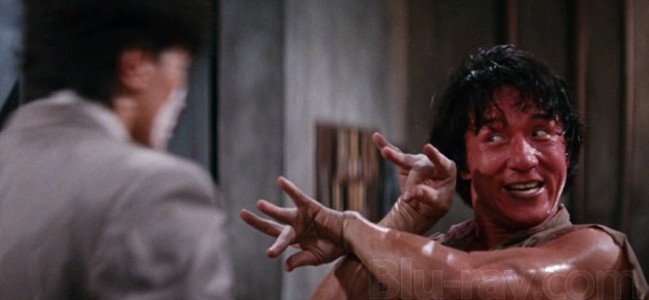
It was actually considered Chan’s return to martial arts filmmaking (after the previously noted and more modern franchises of the decade previous), and he didn’t hold back in any department. The fight choreography is truly epic and features many of the best sequences the star had ever produced. There’s a remarkable and amusing fight under a train in close quarters, an incredible showdown in a public restaurant between the star and, seemingly, a hundred opponents, and a phenomenal final battle in a foundry that is jaw-droppingly put together. Even in the elaborately choreographed battles, the takes are surprisingly long and exciting, with several big moves made by the characters without cuts. It’s also very funny – Anita Mui stands out as the hero’s aunt (even though the actress was close to the same age as the star).
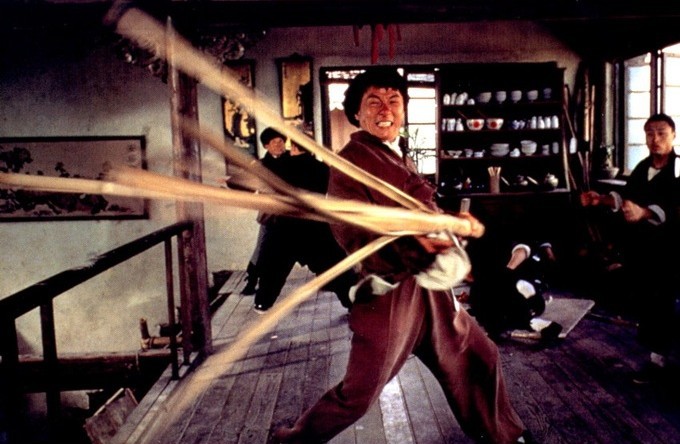
For me, it’s Chan’s best traditional martial arts picture and is one of, if not the best, ever made. The picture looks incredibly sharp and there is a clear upgrade in terms of detail in the 4K edition when compared to older discs. This is especially true during the climax, which features embers, flames and various impressive backdrops that all look incredible.
As far as extras go, there are plenty to enjoy. As mentioned, you’ll get three cuts of this film. The Hong Kong edition is the preferred one featuring the original Mandarin, a few lines of English, and English subtitles. The international version is a couple of minutes shorter, and the American cut is actually very close to the original, only completely dubbed in English. There is a film historian commentary with Hong Kong cinema experts Frank Djeng and F. J. DeSano, who goes into the history of the production. It seems that original director Lau Kar-leung (who also has a role in the movie) and Chan had different approaches to shooting action, and thus difficulties arose on-set. Chan eventually took the film over, with the previously noted longer, more elaborate choreography between cuts, as well as a stronger emphasis on more comedic material with Mui. The information presented is very interesting and informative throughout.
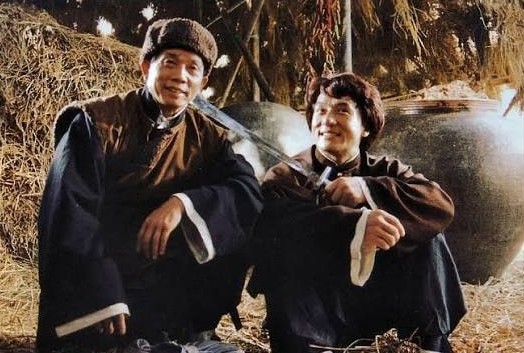
There are also a great series of documentary pieces throughout the set. The first, Breakout! Part 1, features critics and few crew members going into the early career of Chan. They explain his trouble finding success in North America, and his determination. It transformed into the development of a winning persona for Chan… that of a talented, but sweet, genial and funny hero who rises above adversity to save the day. They also note that the filmmaker had been directing himself in many 1980s productions that had become bigger and more unruly. Working with other filmmakers in the 1990s was, in part, a way of keeping his perfectionist tendencies under control and the movies on budget. Of course, this didn’t end up working, but the feature was still a huge success for all involved.
Another plus are interviews with stuntman Mars and co-writer Yuen Kai-Chi. They both note that, with the exception of the opening train conflict and the more serious drama, Chan ultimately directed most of the movie. Mars also talks about his stuntwork in the picture. If that wasn’t enough, there are interviews with authorities about the historical elements of the story, an appreciation piece on martial arts cinema of the era, and archival interviews with Chan and others for a 2000 release of the feature. There are also interesting Chinese New Year messages recorded by Chan for the film’s Taiwanese and Malaysian openings, promo materials, and the end credit outtakes without text running through them.
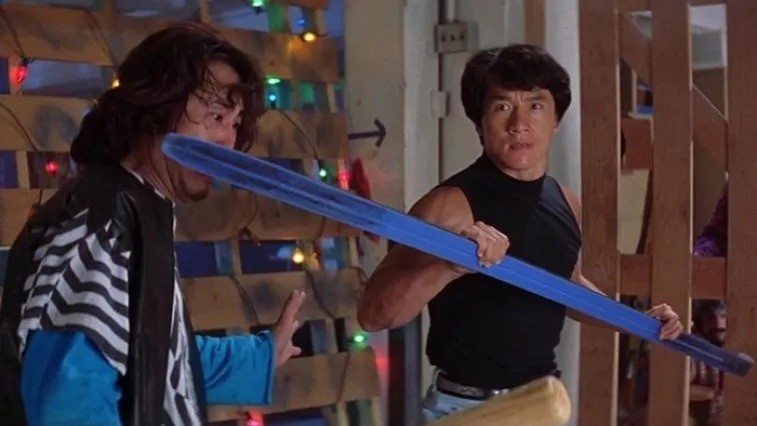
Chan’s next picture was the one that truly made him a famous figure in North America. Rumble in the Bronx involves Hong Kong cop Ma Hon Keung (Chan) leaving Hong Kong to visit his engaged Uncle Bill (Bill Tung) in New York and help him celebrate his wedding. When Bill announces that he’s selling his corner store to fellow Chinese immigrant Nancy (Anita Mui), Keung does his best to help out. Unfortunately, the location is troubled by a nasty motorcycle gang. Things get even more complicated when crime syndicate leader “White Tiger” loses stolen diamonds and decides to wipe out anyone in his way.
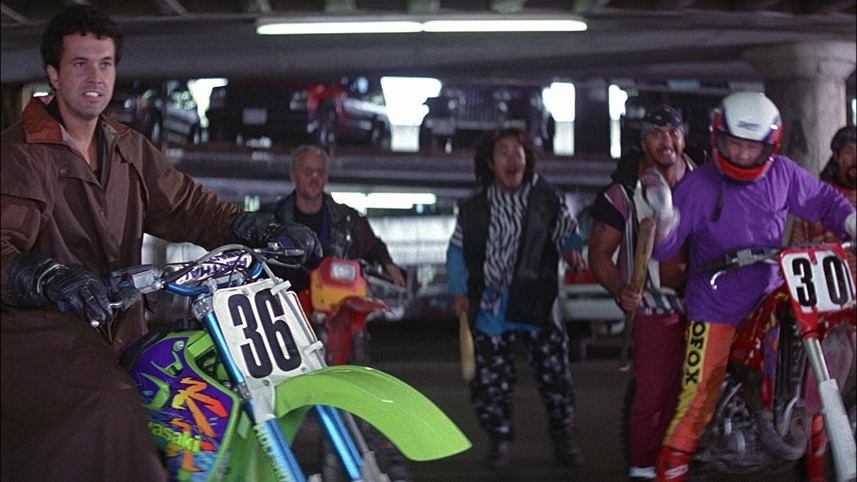
This picture was a massive box office success, featuring more incredible stunts and impressively orchestrated fights. There’s an incredible chase through a parking structure, and the battle in the gang’s hideout, which includes characters jumping, and bouncing off of pinball machines, stolen refrigerators, shopping carts, bottles, and seemingly every bit of background décor. It’s a blast to watch. The villain characters are all over-the-top and ridiculous, but it isn’t a bother. In fact, it actually seems to help lend a fun tone and atmosphere to what would normally be serious problems being depicted. The finale is also memorable, featuring a hovercraft flying down city streets and interrupting a rock performance (don’t worry, the band keep playing, even with the wind from the hovercraft blowing them around their stage).
Additionally, the movie delivers more laughs with Anita Mui, as well as a young boy who befriends Chan’s character. The kid isn’t the most convincing actor, but his lines are amusing, as are the hero’s blunt declarations to the bad guys. Another eccentric element is the location shoot (which many of the extras go into). Vancouver, British Columbia is very clearly standing in for the Bronx, with mountains clearly visible, as well as distinctive, familiar Canadian sites like BC Place and Science World right there onscreen as the characters talk about their difficult lives in the Bronx. (If you happen to be watching the World Cup, Vancouver’s Science World is the globe-like building currently painted up to represent a soccer ball).
Those who own the set will get both the 107-minute Hong Kong version and the international cut in 4K. There is a major difference between them, as the first version is roughly 17 minutes longer than the edition that played in North America. It’s fascinating to see the differences. Opening credits are different, and many scenes are trimmed down in the international version. There is more character development in the Hong Kong edition, as well as a different score and music cues. In fact, most scenes in the longer version are slightly extended, be it comedic bits, and even some of the action. As far as drama goes, viewers learn more about the difficulties immigrants face in trying to make a new start in the US, which is addressed in the longer version. While I understand why New Line might have wanted to pare it down to 90 minutes and primarily emphasize the action, the Hong Kong cut is a stronger film and it is great to finally have it on 4K in this part of the world.
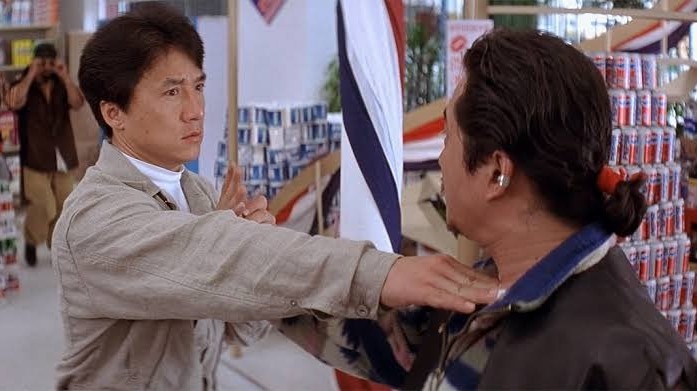
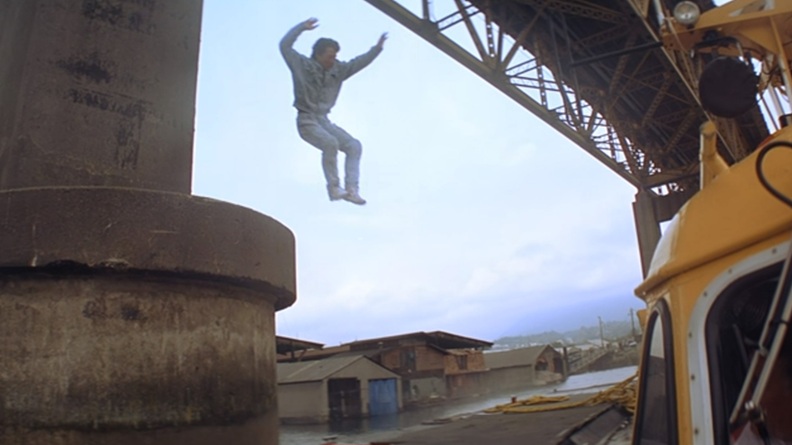
No matter which cut you prefer, the movie is always fun. Once again on this disc, there is an entertaining film historian commentary that goes over shooting in Canada and Chan perfecting his heroic character image for audiences around the world. The Breakout! Part 2 doc includes stuntman Mars, as well as stuntwoman Kathy Hubble, in addition to film historians discussing the project. Hubble was a local stuntwoman who describes working on the picture and how much fun everyone had during the production. You’ll learn more about Chan breaking his ankle leaping to the hovercraft from the base of a bridge, and Hubble’s own injury, which wasn’t quite as bad as the cameras made it appear.
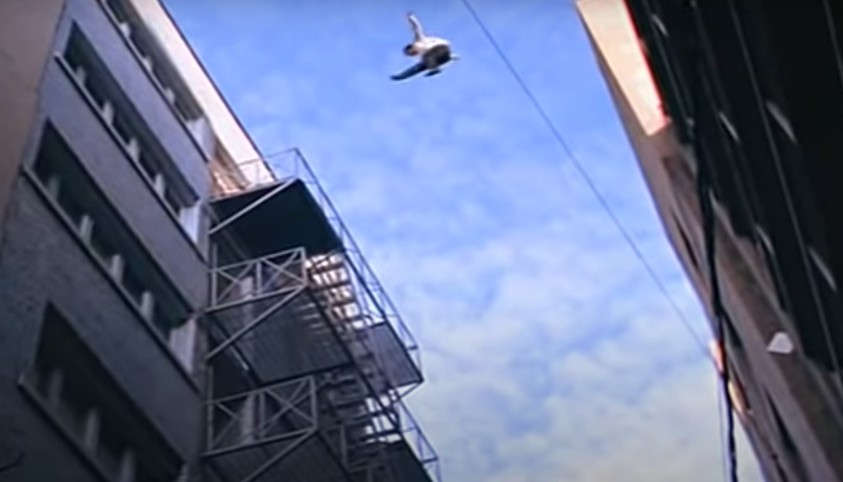
One interesting secret from stuntman Mars is that the incredible leap from the parking garage rooftop to an adjacent building wasn’t performed by Chan. He jumps in the medium shot setting up the action, and appears in close-up during the landing, but several involved suggest the wide shot/leap over the alley was actually performed by director Stanley Tong (who was a similar size and build to the star). Chan’s ankle was broken at the time, so Tong did the stunt leap himself. You’ll also get an expanded discussion with Hubble, alternate footage, a textless version of the outtakes from the end of the movie, and an image gallery. The disc containing the US/international cut also has EPK materials from the movie, two scenes from the Hong Kong version that were added to network television broadcasts (with different dubbing) and promo materials.
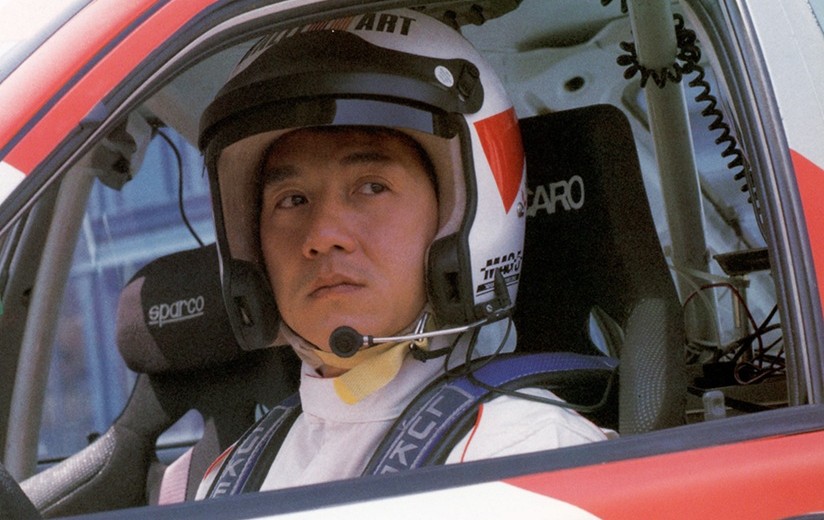
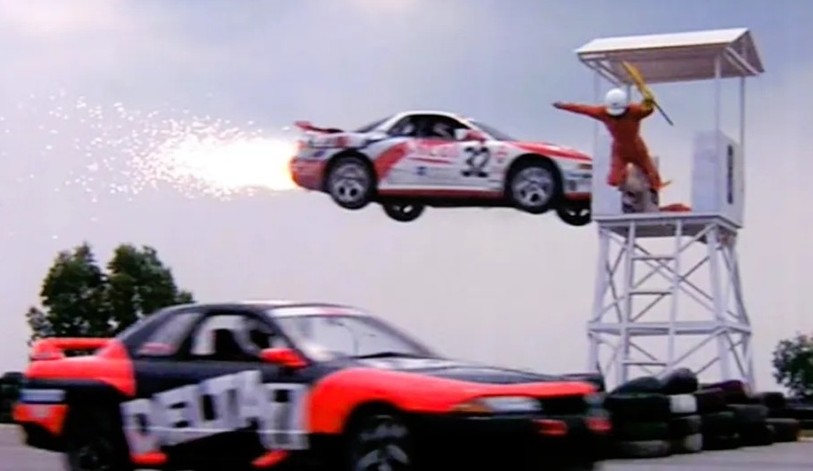
The next disc contains Thunderbolt (1995), an unusual follow-up for Chan that attempts to expand his repertoire. It’s a car-racing action picture with a much more serious tone than the other titles on this set. This movie didn’t receive as much fanfare in North America, and as such isn’t as well remembered in these parts. Many of those on the bonus features note that the film wasn’t as appealing to western eyes because it was a car race movie, and not a martial arts film that most would have expected from Chan. But it did strike a chord in the east and was one of Chan’s biggest hits there. And, it seems to have been a bit ahead of its time, marking something of a forerunner to titles like The Fast and the Furious franchise, that would arrive a few years later and become a major franchise in the US. The complete 110-minute version is included, along with a Japanese cut that is 9 minutes shorter.
A part-time racer (played by Chan) spends his days working at his family’s junkyard/car servicing business. He also ventures out at night to help the Hong Kong police stop illegal street racing. One evening, he crosses paths with a psychotic driver named Warner Cougar Kaugman (Thorsten Nickel), who has ties to criminal organizations around the world. Cougar is also a murderer, and when he isn’t causing trouble and being interviewed by cops, does race professionally (which admittedly makes no sense). The protagonist gets into a chase with the villain and helps to get him arrested. Furious, Kaugman associates hunt down the lead, his family and even kidnap some of them. The antagonist threatens to kill them unless the hero takes part in a professional race in Japan. Wildness ensues as the pair compete on the track.
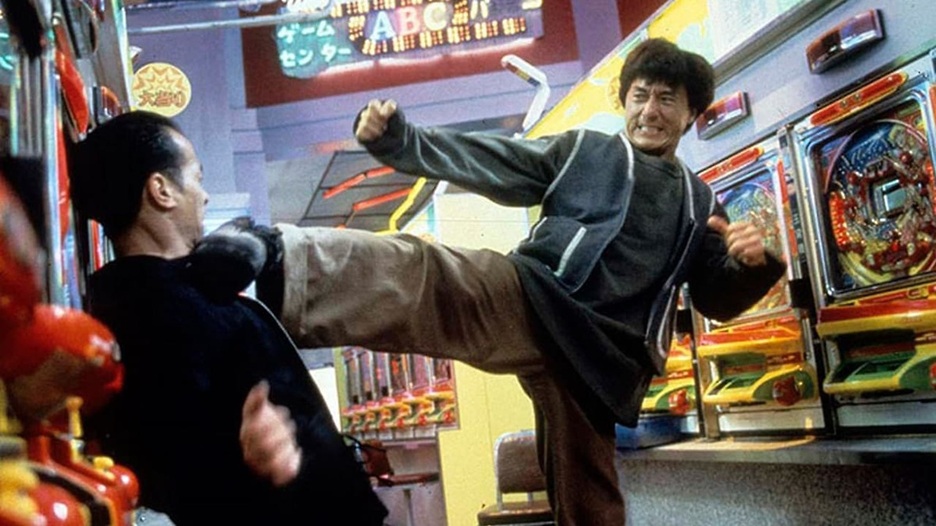
As mentioned, this effort is more about racing, although it does feature a couple of memorable conflicts between the protagonist and members of Kaugman’s ensemble. One, involving a lengthy chase/fight in a Japanese pachinko parlor, is jaw-dropping. Machines are smashed, and the characters even end up bouncing around and kicking each other on display materials that are hung from the ceiling. It looks phenomenal. The driving is well-captured as well.
Admittedly, this is an odd effort. The tone is darker, there are too many characters, and the plot is at times convoluted and confusing. But the action is fantastic and it might be the best-looking movie in the set. There is a lot of neon, and light bouncing off of wet streets, as well as incredible racetrack footage. If you can forgive the strange story and more serious approach, there is still enjoyment to be had here.
Once again, there is a great film expert commentary, with the speakers going over the details about this production and its differences from previous Chan efforts. They do note the star’s further attempts to tell more and more stories outside of Hong Kong in order to draw in worldwide audiences. Breakout! Part 3 also goes into this and adds a new speaker giving insights on this production. That man is dubbing supervisor Paul Clay, who notes his experiences creating English-language tracks for various Chan films. He explains how he would find performers who looked and sounded like the actors racing around onscreen. An expanded interview with the speaker is also included as a bonus.
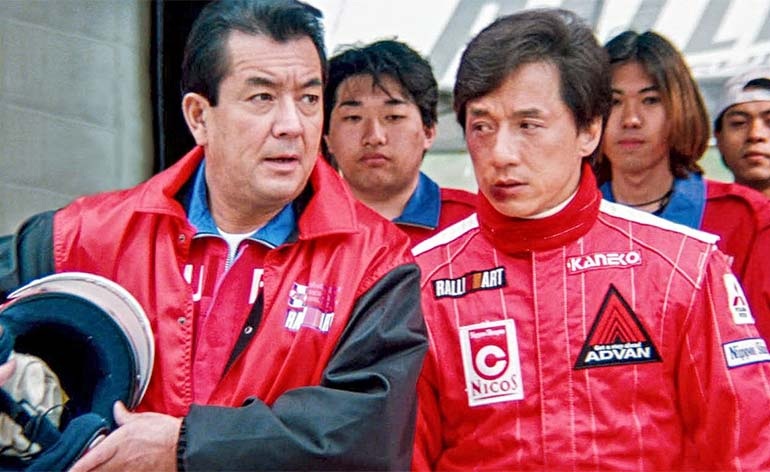
Some interesting tidbits about this title include the fact that, despite the fact that one director, Gordon Chan, is listed in the credit, titles also state that this is “A Film by Jackie Chan”. As it happens, there were several filmmakers working on the project. Gordon Chan did shoot the majority of the film, but Sammo Hung was responsible for the pachinko battle, and Chan himself handled other elements. There are also tales about capturing the dangerous stunts and driving feats. Apparently, there was talk about filming racecar crashes on the track, but the production team discovered that their elaborate plans would have ripped up the driving surface of an actual racetrack, costing them astronomical amounts of money to repair. So, they shot many elaborate car stunts and explosions separately and incorporated them into the regular racing footage. Most of the speakers do note that while hugely popular in the Asian-Pacific market, Chan himself doesn’t appear to have been all that taken with the final film.
You’ll also get textless outtakes, trailers, and an image gallery.
Police Story 4: First Strike (1996), which was released in North American theaters simply as First Strike, is the fourth film in the set. It’s a complete 180-degree turn from the previous effort, with Chan returning to a familiar franchise (at least, the Police Story series, which was famous in eastern territories) and starring as a good-natured, well-meaning, heroic police detective.
Yet unlike other pictures in this series, he isn’t hunting typical criminal gangs in Hong Kong. In this tale, he is asked by his boss to help the CIA with an international investigation. Our protagonist is told to follow a woman named Natasha and report on her actions while visiting the Ukraine. The hero ends up in the middle of an arms deal involving a stolen nuclear warhead, which is wanted by the CIA, the Russian mafia and everyone else who is aware of it. Jackie’s exploits take him all the way to Brisbane, Australia as he attempts to figure out who the real villain is and recover the dangerous weapon.
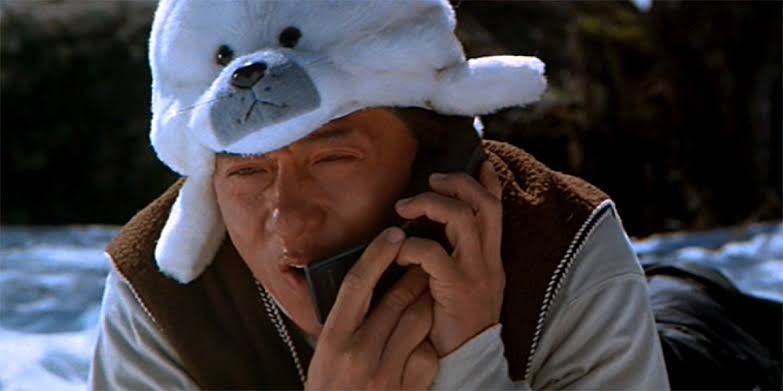
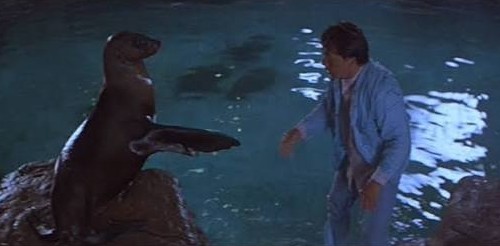
This is Chan’s take on a James Bond picture with globetrotting hijinks, and even grander, more elaborate stunts. It doesn’t have the same level of threat as far as villains go (we’re not even sure who the antagonist is until the final act), but it is a great time, and contains some memorable sequences. The opening act consists of the hero in the Ukraine (and eventually Russia) dealing with enemy forces and trying to escape on a snowboard (also donning a seal hat he purchases from kids at a ski chalet). There are gun-toting skiers jumping out of helicopters, explosions and all sorts of impressive chaos.
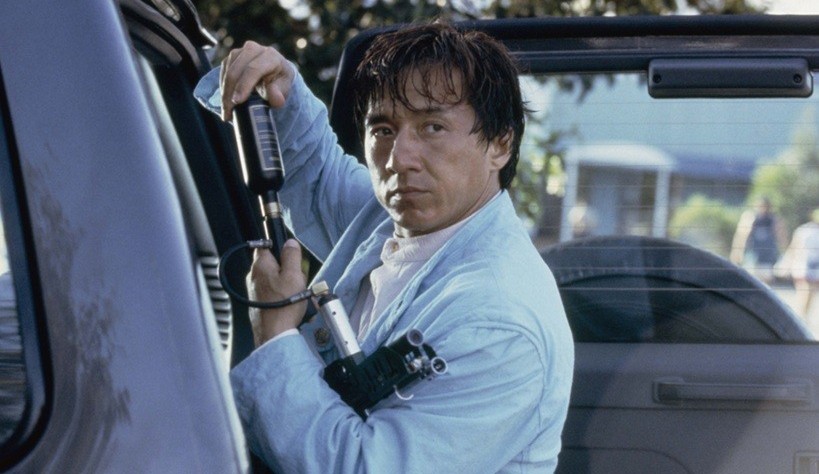
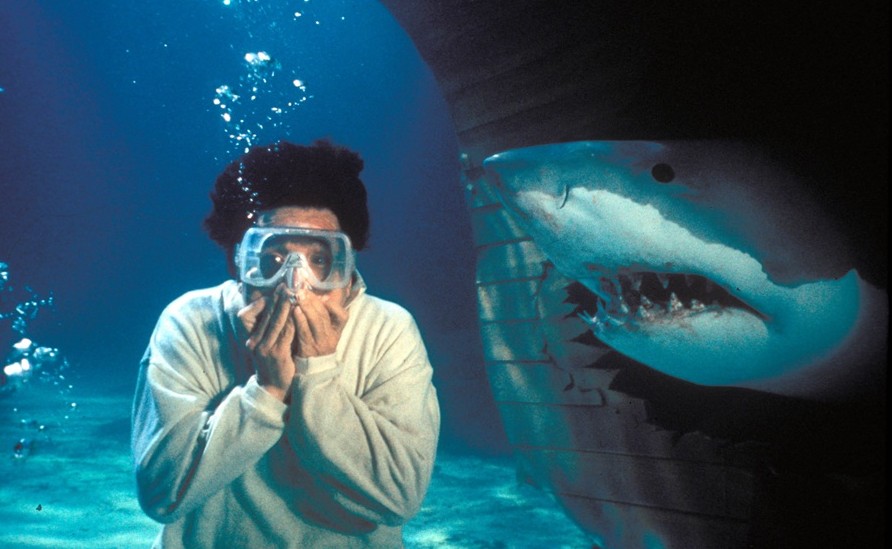
Later in the picture, the protagonist is hanging from the side of a tall Brisbane condo. The most famous scene is the fight involves an intricately staged and jaw-dropping conflict involving a full ladder, as well as a series of bits with Chan on stilts and using them to kick bad guys. It finishes with an elaborately staged climax at an aquarium in which Jackie fights a henchman underwater while they are all hunted by “killer sharks” in the tank. It’s all very silly, but it knows it’s over-the-top and wants nothing more than to entertain you, which it does easily.
This is another picture in which you will receive two very different versions of the same story. The Hong Kong cut is more than 20 minutes longer. Again, there are more character bits, and more humor between the fights. A great moment involves a series of Russian warning signs featuring soldiers shooting intruders who enter their country. You get a brief line about it in the international version, but more humorous panic from the lead in the extended version. Early scenes also involve Jackie following his suspect around for much longer. The longer cut is, again, in my opinion superior. This picture was literally cut to the bone in the international edition, and a few pauses for more laughs and character beats actually help the story.
It comes with an enjoyable film critic commentary and the featurette Breakout! Part 4, which goes into the story behind this feature. Additionally, there is an interview with martial arts cinema expert Frank Djeng. Everyone notes that this was not really a Police Story film, but that it was essentially reworked to become one when fans kept asking for another in the series. This movie ended up being a massive hit in China and Asia, but not quite as popular in the US as previous titles. All involved have interesting theories, and I will offer my thoughts on what was going on in North America while examining the next picture in the set. They do note that, as is obvious, this movie was once again an attempt by Chan to expand his worldwide audience and tell stories set outside of Hong Kong. Other bonuses include scenes added for the US network TV version with unique dubbing, textless outtakes, an image gallery, and a trailer.
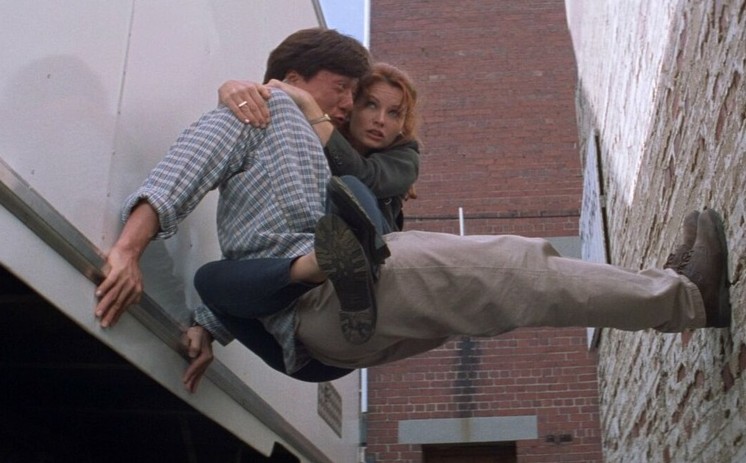
Mr. Nice Guy (1997) is the fifth film in this box, and it is set primarily in Melbourne, Australia. This plot involves a cook and, well, nice guy who spends his days performing with an Italian restaurant owner/chef on a television program. In the meantime, a local reporter uncovers a drug-dealing criminal gang with ties to wealthy mob boss Giancarlo Luchetti (Richard Norton). She and her cameraman record incriminating evidence on a video camera. The villain and his goons hunt the woman, who bumps into Jackie. Soon, Jackie and everyone close to him are pursued by relentless villains determined to recover the tape and kill them all.
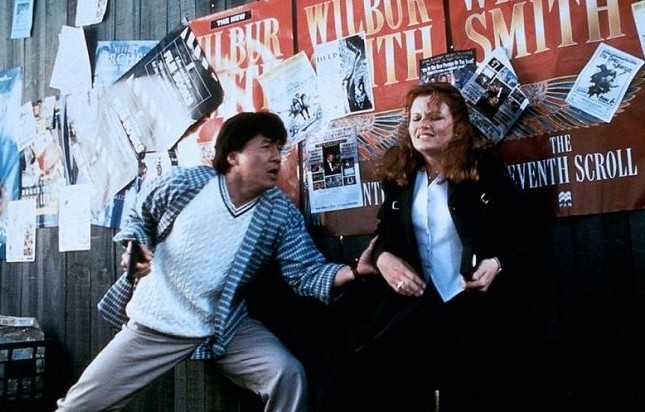
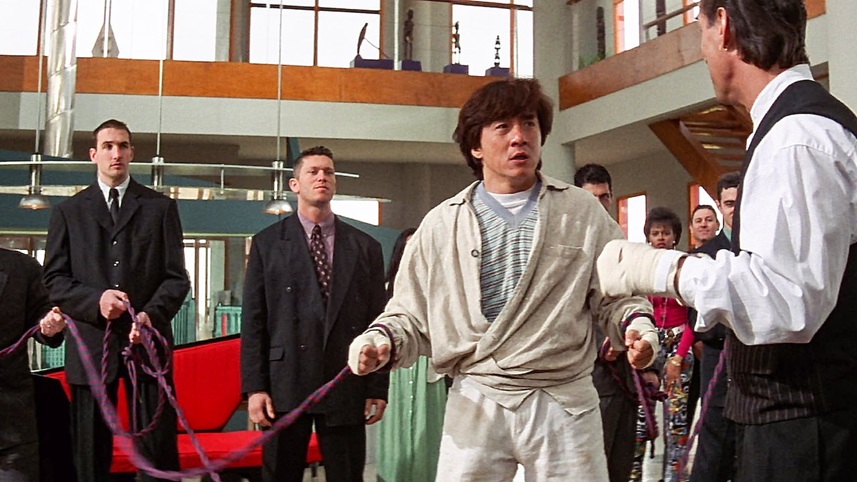
This is essentially an extended chase movie, but the pursuits are exciting throughout. Sammo Hung stepped in to direct this picture. Like many of Chan’s films, there are some clumsy plot elements, including the appearance of Miki (Miki Lee) as the lead’s jealous girlfriend who doesn’t do much in the film but requires constant reassuring and rescuing. Despite the character issues, the action is top notch and, to some degree, even better than the previous title. There are many incredible physical bits, with Chan running across trash bins while opening a few and causing pursuers to fall in. There is an absolutely wonderful fight sequence at a building construction site. One section involves Jackie being chased and using doors to defend himself (this particular floor of the incomplete building has an absurd number of doors, but it allows for the performer to use them in thrilling ways. The fight then moves to an open area, where running cement mixers and saws are used for some dangerous looking stunts.
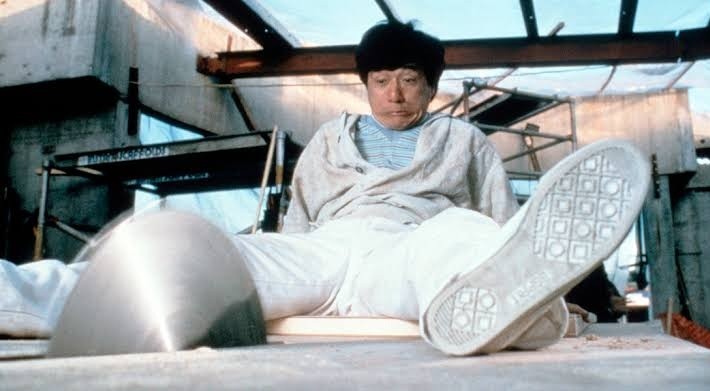
Add in fisticuffs on a horsedrawn carriage in downtown Melbourne and a finale featuring a massive mining vehicle and huge explosions (an entire residence is destroyed) and you’ve got a satisfying and occasionally riotous movie. Hung even has a fun cameo in the picture.
You’ll get two versions of the movie here, with the Hong Kong edition running an extra five minutes and featuring a bit more English language dubbing between characters. Again, the original version is superior to the international cut and one wonders why there was any effort at all to trim five minutes out of a 95-minute picture and add a few extra lines between Jackie and his girlfriend rerecorded into English, especially when so much of the film is already in English.
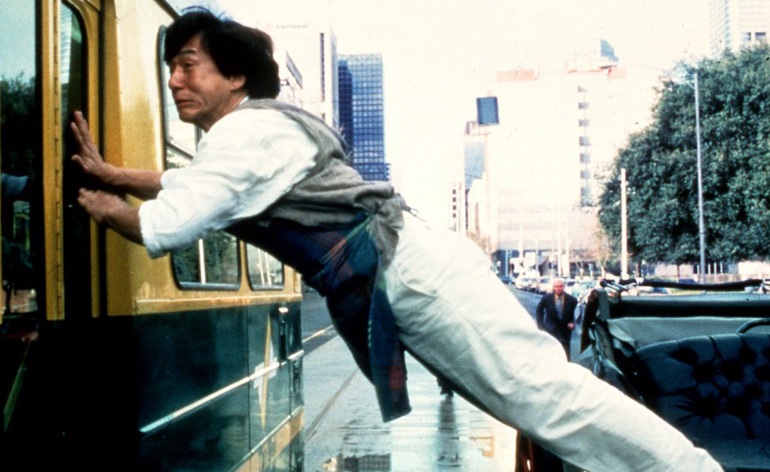
The disc contains a film historian commentary and the Breakout! Part 5 featurette on the movie. A new appreciation of the picture is also included. Those involved in the bonuses note that the feature is actually much better than they remembered it being during its initial release, and they praise the incredible stunt work and fun comedic moments. They also explain that this title, again, wasn’t as big a hit as earlier efforts like Rumble in the Bronx. There are also textless outtakes, promo materials and more included as extras.
If it matters to anyone, I think I might be able to explain from my perspective why these later efforts weren’t as big of a box office draw in North American. When Rumble in the Bronx arrived, the film was well-marketed and a huge success for New Line Cinema (who would continue to release Chan’s latest titles). These pictures were so successful that other studios sought to take advantage of Chan’s newfound popularity. Particularly Miramax and the Dimension Pictures line, who bought up the rights to several earlier titles starring Chan.
Immediately after Rumble in the Bronx, Dimension released Supercop (aka Police Story 3: Supercop) at cinemas, which was also a big hit. Over the same period as the titles on this set, Crime Story, Operation Condor (aka Armor of God II: Operation Condor), Twin Dragons, and many more were also released at theaters and on home video, to the point where it seemed like Chan movies were almost competing with each other. In Hollywood tradition, US studios saw a good thing and quickly saturated the marketplace with Chan movies, to the point where after only a few years average viewers were likely becoming exhausted by all the releases. Thus, North American box office grosses for Chan’s newest titles began to suffer. That’s my hot take, anyway. Now, back to the set…
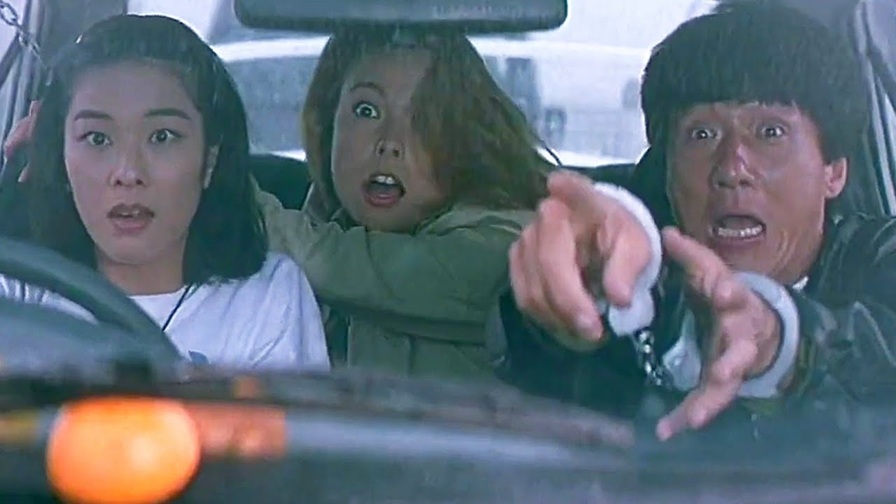
The final film on this set is Who Am I? (1998). Unlike previous features, this effort was from a different US distributor, Sony Pictures. It also was the last Hong Kong production before Chan was cast in major Hollywood productions. This is another globetrotting adventure about a secret compound that governments and sinister individuals want for their own use. Jackie Chan is a Hong Kong agent sent to help out, but is set up and ends up left for dead and waking up with amnesia in South Africa. He is taken in by the indigenous population, before assisting a snake-bitten Japanese rally car driver and his sister. The sibling Yuki (Mirai Yamamoto) decides to help the nameless figure find out his identity.
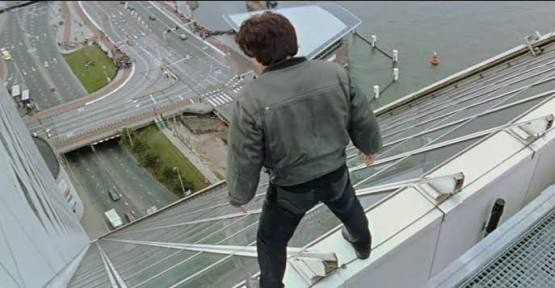
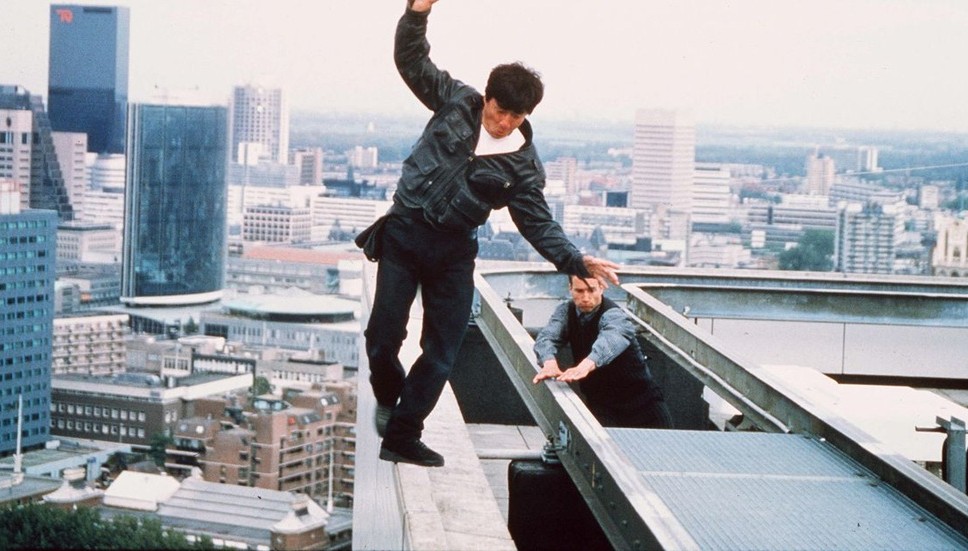
It isn’t long before officials figure out his identity and want him killed. He evades death in Johannesburg and receives extra assistance from reporter Christine Stark (Michelle Ferre), who may know more than she tells Jackie. Almost everyone ends up in Rotterdam, Netherlands for some wild action and an amazing stunt slide down the side of a skyscraper.
A Hong Kong cut and an international cut are included. The Hong Kong cut is 12 minutes longer and presents the events differently. In the original cut, the audience slowly finds out about Jackie’s history as he does, whereas in the international cut his entire backstory is relayed immediately instead of in pieces. While one understands trimming down some of the material, eliminating any suspense by giving away all the possible surprises in the latter version seems unwise. The Hong Kong cut is, again, stronger.
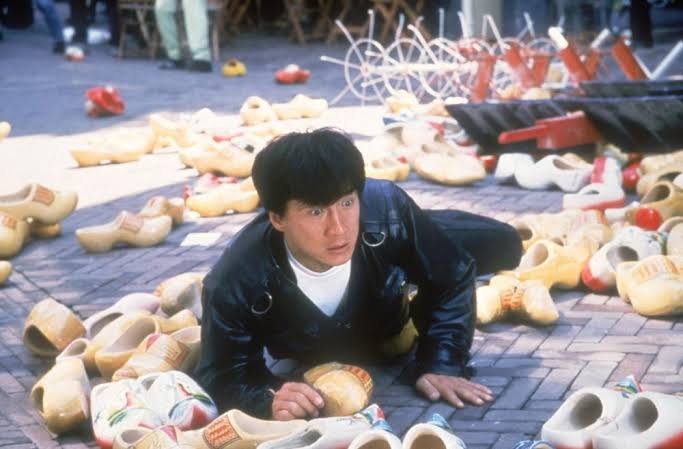
The story is more convoluted this time out, with Yuki eventually disappearing from the story entirely. But, the last half-hour in Rotterdam is fantastic, with a great chase down cobbled streets involving a great many dangerous and heavy items falling from above and creative use of clogs. The final battle atop the skyscraper is memorable (with the lead almost falling over the roof edge at one point), as is the incredible final sliding stunt. This isn’t his best picture, but it still has some great moments that look all the more impressive in 4K.
New bonuses include Breakout! Part 6 featuring interviews with film historians and co-star Glory Simon. There is also a film historian commentary, and a lengthy featurette on where Chan’s career would progress after this film. Apparently, Chan was visited on-set during production by director Brett Ratner, who offered him the co-star role in Rush Hour. It took some consideration, but obviously Chan soon agreed to take part and his career would get another big boost.
The interview with Simon is also enlightening. She discusses her experiences working on two Chan productions. In this one, she worked directly with Chan and spent time with him. She noted that the actor was hard-working but friendly, and would always invite cast and crew to big dinner parties after wrap and that the meals were incredible. She also recounts her experiences on The Accidental Spy (2001) in Turkey. She wasn’t in any scenes with Chan and didn’t even see the star during her time on the production, but noted that the director of that film kept the same kind of vibe on set, and that they all had a great time and ate well.
Additionally, this disc contains archival 2000 making-of featurettes, alternative credits, textless outtakes from the final credits, a Hong Kong theatrical trailer, image gallery, an interview with the second unit director, a US video trailer, and more.
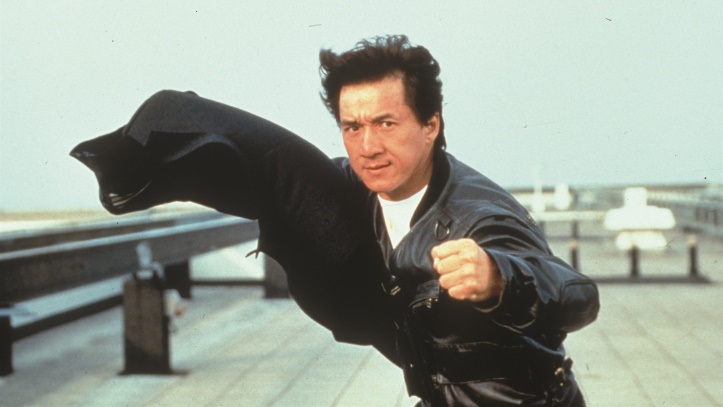
So, yes, in general the 4K picture quality is noticeably improved here, with impressive photography throughout (and with a few titles that look absolutely stunning). The set is also worthwhile for compiling all of Chan’s films from this era, some of which are out-of-print and hard to locate. And, the extras are incredibly enlightening, offering great stories and background information about the various titles. If you adore action pictures, then the 4K Ultra HD “Limited Edition” of Jackie Chan’s Breakout Hits! is a must own. I had a great time revisiting all of the performers’ 90s films, and heartily recommend this box to everyone.
