
This “Limited Edition” 4K Ultra HD release from Arrow Video is currently available for purchase.
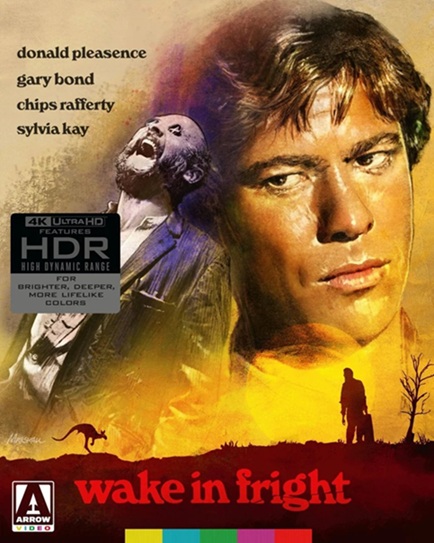
Back in 1961, Australian author/journalist/documentarian Kenneth Cook released the notable novel, Wake in Fright. Set in the outback of Australia, the dramatic thriller was noted for its grittiness, chronicling an elitist schoolteacher’s lost weekend in an unfamiliar and, at times, dangerous part of the country. The book was generally well-received, and it was only a year or two later that producers began trying to adapt it for the big screen.
After a decade and many false starts, the picture was successfully completed. The Australian film industry was small at the time, and while the crew were locals, the production featured a Canadian director, Norwegian producer, as well as UK involvement. Even some of the financing came from the US. While the feature included people from all over the world, the final product gelled and has stood the test of time. Admittedly, it wasn’t well marketed and generated controversy upon its release due to the portrayal of the outback and other story elements, but it was immediately embraced in France and other international territories. This film is now considered an Australian classic.
Arrow Video is now delivering the film as a “Limited Edition” 4K Ultra HD title. This is a gritty picture, which means the negative naturally looks grainy at times, but it is a fantastic transfer that delivers far greater detail and clarity than ever seen before. Loaded with bonus features, the disc also gives notable details about the production, analysis of the themes, and a ton of trivia and facts about its release.
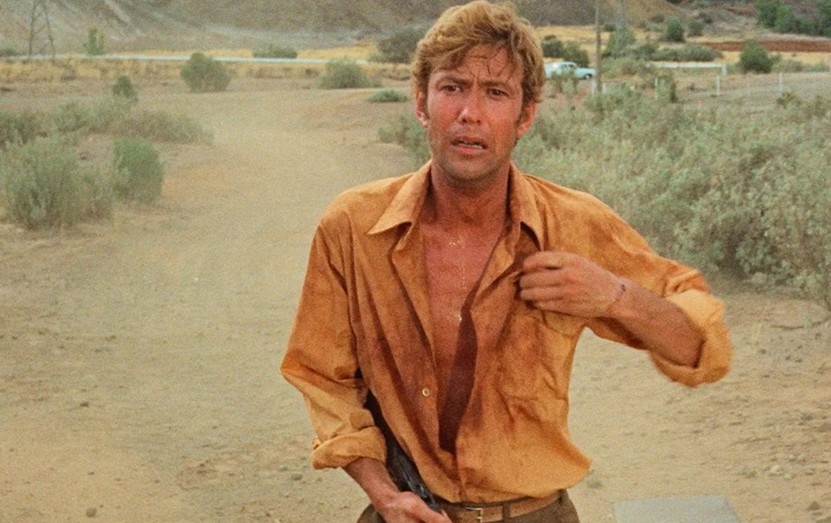
For those unfamiliar with the storyline, John Grant (Gary Bond) is a schoolteacher in the middle of the Australian outback, serving a government contract in order to pay for his own education. While pleasant to his students, the lead has great disdain for the area and people living there. Over the stifling hot Christmas holiday (seasons are reversed in the southern hemisphere), Grant decides to travel back to Sydney in order to visit his girlfriend. Unfortunately, things go sideways.
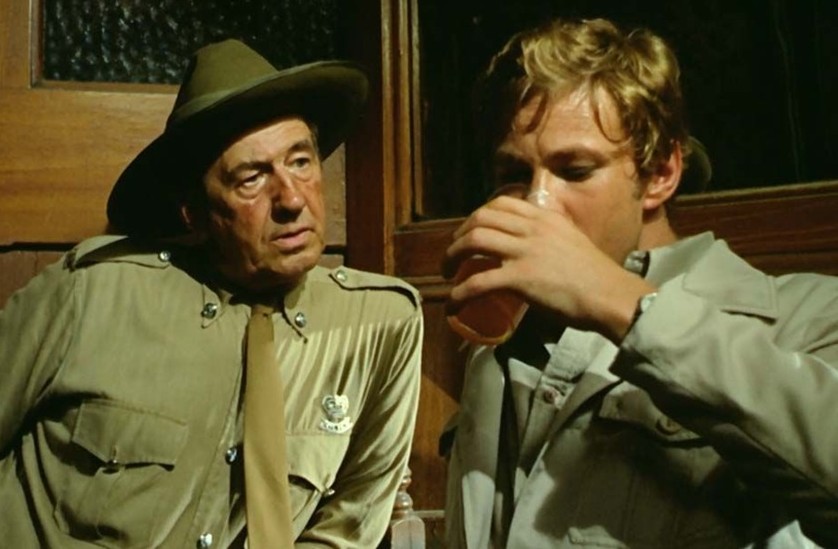
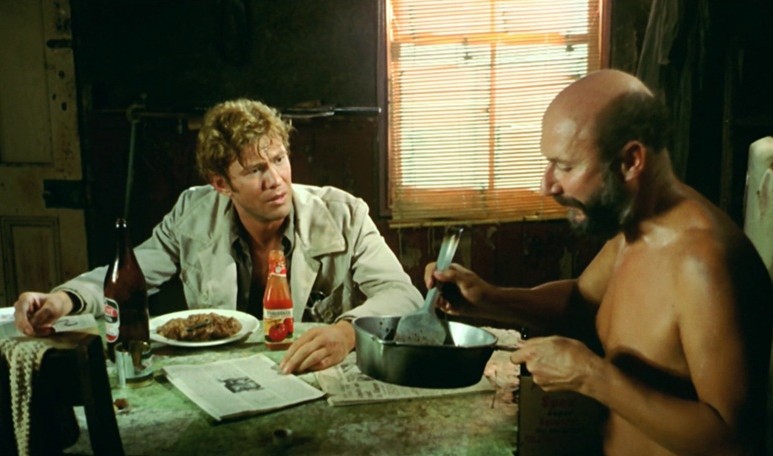
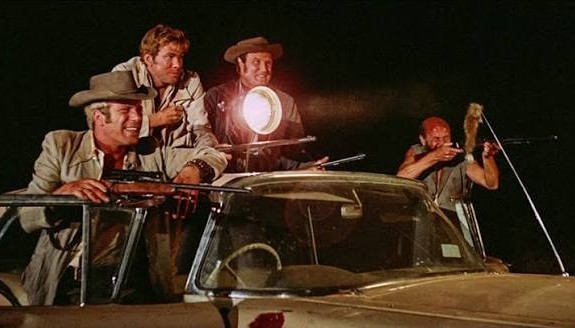
After arriving in nearby mining town Bundanyabba aka “The Yabba” to await a flight back home, he goes out and ends up begrudgingly fraternizing with locals. The population is mostly male, outgoing and aggressively macho. Among them are local policeman Jock Crawford (Chips Rafferty) and alcoholic MD Clarence F. “Doc” Tydon (Donald Pleasence). In between drinks, Grant takes part in a game of “Two-Up”. He ends up losing everything, and, in his efforts to prove himself to those around him, partakes in other hedonistic activities. In the end, he finds himself on a kangaroo hunt and even in bed with an unexpected partner.
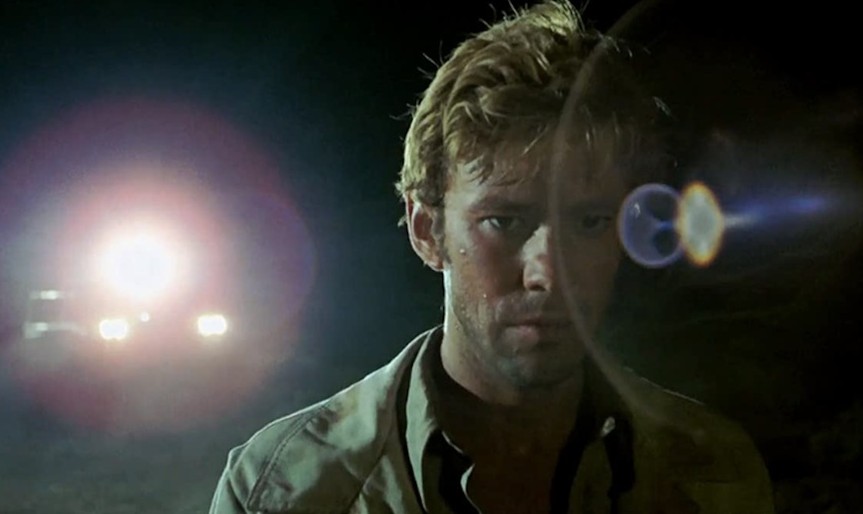
The picture is incredibly strong, with great, naturalistic performances for the era from its lead actors. There’s a lot of wild behavior on display. Yes, viewers witness John sneering at the others, but it’s clear that life is incredibly hard in these parts. And when the protagonist finds himself in trouble and in desperate need of help, he begins agreeing to things he never would have previously. The alcohol abuse also fuels a lot of the behavior that follows, and one discovers that, when there are no social standards of behavior to adhere to, the main character can turn into a completely, and perhaps even more truthful, version of himself. Some true aspects might be more truthful to himself, but others are brutal and boorish.
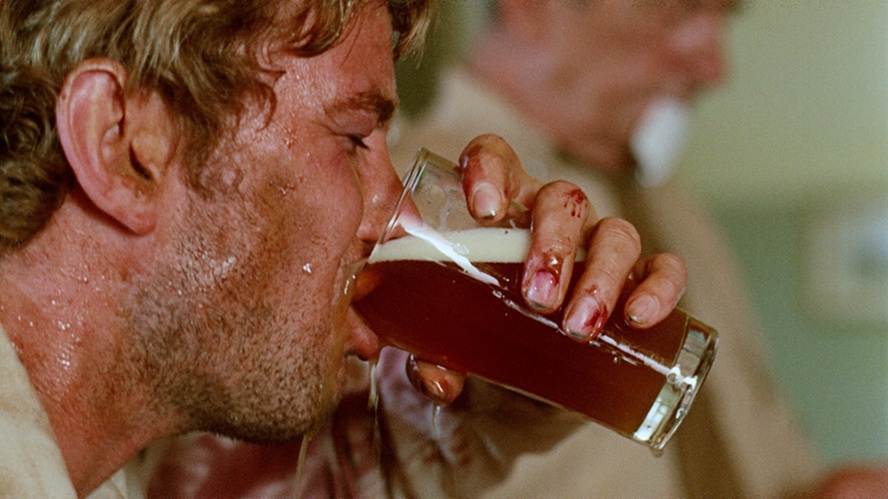
This film is also remarkably shot, with incredible camera angles and images of dust, dirt and desert. It literally looks and makes you feel like you’re in heat measuring 110 degrees Fahrenheit (or 45 degree Celsius), with the sun blaring down on you. This is especially true during the opening scene, which features the camera panning nearly 360 degrees around a desert area in the middle of nowhere, emphasizing the emptiness of the outback. The bar locations are sprawling, crowded and intimidating, and the editing allows the situations to feel real, while occasionally adding artistic license to make a point (including a blinding light hanging about the hall where the game of “Two-Up” is being played, as well as various uncomfortable flashes of characters Jack encounters when he’s in an increasingly dilapidated state).
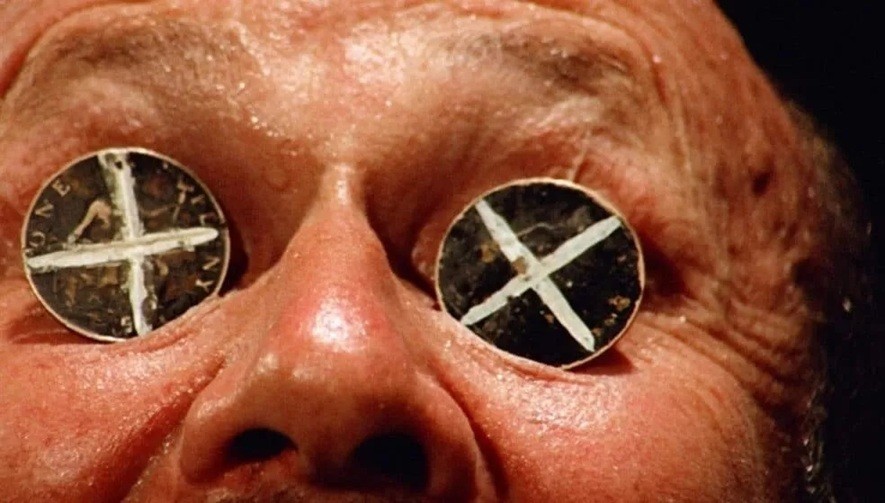
While there is an overarching theme about the lead character not really knowing himself until the close, although a lot is wisely left open to interpretation. The movie doesn’t judge its characters or what they do, it simply presents them and allows you to think about events and make your own analysis of what it all means. It’s a wonderful approach that invites conversation and thought, and I wish more films would adopt this approach today.
The 4K restoration from the original camera negative, presented in Dolby Vision, is exceptional. This is an older, relatively low-budget feature and it has plenty of natural grain, as would be expected. Despite this, the colors are strong and the detail is much better here than I have ever seen before. You can observe all kinds of interesting details and signage in the bars and buildings, and it makes the images and places in an already atmospheric movie feel even more immersive.
In addition to the great picture, there are fantastic extras. The most impressive one is a 2008 archival commentary from late Canadian director Ted Kotcheff (who would go on to direct The Apprenticeship of Duddy Kravitz, Fun with Dick and Jane, Split Image, and First Blood among many others), who explains his working methods, along with Australian Anthony Buckley, who helped discover and restore the lost camera negative 20 years ago. Kotcheff goes over all the important details about making the movie, noting that he felt very capable of shooting a story in which the isolation the characters experience in a lonely environment affects their behavior. He states that, while in Australia the weather is blazingly hot, it can be equally inhospitable (in a cold way) in the wilds of Canada. So, the idea of a snobby city figure transforming while in the middle of nowhere with rustic, provincial types was a familiar concept to him.
He talks about spending a great deal of time researching the area so that little elements would be accurate. Additionally, Kotcheff speaks of shooting in the town of Broken Hill, noting that it was a dusty mining town filled with heavy drinkers (many of whom were used in the picture). At night, he and the crew would witness barfights and other overly masculine behavior. The movie also spends a lot of time showing real games of “Two-Up,” and Kotcheff shares his experiences watching it being played and even getting involved. It’s all fascinating information.
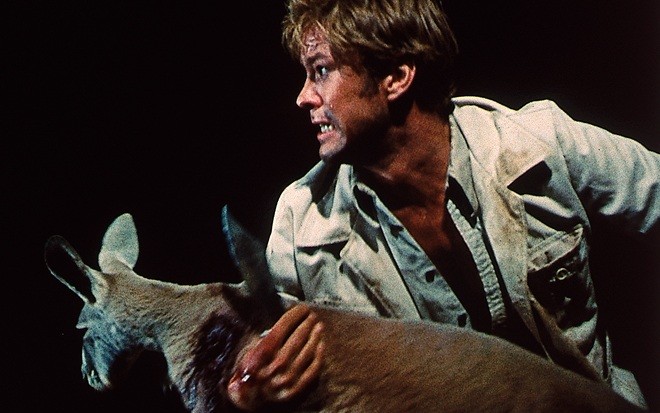
Kotcheff also goes into the brutal kangaroo hunt sequence and describes how it was captured. It is harrowing to watch in the film, and he notes exactly how everything was cut together to create the illusion that the characters were committing these acts. In Australia, kangaroo hunts occurred nearly nightly at the time. Locals would venture out, shoot dozens of kangaroos, and sell them for their pelts and meat. He points out that kangaroo meat was (and is) still used for dog food domestically and abroad, and that if you bought it during the era (and frankly, many still do it to this day), this is how it ended up in your can. The government has stepped in to make it more regulated since the 1990s, but back then there was no control.
So, Kotcheff and a small crew ventured out on a typical kangaroo hunt one night and photographed the shooters firing at and collecting the bodies of kangaroos. He and the cinematographer also collected footage of carcasses strewn everywhere. The bits were intercut with the actors and a trained animal that performs in one bit of the picture, and it’s all cut together seamlessly (and is shocking at times to watch). You couldn’t shoot this today, but the narrative really depicts the strangeness around what was really going on at the time (and what, to a lesser degree, still occurs in the wild).
Perhaps Kotcheff’s funniest story comes from the premiere of the movie at Cannes, and him overhearing a young filmmaker reacting loudly and positively to the screening. He asked a press rep after the showing who the person seated behind him was, and was told that it was a young, relatively unknown moviemaker named Martin Scorsese. As it turns out, after the film was lost and then rediscovered several decades later. In 2009 at Cannes, Scorsese presented the restored, complete version of the film (the same version that is presented on this disc).
There is also a critic commentary, delivering more information about the production, the things reported to have occurred during the shoot, earlier attempts to get the picture made, and the movie’s importance in Australia and around the world, essentially jumpstarting Australian cinema. He also goes about analyzing the picture and brings up some interesting observations that are worth listening to. But as someone with a unique knowledge of Canadian film and its filmmakers, I would assert that there are distinct connections between Kotcheff’s approach to storytelling and the era’s Canadian documentary moviemaking (which was a huge influence on Canuck filmmakers, even those living internationally). The downward trajectory of the somewhat passive protagonist, as well as fly-on-the-wall observational techniques, and an unwillingness to wrap things up in a tidy manner are strongly evident, even if they are interspersed with some creative camera angles and dynamic editing.
There is an interview with the cinematographer, who goes through the difficult shoot and personal experiences making the movie. Additionally, there is a great featurette on “The Yabba” aka Broken Hill. This includes visiting the exteriors used in the movie and comparing them and how they look today, as well as a look at other pictures that were shot around town (like Mad Max 2 aka The Road Warrior, and The Adventures of Priscilla, Queen of the Desert). It’s a very entertaining piece.
You can also watch a discussion with the sound editor and assistant sound. The two were based in the UK, and talk about getting hired to work on the project and their contributions to it. And, film critic and author Kim Newman presents a look at the career of Donald Pleasence, highlighting some roles that will make you add a few titles to your personal watch list.
There is also a recent discussion on Wake in Fright between a film historian and director Philippe Mora (A Breed Apart, Communion), who was familiar with Kotcheff and shares his thoughts on the movie and its director.
You’ll also get alternate scenes for the US cut of the movie. Titled Outback, this includes a nude scene featuring the star that was shot twice. The clothed version is presented here, along with other sanitized versions of other moments in the picture.
As if there wasn’t enough information already contained on the disc, there are also an archival interviews from 2008 with Kotcheff, a 45-minute discussion with the moviemaker from the Toronto International Film Festival, and a 2-plus hour audio interview from 2009, along with an audio interview with the movie’s composer and another with Jack Thompson, a notable Australian actor who made his onscreen debut in the picture.
And trailers, TV spots, an image gallery and even a 38-minute set of movie trailers for Australian pictures directed by overseas filmmakers is included. This bit is hidden in the “Trailer Gallery” and includes some famous pictures, along with a number of obscurities (many featuring cast members from Wake in Fright). The TV clips contain an ABC news segment on the making of the movie, another about its rediscovery in 2008, and a television obituary for co-star Chips Rafferty, who passed away just before the feature was released. It’s all interesting stuff.
In addition, there is a booklet containing essays on the movie, and another 2012 statement from the director about the kangaroo hunt footage in the film.
Wake in Fright can be a tough watch, but it’s a challenging movie that you don’t forget. In fact, it will make most viewers consider and debate the story’s observations long after the credits roll. This is an excellent film, arriving on an equally top-notch 4K Ultra HD disc from Arrow Video stuffed with hours of incredible extras. For these reasons, this “Limited Edition” release gets a big recommendation.
