
This “Limited Edition” Blu-ray from Radiance Films is available for purchase on September 1st, 2026.
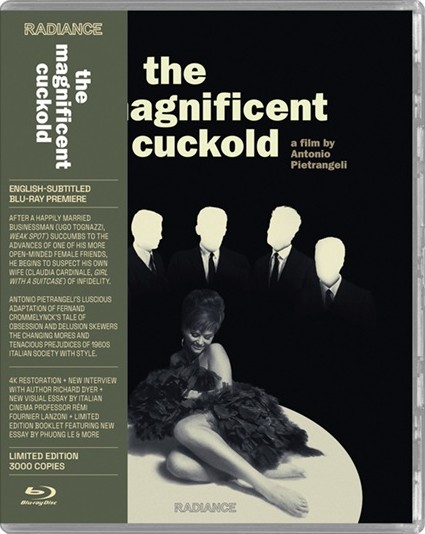
If you’ve read this column, then you’ll know that, for a few years now, Radiance Films has been restoring and releasing incredible international films (and a few domestic ones too) that aren’t necessarily well-known in the western world.
Curiously enough, this week sees the arrival of a hugely successful Italian comedy that faded a bit from the cultural consciousness a decade or so after it left cinemas. However, critics and historians have been rediscovering and singing the praises of the movie over the past decade. They want viewers to know that it isn’t just darkly funny, but far ahead of its time in terms of dealing with and criticizing the culture of the period.
Indeed, it is an impressive film. While shot in black-and-white, The Magnificent Cuckold initially feels like a lavish Hollywood rom-com with some big-name performers following the story of a jealous husband, before it subtly and convincingly turns into something decidedly darker and sharper.
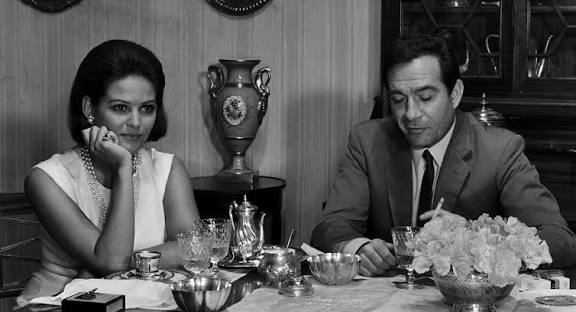
The lavish home and hotel sets make an impression, as does the costuming on the characters (particularly the female leads) and there are some genuinely funny bits before the movie’s lead goes to a darker, more unhinged place.
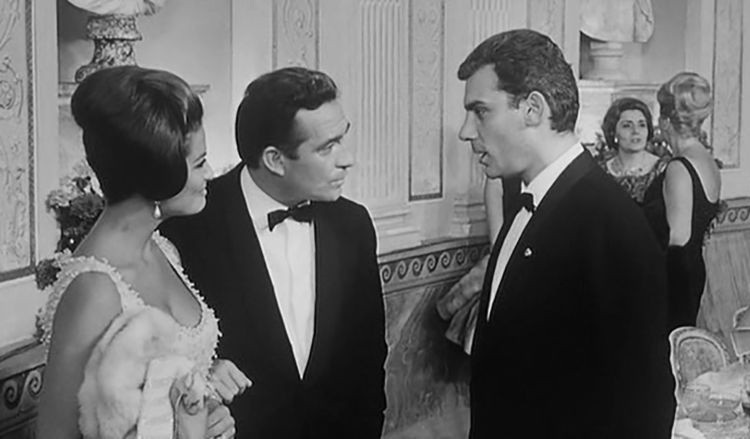
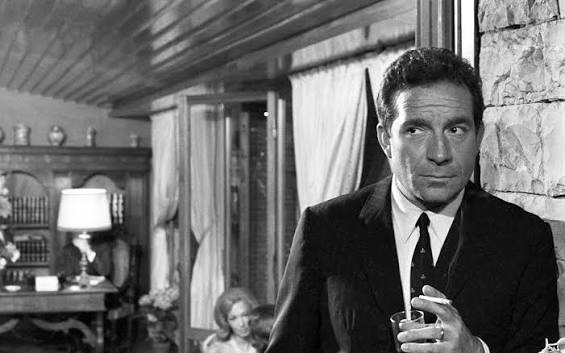
Andrea Artusi (Ugo Tognazzi) is a middle-aged, rich and powerful, recently-married head of a hat- producing film. His sweet, young and beautiful new spouse Maria Grazie (Claudia Cardinale, whom North American audiences will recognize from Once Upon a Time in the West) has an eye for interior design and working on building them a lavish villa on the outskirts of town. Despite Andrea’s wealth, status, and incredible partner, something is nagging at Andrea. At some very stiff, upper-class parties, it becomes clear among many male elites that rumor and gossip is popular, and some within the group claim to be embarking on affairs with each other.
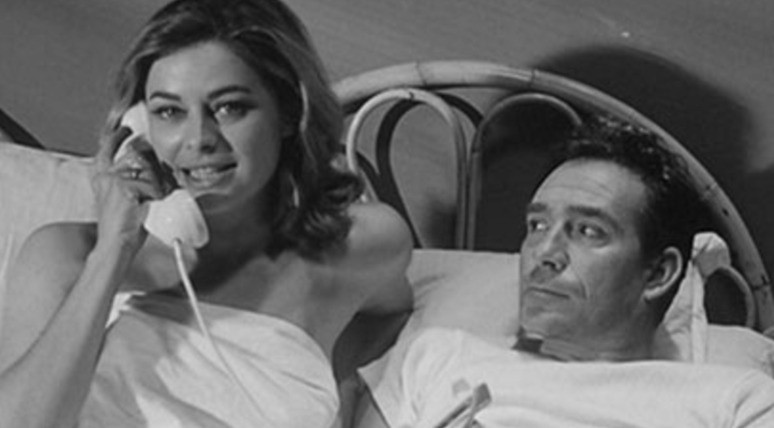
Andrea initially blows it off, until he becomes enamored with the wife of a partner, Cristiana (Michèle Girardon). They begin an affair, with the lead noting that he can’t believe he’s cheating on Maria. Cristiana makes a passing comment that, when things seem fine, it’s the best time to embark on extramarital activities. Andrea suddenly becomes convinced that Maria must be cheating on him as well. He comically goes through her things, follows her, has her followed and invents imaginary, increasingly elaborate scenarios of whom she might be sleeping with, and how she is getting away with it. As his intensity builds, Andrea’s behavior becomes paranoid, frightening and more erratic to Maria, in a manner that almost seems to be pushing her to cheat on him for real.
It’s an amusing concept and the film does an excellent job of showing just how hypocritical, absurd and irrational Andrea’s behavior is. Initially, it does appear to be guilt causing some of his actions, but things get progressively worse as his imagination takes control and he rationalizes his behavior. There is a comment from another within his group that I’m paraphrasing here, suggesting that, “You can’t ever prove your wife is innocent, but it is possible to prove her guilt,” leading to more and more extreme actions.
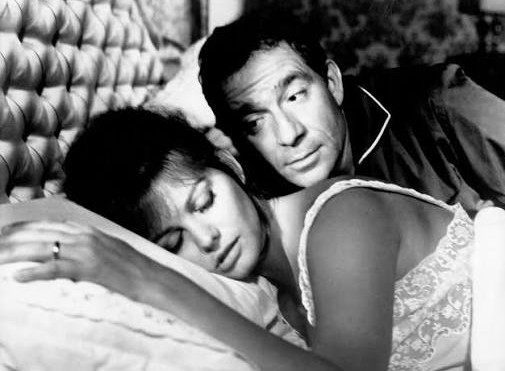
The true darkness in the story builds slowly and along the way there are a few amusing antics. One bit involves Andrea visiting a hotel where he believes Maria may be meeting a lover. After seeing a woman in lingerie and presumably imagining the floor is full of illicit affairs, he follows the figure and ends up interrupting a lingerie show (which his wife is attending). Even some bits later on are amusing, as Andrea fires a young worker whom he fears might attempt to seduce Maria, only to hire a gruff, less-than-handsome elderly man who then starts catcalling women around the property. Just before his complete break from, the lead decides to fake an international business trip. He pulls off the road outside his home, takes a blanket, a thermos, binoculars, and smokes, planting himself behind a wall outside the home. Maria and all the staff look on in frustration, watching as puffs of smoke appear from behind the wall.
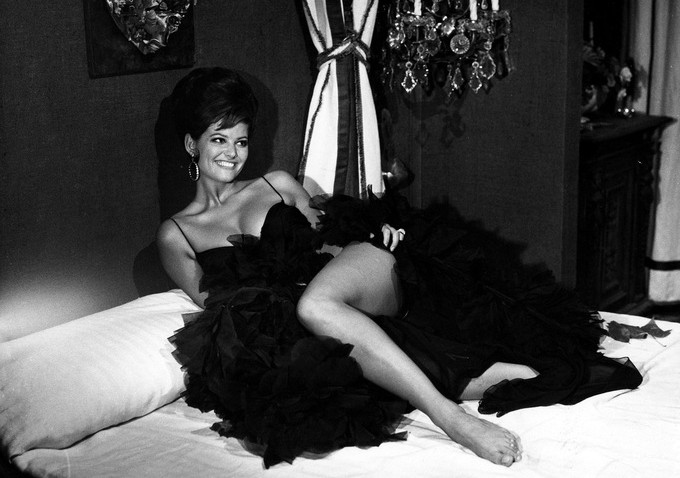
It all does become serious as Andrea soon becomes completely unhinged, threatening and pushing her to change how she views her husband and herself. In the end, Andrea backs off and gives up his pursuit, but the damage to their relationship is already done and Maria has also changed. Not to give away the finale, but it paints a sad picture of life among the upper-class, with all the characters detached and living separate lives.
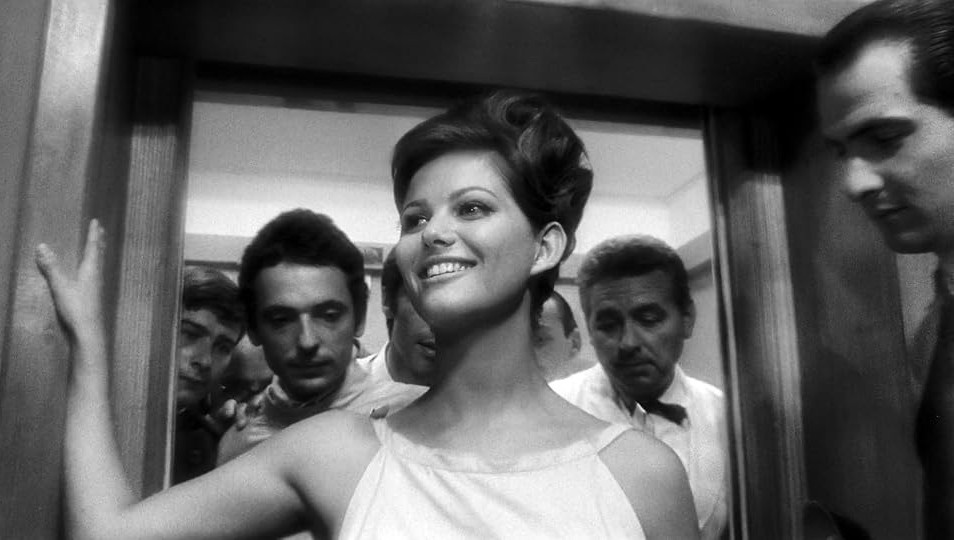
This release presents a 4K image restoration from the original sound and camera negatives. It looks fantastic. As mentioned, there’s some incredible detail on display, from faces and costumes to locations. It may sound silly, but my eyes were checking out details during a party scene in the finished villa. The dream sequences are intentionally fuzzy, and one shot features a hair in the gate at the top of the frame for 30 seconds), but that’s literally a result of a camera operator not checking the lens during production. The movie looks beautiful, exactly as it was shot more than 60 years ago.
The extras on the disc are also enlightening. There is a color sequence from a 1971 reissue of the movie. During the lead character’s dreams, the image is tinted here and there with a yellow, green, blue or red. It’s an interesting effect and is fun to see here, but doesn’t really add anything to the presentation and is better as an extra than in the actual picture.
There is a visual essay on the picture from critic Remi Fournier Lanzoni, who clarifies what was going on in Italy at the time and the ideas that the movie was playing with. The early 1960s were a period of economic boom and growth for the country, with industry on the rise (as well as the emergence of more extravagant spending, particularly among the rich and powerful, including upper-class businessmen). He explains that the film does appear to be stating the fact that, despite all the money and influence in the world, the lives of many of these people are still complicated, unsatisfying and even empty. It’s an interesting track that does add a thematic layer to the proceedings.
The same goes for a 42-minute interview with Italian film expert Richard Dyer. He details the movie’s history and that it was based on a play (which explains why the movie adaptation is literally split into two acts). The speaker also continues with the previously stated themes, suggesting that Andrea’s status and appearances are a hugely important factor in the lives of these people. Andrea’s self-induced paranoia and increasing rage, as well as revenge fantasies, is just about how he might be viewed by others as much as it is about his own jealousy. He talks about specific examples in the movie, as well as Maria’s character and how it transforms over the course of the story.
There are further themes addressed as well, and the discussion puts them all clearly into focus. Dyer also sings the praises of director Antonio Pietrangeli, believing that his work is incredibly dense and underrated, with a lot of ideas and influences that many may have missed the first time around. He shows the filmmaker’s influences, including neorealism, and how the director deftly mixes elements of both exaggerated fantasy and realism in his movie.
The Magnificent Cuckold is an exceptional movie that made a splash for a reason back in 1964. But it also holds up incredibly well in today’s age, still dealing with relatable themes and offering a social critique in the process. The picture looks excellent and the extras included will help those unfamiliar with what was going on in Italy at the time even more appreciative of the feature. This “Limited Edition” Blu-ray is another great surprise and one that is well-worth picking up.
