
This “Limited Edition” Blu-ray from Radiance Films is available for purchase on September 15th 2026.
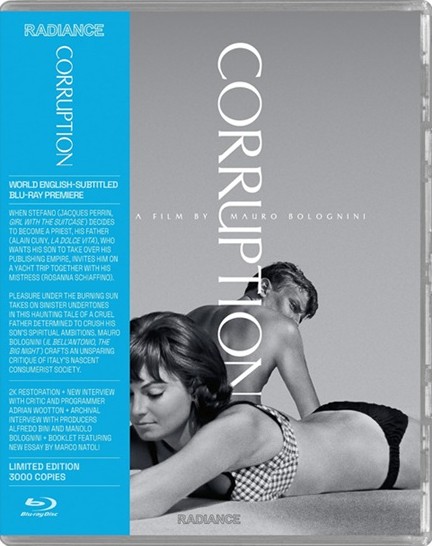
As home video enthusiasts will already know, Radiance Films has been doing an exceptional job at bringing lesser-known international titles to Blu-ray and 4K Ultra HD. And while I’ve spent most of my lifetime watching movies from all over the globe, many of their releases have been new to me as well. Their latest release, Corruption, is another title that I had no idea even existed. At least this time, I’m not to blame for my ignorance. This picture was barely released outside of Italy, and is finally making its Blu-ray debut in this part of the world.
Despite it being a smaller, more obscure title, my first reaction to the movie was that it is pretty incredible. Made around the same period as The Magnificent Cuckold (another recent release from the same distributor), these efforts were created during a period in which writers and directors were criticizing aspects of the postwar boom. This period of economic wealth benefitted the country in certain respects, but also resulted in obscenely wealthy businessmen/industrialists and a bigger, more obvious divide between the rich and poor.
While it wasn’t a success during its original run at Italian cinemas, Corruption has a compelling concept and explores its themes in an interesting and dramatic manner. It is bleak, but powerful and deserves to be seen by more film fans outside of Italy.
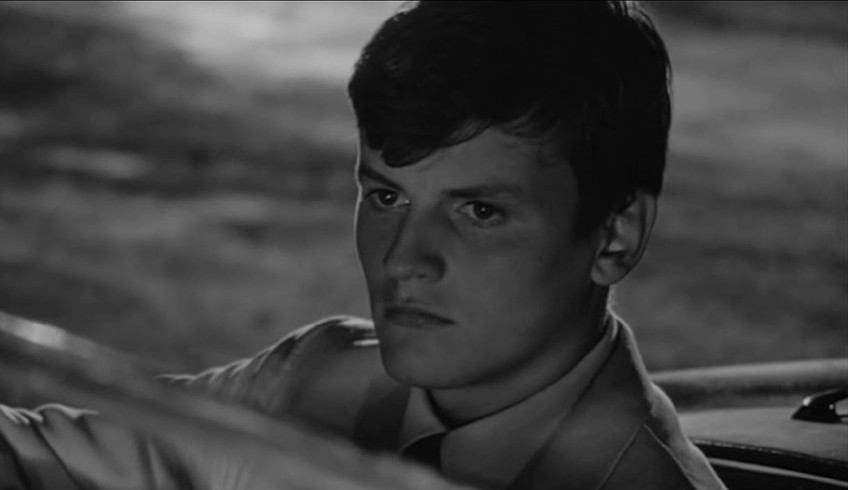
The film chronicles naïve young man Stefano Mattioli (Jacques Perrin) who has just finished college. Despite being the son of the head of a major publishing firm, upon his graduation he states to his professors that he intends to turn down his father Leonardo (Alain Curry) wishes to work for the company. Instead, he’s set on becoming a monk. They gently tell him that they wish him the best, but that he has less control of his future than he believes. One notes in a speech that, despite the best intentions of many grads, as members of the upper class they are actually trapped, and more likely to live out a life that has already been established for them.
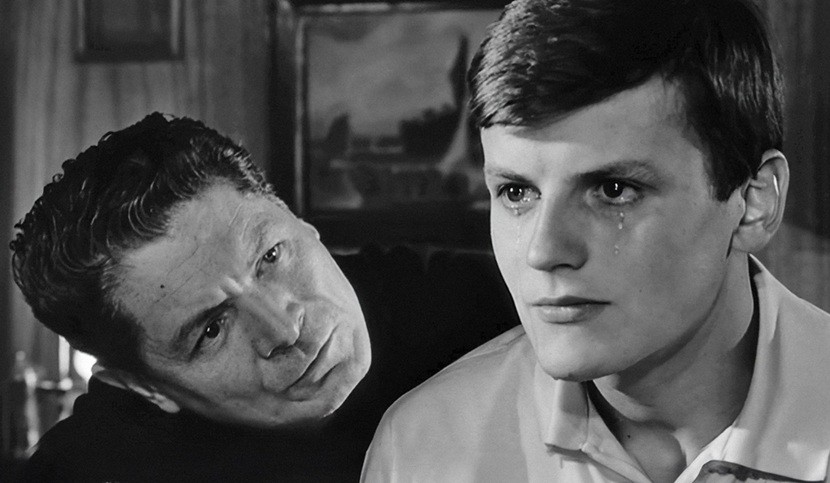
Indeed, when Stefano reunites with his father, his pop is none-to-pleased with his son’s decision. While at the office, Stefano witnesses his dad grilling a warehouse staff member over missing funds. At least he also encounters an author who writes critical novels about social class and whose work he admires. The protagonist also visits his mother, who resides in a psychological institution. Leonardo states that if his son really means to join the church, the least the two can do is spend as much time together as possible before the monastery calls. Stefano agrees, and is whisked off on a private yacht for a Mediterranean cruise. Unexpectedly, joining them is the lovely Adriana (Rosanna Schiaffino), who is in her early 20s and was a mistress to Leonardo.
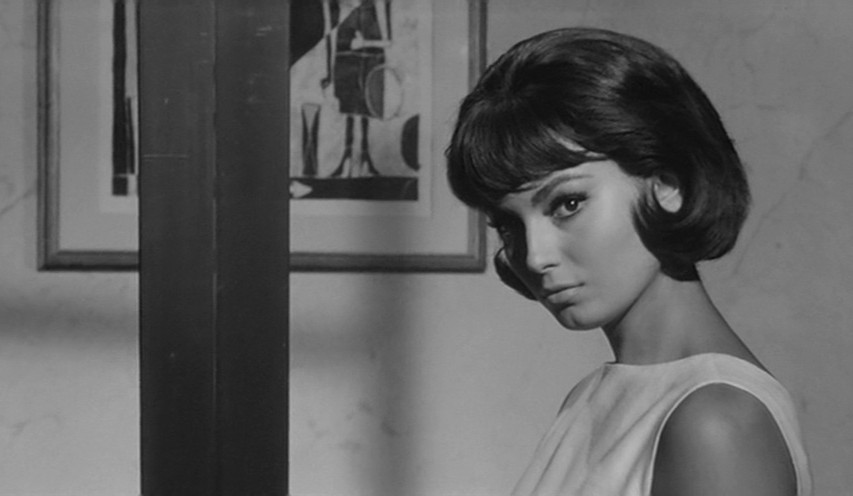
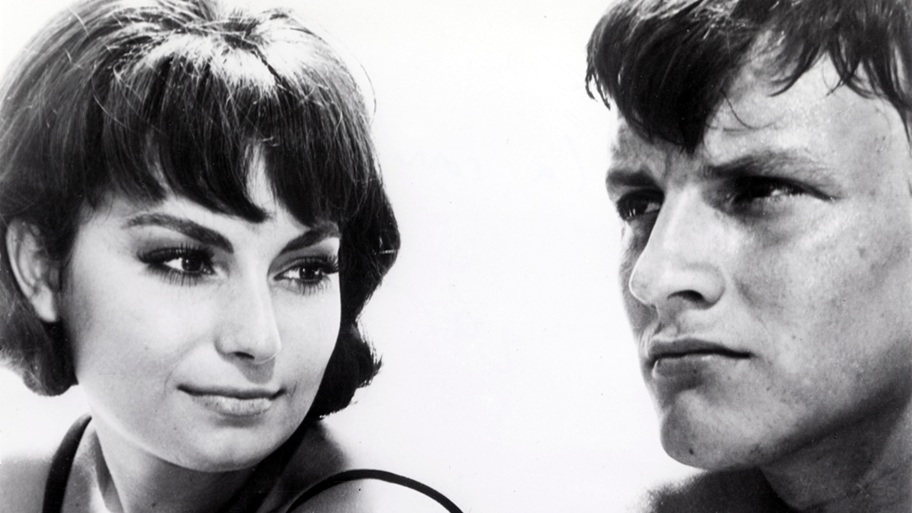
If you don’t want spoilers, skip to the next paragraph. The celibate Stefano is initially blunt and rude to Adriana’s sexual free-spiritedness and her materialism, but over the course of the journey the lead softens his stance. So much so that the protagonist begins to find the young woman hard to resist. In fact, he even tries at various points to sneak off the boat, but ultimately can’t escape his manipulative dad, or the charismatic, alluring Adriana. It results not only in an intimate encounter with the female guest, but the character doubting his own morals and ethics. Things get even worse later, when Stefano discovers that his literary hero is really only interested in making money off of his works and doesn’t live by his own code. There’s more horribleness regarding the warehouse employee, and perhaps even a subtle suggestion about what might have happened to some of the company’s vanished funds. In the end, Stefano feels completely trapped and broken by the world around him, his idealism destroyed. And it seems as though the breakdown his mother experienced might be in his own future as well.
This is an impressively shot movie, with incredible seaside imagery. Naturally, Schiaffino is beautifully shot as well, making it easy to understand how a determined, high-minded young man could fall for the temptation in front of him. The 2K image restoration looks very appealing once the optical credits pass and the movie focuses on the characters sailing on the Mediterranean Sea. While there is really nothing else to compare the image quality to (since this movie hasn’t been available in this part of the world), newcomers should still be impressed with the images on display.
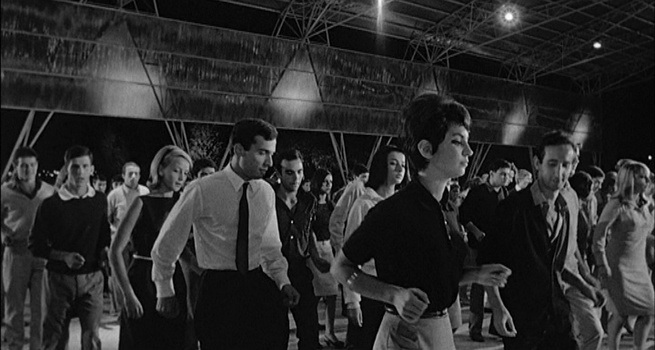
As mentioned, the film deals with important themes, including how the societal system around us forces many of the choices we make in our lives, even regarding who we are and what we end up becoming. The final image, of a large crowd of young people dancing is also surprisingly effective. Yes, they all appear to be having fun, but are moving in unison and following the same moves, suggesting there really is no hope of breaking free. It’s quite effective and the end result is remarkably potent.
There are some notable bonus features here. The first is an interview with a film historian. The individual goes over the career of director Mauro Bolognini, an artist who worked with Pasolini on projects like The Big Night and Il Bell’ Antonio, before branching out on his own and making movies like Corruption, Madamigella di Maupin and Mosca Addio. This critic goes over many of the themes present in this film and its criticism of Italian society during this era. The speaker also notes that Corruption was not a success at the time of release and was barely distributed at all outside its homeland. He suggests part of the trouble may have been due to the fact that, while incredibly sharp, pointed and astute, it is also condemning its own audience and the choices they’ve made to conform.
In addition, you’ll get an archival interview with Manolo Bolognini, who was the producer on the film and the brother of the director. He discusses how he and the filmmaker were able to get this project off of the ground and the difficulties involved in making it and getting it seen.Again, there are plenty of intriguing revelations about his attitude towards the film industry and the state of Italy in general during the 1960s.
An essay is also included in the case booklet, which again goes over some of the ideas being presented in the film.
If you’re going to make a protest movie about capitalism and class structure, as well as the ugly treatment of those stationed beneath you, and conformity in general, it’s best to go all in and try to eviscerate your targets. This picture does so brilliantly. I was deeply impressed with Corruption and am glad that I have finally had the opportunity to view it. So, many thanks once again to Radiance Films. It also features a high-quality transfer that highlights some of the gorgeous images and compositions. And finally, this “Limited Edition” Blu-ray also contains enough extras to give some context to what inspired the movie.
Those who admire classic Italian cinema need to own this, as well as those who want to see a grim, but also sharp examination of the ugly side of a system most simply take for granted.
