
This “Limited Edition” Blu-ray from Radiance Films is now available for purchase.
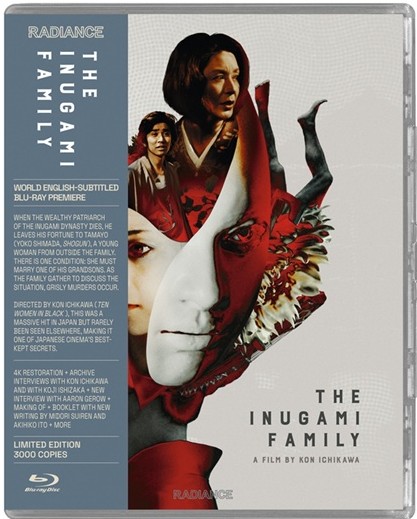
According to the bonus features on the latest Radiance Films Blu-ray release, in the 1970s Japanese cinema was on a downturn. It’s not that the movies were necessarily bad (some were very good), but box office was slumping. Many major studios in the country closed their doors or took drastic cost-cutting measures, changing their output and focus. Hollywood blockbusters were stealing audiences away from domestic titles, and there was little that Japanese producers could think of to compete.
That all changed with The Inugami Family, a homegrown murder/mystery book adaptation that appeared to cross most demographics in its homeland and became Japan’s second highest grossing title of the year. This massively popular title is now getting an impressive 4K restoration and release in this part of the world, so that western viewers can see the movie and decipher what made it such a hit with the public.
To an outsider’s eyes, the most notable selling points must have been the all-star cast and mystery format popular during the era. It seemed to be taking a page from hugely popular western efforts, like the Agatha Christie adaptations of Murder on the Orient Express and And Then There Were None aka Ten Little Indians, with perhaps even a bit of Frenzy and plot elements from Chinatown thrown in for good measure. But at least this story is told from a Japanese perspective, adding some uniqueness to the proceedings.
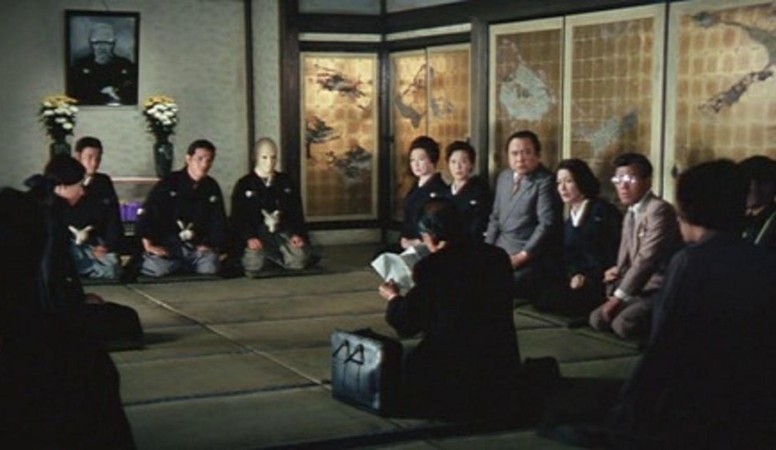
Most of the Inugami family, who have made their fortune in pharmaceutical products, find themselves being summoned to a massive lakeside mansion. They learn that the family patriarch Sahei Inugami (Rentarō Mikuni), is about to die, and that the contents of his will are to be revealed only when all his relatives are present. Immediately, there is bickering among those already there, and not long after one of the lawyers handling the will is murdered. The departed figure had already suspected trouble, and hired a private detective to stop in and help him uncover dark family secrets. Indeed, PI Kosuke Kindaichi (Kōji Ishizaka) appears shortly afterward and is tasked with figuring out what is going on.
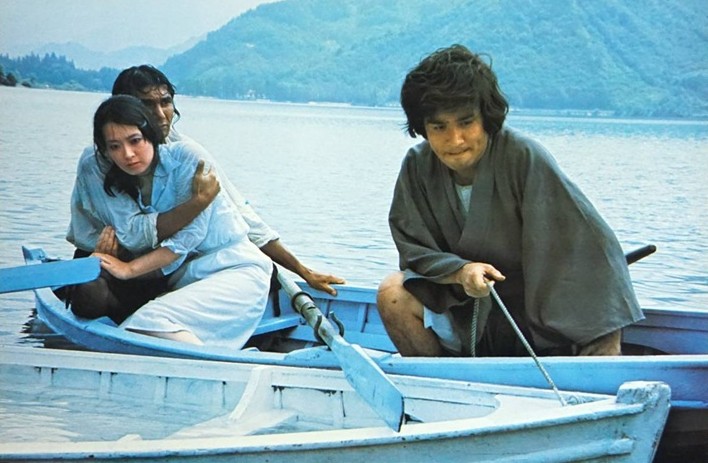
It seems that Sahei fathered three daughters with a trio of different women (who themselves have had children) who all want the fortune. When the details are revealed, it appears that the deceased has left the majority of his fortune to family stranger Tamayo Nonomiya (Yoko Shimada), a young, close friend of the deceased. But she can only keep the cash if she marries one of Sahei’s daughter’s sons (there are more and more stipulations about what occurs in the event of other deaths that are confusing, but they ultimately don’t become huge factors). One of the potential husbands is a disfigured, mute war veteran who wears a thin, skin-like mask over his face. It raises suspicion that he isn’t actually a relative, but a stand-in employed by his greedy mother. Naturally, potential suitors start dropping dead as detective Kindaichi uncovers the dark history of the family, including the possibility of yet another heir. And, there is a second masked figure running around the area who may also be involved in the slayings.
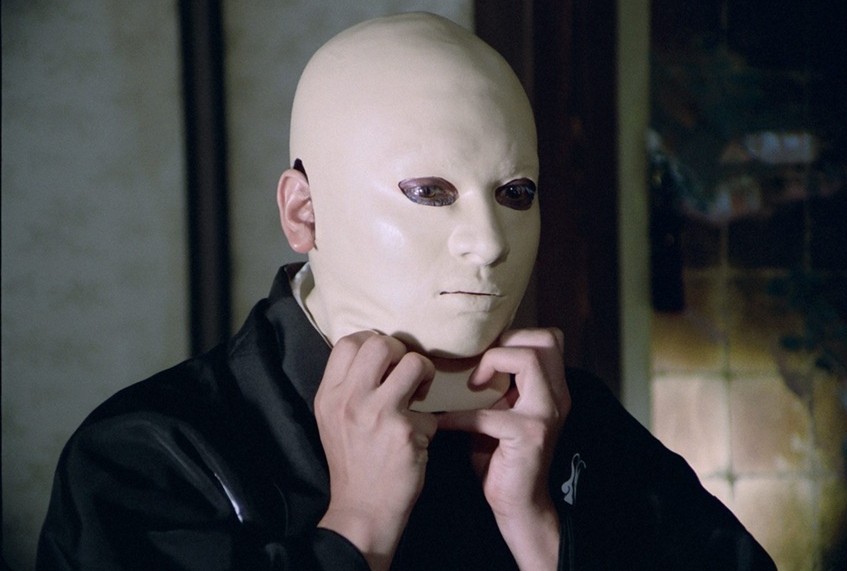
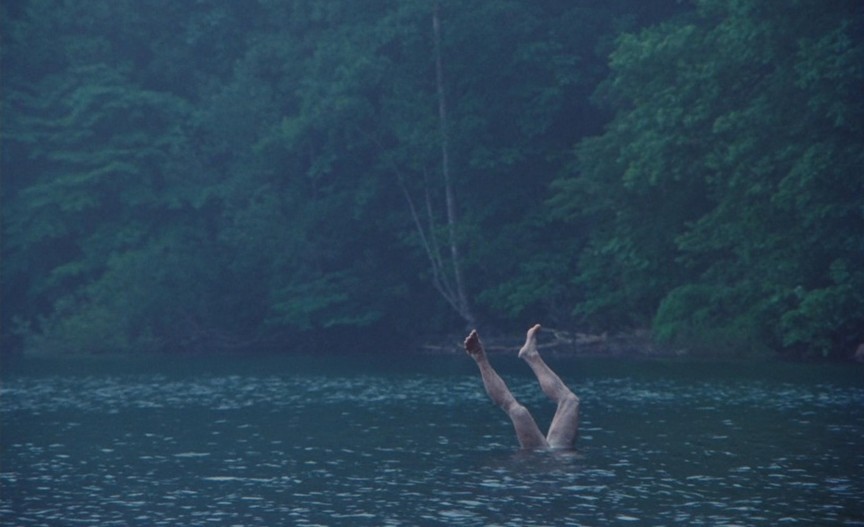
For Japanese audiences, this title featured an all-star cast and most of them are quite good. There is a tendency towards melodrama, and for the movie to show shocked screams and big reactions from female characters whenever another body is found. Still, lead Kindaichi is a very likably disheveled investigator, and the masked figure makes a dynamic impression. The murders are creative, anger-infused and even darkly comical. It leads to some funny comments from the lawyers, policemen and the protagonist. One mangled body is discovered in the marsh with his legs pointed up and out of the water, and when he’s lifted out, one of the officials calls to drop the body back in so no one can see the mess on display. Another character is decapitated, and the murders themselves are surprisingly graphic and make a strong visual impression. There are a few other cinematic quirks, including some unexpected images that appear recreating stories told by suspects and bits that are jarringly cut for dramatic effect.
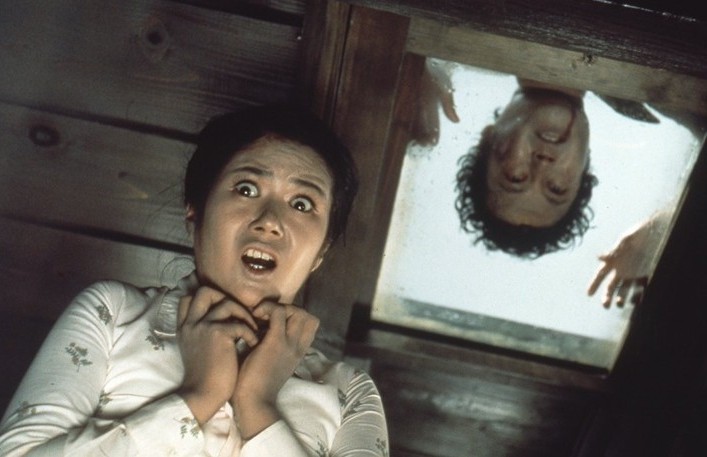
It is a bit slow-moving, running at nearly two-and-a-half hours with perhaps too many supporting roles. The many relationships with the protagonist aren’t all resolved (in fact, the lead literally just runs away from everyone at the close of the picture, which is funny to see but feels abrupt) and the plot is overly complicated. Secrets revealed include an incestuous relationship, which is met with little more than a shrug, and other red herrings that are only tangentially related to the solution given. It even takes about fifteen minutes for everything to be explained during the resolution.
Of course, most mysteries with a big cast have these issues, and it won’t matter to anyone who admires the cast and the storytelling format. And there are plenty of interesting moments to help those get over the clunky sections. It is comparable to the 1970s Murder on the Orient Express adaptation, making it a fun picture and one that is beloved by those who saw it during its original run. The film spawned several sequels based on other novels featuring the lead private investigator solving murders and becoming something of a Japanese version of Hercule Poirot.
The disc image looks great as restored. Colors are intentionally muted to give the film a cold look, but the image is impressive with some really sharp details present. And the bright red really pops whenever there is onscreen carnage.
There are also a ton of bonus features. The first is an informative film historian interview who notes that this project was created by the publishing house behind the Kosuke Kindaichi mystery series. They wanted to sell more books and thought a movie would help for business, so they made deals with desperate studios to get the picture into production. Apparently, Kon Ichikawa was a noted director who loved the series and was eager to adapt one of the novels and give it his own spin. This is a great discussion about the Japanese film industry and how this picture changed the film release model in the country. Most titles would be booked for only a couple of weeks, but this picture was well-promoted, opened wider and played until audiences stopped showing up. From this point onwards, the industry began to follow the western distribution model.
There is an archival video with director Kon Ichikawa in which he talks about the unique opening credits. He is known for his titles and goes through the various cards he has used throughout his career. The artist goes into editing decisions, lighting and all the technical aspects he employs on his films. A brief behind-the-scenes video with footage from the day of the Ichikawa interview shoot is included as another extra.
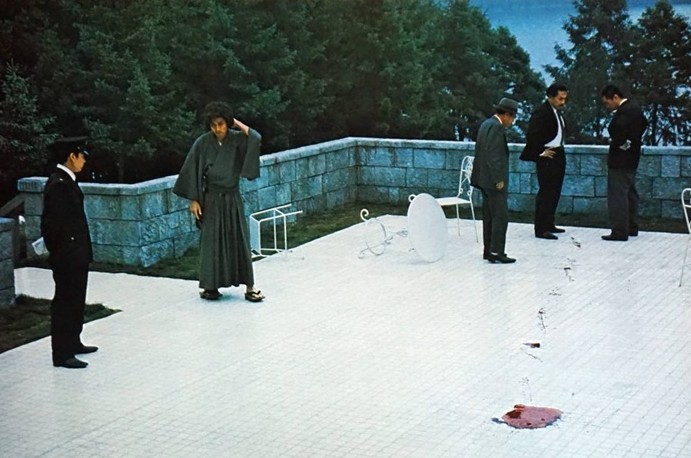
Additionally, a lengthy retrospective making-of is featured with crew members talking about their experiences on this and other Kindaichi mystery movies. One remembers accidentally spraying a famous performer in the face with too much blood during a murder scene and how the performer responded to being soaked (the shot was left in the final film).
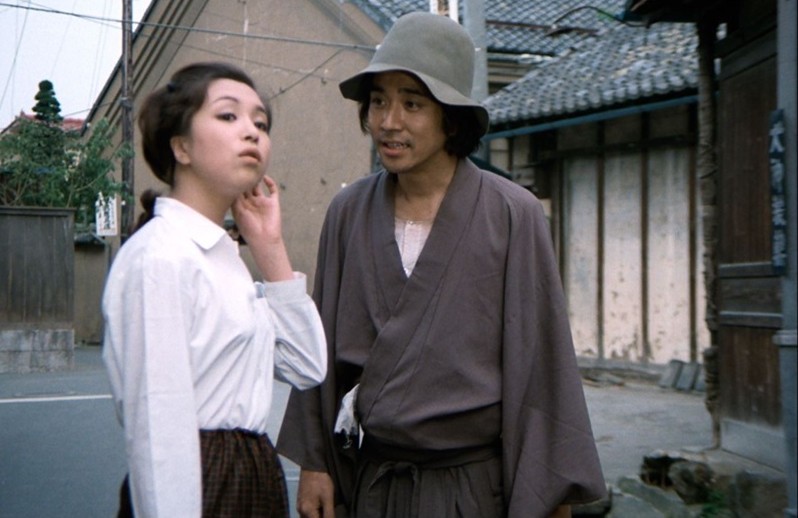
You’ll also get a featurette on the Kosuke Kindaichi character, with actor Kōji Ishizaka discussing how he approached the role. He clearly attempted to make this detective unique, changing him from the novels and making him more down-to-earth than others of the same ilk. This is one of the more different aspects of the movie, as Kindaichi really seems like a normal, sweet-natured man making mistakes, adapting and putting the pieces together to come to a correct conclusion.
There is an amusing featurette on the restoration process, which is very silly and narrated like a mystery movie. Truth be told, the program actually features more detail than most of its kind, really going into color timing, how prints can differ from the original negative, and the ways in which restoration efforts attempt to recreate the proper look and aspect ratio of a title.
A teaser trailer and theatrical trailer are included as well. You’ll also get a booklet with two essays on the movie and its importance in Japanese film history.
The Inugami Family is a feature that will certainly appeal to mystery fans and it includes a few unique elements that differentiate it from other titles in its genre. The image is excellent and this Blu-ray contains more bonuses than most releases from this label. Radiance Films has done a great job with this feature, and it will please most viewers… and perhaps make them interested in seeing more Kosuke Kindaich mystery stories.

[…] The Inugami Family (1976) is a Japanese effort about a wealthy family who must deal with a series of murders among their kin over a contested will. The distributor was given a 4K restoration of the movie from the Kadokawa Corporation, and also arrives with a historian analysis of the film, an archival talk with the director, outtakes from the production, a making-of, a career overview of the movie’s star, and a look at the restoration process. Trailers are also included, and you’ll also get a booklet with essays on the feature. You can read a detailed review of the disc by clicking on this link. […]