
This “Limited Edition” Blu-ray from Radiance Films is now available for purchase.
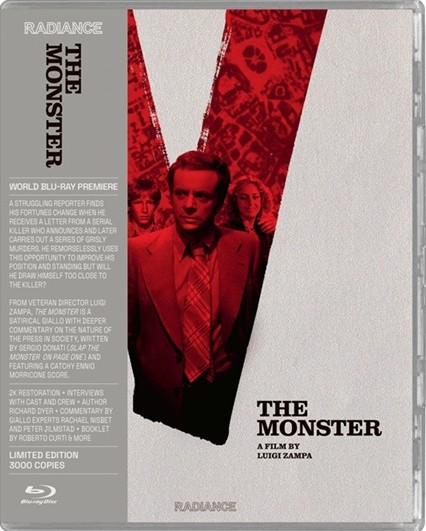
I’m always very excited to receive review copies of new titles from Radiance Films. And over the past little while, I’ve really come to appreciate Italian cinema. While many viewers like myself may be familiar with the likes of Vittorio De Sica, Bernardo Bertolucci, Federico Fellino, Dario Argento and others, there were so many other fantastic moviemakers from the era who aren’t as well-known in this part of the world. Thanks to the distributor, I’m now thrilled whenever a new arrival from Damiano Damanini, Antonio Pietrangeli, or Mauro Bolognini comes my way.
This week sees the release of another impressive title from the region. Luigi Zampa was a director most famous for neorealist pictures and comedies, but he clearly also knew his way around thrillers. The Monster aka Il Mostro is a picture that did come after the “Giallo” genre was in full swing, but offered a few clever twists to the formula. The film also arrived at a particularly tumultuous time in the country’s history. Known as the “Years of Lead,” this period was filled with protests and violence between right wing and leftist factions. Most of the movies of this era have a strong political slant, even when dealing with otherwise typical stories and themes, and this effort is no exception.
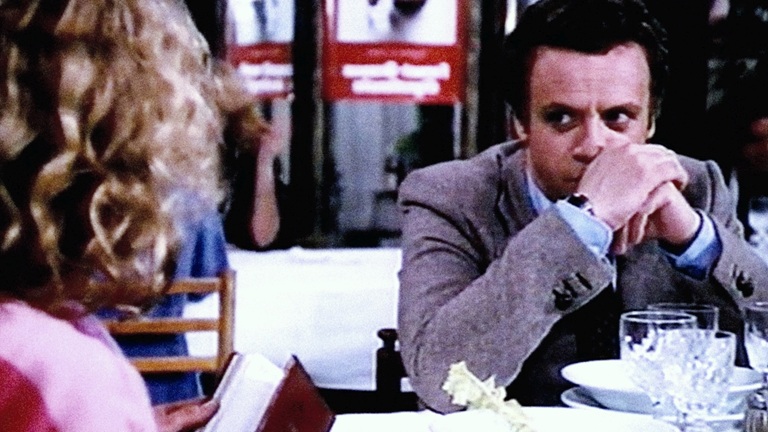
Radiance Films is now presenting the movie as a “Limited Edition” Blu-ray, so viewers can get a peek at this unique and memorable feature. Valerio Barigozzi (Johnny Dorelli) is a bitter journalist angry at the world. He doesn’t appear to have anything positive to say about anyone or anything, even around his teenage son Luca (Enzo Santaniello) who happens to idolize him. Valerio’s creative writing projects have gone nowhere and he’s been reduced to writing for a conservative local newspaper run by a wealthy figure more interested in sensationalism than delivering valuable information. Additionally, Valerio and his wife Anna (Angelica Ippolito) are on the outs, verbally sparring and throwing insulting and vicious comments to each other in front of their son.
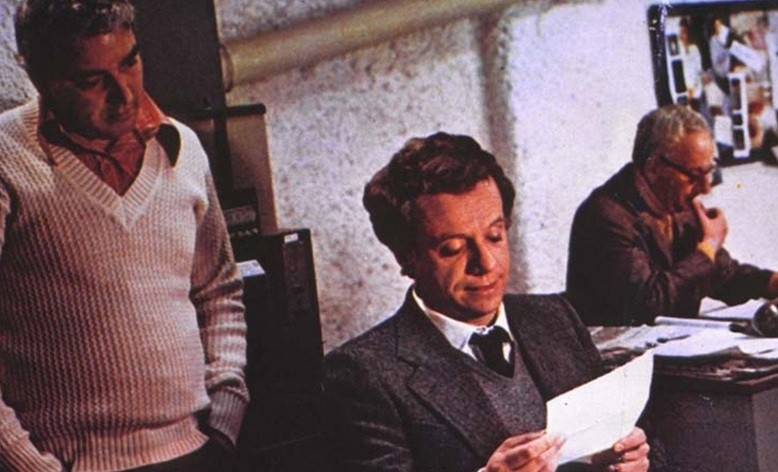
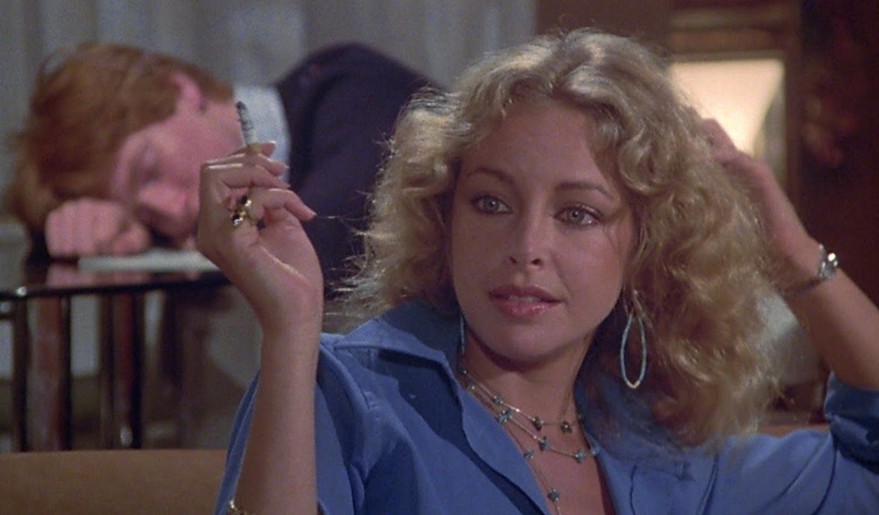
When a serial killer leaves a note for Valerio, the journalist immediately writes about it. His readership begins to skyrocket, but instead of helping the police he decides to manipulate the situation to his own personal benefit. This involves trying to get the murderer to continue corresponding with him for more stories, and prolonging the mystery (much to the frustration of authorities). As the body count rises, Valerio uses his newfound celebrity to earn a raise, get a new apartment, date a famous singer named Dina (Sydne Rome), and become even more brazen. Ultimately, his actions put not only himself but those closest to him in mortal danger.
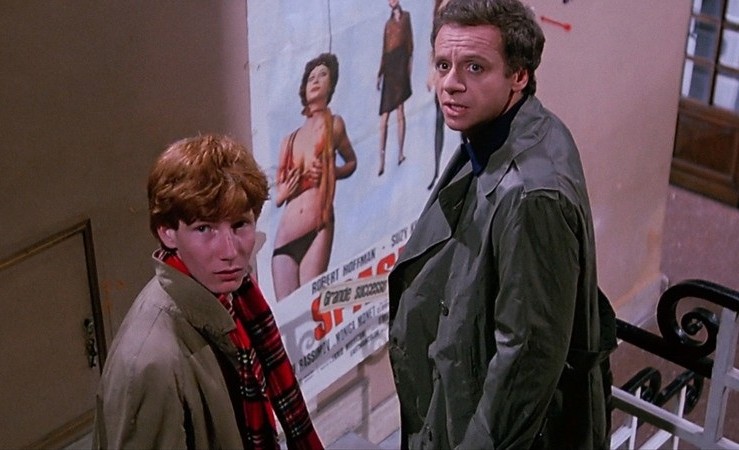
There are definitely “Giallo” elements here, including several brief but disturbing murders by an unseen figure. Valerio finds a body in a TV studio, another at a soccer training ground, before they become more brutal and occur much closer to home. These slayings aren’t overly graphic or elaborately staged, but do make an impression because of the lead characters and how they respond to these horrors. This focus on the personal drama really adds something special to the mix. We witness an already troubled individual with a nasty outlook on humanity not rise to the occasion and try to save the public, but instead exploit the deaths and sink further until he becomes completely cold and inhuman himself.
The film ends with an appropriate little twist. Most will probably see it coming, but it’s still well-acted and ends on a powerful note as the Valerio slowly begins to understand that his own actions and behavior can inspire heinous conduct. It also ends on an interpretive note, leaving the final fate of its main characters up to the viewer.
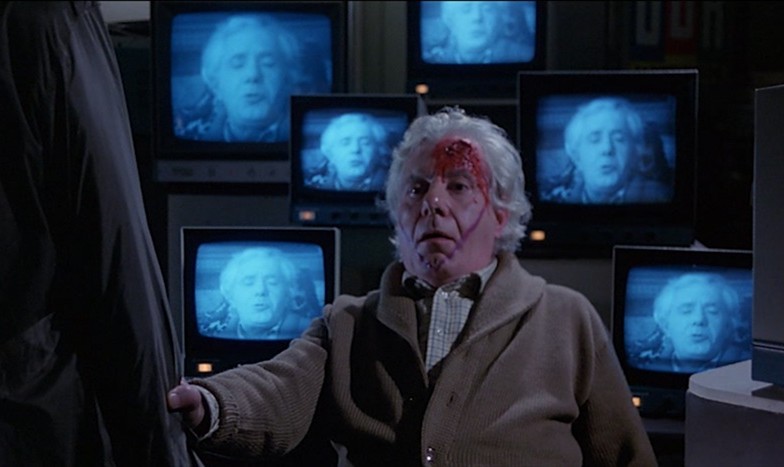
This is a wonderful little thriller that makes a lasting impression. According to press notes, the movie was scanned in 2K in Rome. Advanced digital restoration tools were used to clean up the image, including removing scratches and blemishes. Whomever was responsible has done an exceptional job, as the picture on display looks wonderful when upconverted on my 4K player. It’s clear and sharp with plenty of detail and very fine natural grain. I was impressed with the quality on display and, with such a great picture, most will easily find themselves immersed in the story.
Additionally, some fine bonus features are included. There is a film historian commentary. The speakers present a wealth of information about the Zampa, cast and crew, while also examining the themes present in the story. Much like I’ve noted, it’s clear that there is more than one character in the picture who could qualify as a monster, and they also discuss the locations, as well as character motivations. It’s an entertaining and informative track.
There is a lengthy interview with film expert Richard Dyer, who talks about this picture, the “Years of Lead” and how the movie fits into pictures from this period. He goes into plenty of detail about director Zampa’s career, and how he would take a story like this from a specific genre and put his own personal spin on it.
A 44-minute documentary on the movie is perhaps the biggest plus. Made in 2022, it features cast and crew interviews. They share their memories and experiences on the picture working with Zampa. Many also talk about star Johnny Dorelli, a famous singer in Italy who was, at the time, challenging himself with the darker, more serious role. He’s totally convincing in the part, especially to someone myself not familiar with his fame as a performer.
In fact, co-star Rome calls him the Frank Sinatra of Italy, while Santaniello talks about working on the film as a teenager, and the stress of being in the company of fantastic performers. It seems that the lead actor was always very friendly and considerate. They also note how amused they would be whenever he wandered past and randomly started singing, which would wow them all. All of these people were on set and their recollections obviously paint a very clear picture of the production. They all mention how impressed they are that the picture has grown in estimation over the years, and several note that many of the plot elements are still relevant today.
There is also a trailer for the movie. A booklet with an essay on the movie and interviews from 1977 with cast and crew is also included.
The Monster aka Il Mostro is another wonderful entry that further proves how remarkable Italian cinema was in the 1960s and 1970s. It should appeal to anyone who enjoys international cinema, as well as “Giallo” enthusiasts looking for something a little off the beaten path. The image quality is excellent and the bonuses add plenty of notable background info that will also impress. It’s another great title to add to your collection.
